


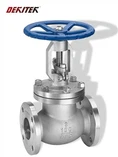

Hey there! As a supplier of Cast Steel Pressure Seal Gate Valves, I've been getting a lot of questions lately about how valve size affects the flow rate. So, I thought I'd sit down and write this blog to share some insights on this topic.
First off, let's quickly understand what a Cast Steel Pressure Seal Gate Valve is. It's a type of valve that's commonly used in high-pressure systems. The pressure seal design ensures a tight seal even under high pressures, which is super important for safety and efficiency. And being made of cast steel, it's durable and can withstand harsh conditions.
Now, onto the main question: what's the effect of valve size on the flow rate? Well, it's kind of intuitive when you think about it. The flow rate, simply put, is the volume of fluid that passes through the valve in a given amount of time. And the size of the valve, specifically the diameter of the valve opening, plays a huge role in determining this flow rate.
A larger valve size generally means a larger opening. When the opening is bigger, there's less resistance for the fluid to flow through. It's like trying to pour water through a wide funnel versus a narrow one. The wide funnel allows the water to flow much faster because there's more space. Similarly, in a larger Cast Steel Pressure Seal Gate Valve, the fluid can move more freely, resulting in a higher flow rate.
On the flip side, a smaller valve size has a smaller opening. This creates more resistance for the fluid. The fluid has to squeeze through a smaller space, which slows down its flow. It's like a traffic jam on a narrow road. The cars (or in this case, the fluid) can't move as quickly because there's not enough room. So, a smaller valve will typically have a lower flow rate.
But it's not as simple as just saying "bigger valve = higher flow rate." There are other factors that come into play too. For example, the pressure of the fluid in the system matters a lot. If the pressure is really high, even a smaller valve might be able to achieve a relatively high flow rate because the force of the pressure is pushing the fluid through. On the other hand, if the pressure is low, a larger valve might not see a significant increase in flow rate because there isn't enough force to push the fluid through the larger opening.
The viscosity of the fluid is another important factor. Viscosity is basically how thick or thin a fluid is. For instance, honey is more viscous than water. A more viscous fluid will flow more slowly through a valve, regardless of the valve size. It takes more energy to move a thick fluid, so even a large valve might not be able to achieve a high flow rate if the fluid is very viscous.

The design of the valve itself also affects the flow rate. Some Cast Steel Pressure Seal Gate Valves are designed to have a more streamlined internal structure, which reduces turbulence and allows the fluid to flow more smoothly. This can improve the flow rate compared to a valve with a more complex or less efficient design, even if they have the same size.
Let's talk about some real-world applications. In a power plant, where high-pressure steam needs to be controlled, a larger Cast Steel Pressure Seal Gate Valve might be used to ensure a high flow rate of steam. This is crucial for the efficient operation of the turbines. On the other hand, in a small plumbing system, a smaller valve might be sufficient because the flow rate requirements are much lower.
Now, if you're in the market for a Cast Steel Pressure Seal Gate Valve, you might also be interested in other types of valves we offer. Check out our Stainless Steel Pressure Seal Gate Valve. It has similar pressure seal features but is made of stainless steel, which offers better corrosion resistance. We also have Duplex Stainless Steel Gate Valve, which is known for its high strength and excellent resistance to stress corrosion cracking. And if you're looking for a valve with an automated operation, our Pneumatic Actuator Gate Valve is a great option.
In conclusion, the valve size has a significant impact on the flow rate of a Cast Steel Pressure Seal Gate Valve. A larger valve usually leads to a higher flow rate, but other factors like pressure, fluid viscosity, and valve design also need to be considered. When choosing a valve for your application, it's important to take all these factors into account to ensure you get the right valve for your needs.
If you have any questions or are interested in purchasing a Cast Steel Pressure Seal Gate Valve or any of our other valve products, don't hesitate to reach out. We're here to help you find the perfect valve solution for your system.
References:
- Fluid Mechanics textbooks
- Industry reports on valve applications in different sectors