

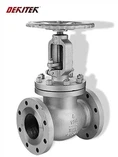
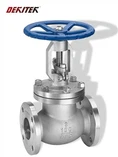
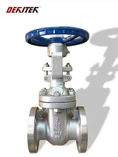
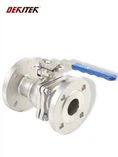

Wenzhou Deki Valve Co., Ltd., is a professional industrial valve supplier specialized in valve research, design, manufacturing, sales and services. Our company's main products include: gate valves, butterfly valves, ball valves, check valves, globe valves, plug valves, filters and etc. Our products are used by our customers in the Oil and Gas Refinery, Nuclear Power Plant, Chemical Plant, Marine Power Station and Water discharge and supply industries.
Why Choose Us
Professional Team
Our professional team collaborate and communicate effectively with one another, and are committed to delivering high-quality results. They are capable of handling complex challenges and projects that require their specialized expertise and experience.
Advanced Equipment
To keep the consistency of our product quality control, we have equipped state-of-the-art lathe machines, CNCs, and inspection labs for material inspection and valve production and testing.
One stop solution
From the begining inquiry and throughout the entire process until you receive the goods. we are dedicated to supporting you every step of the way.
High Quality
We take pride in the craftsmanship of our products and ensure that each one meets our strict standards for quality.
Global Shipping
Our products support global shipping and the logistics system is complete, so our customers are all over the world.
Competitive Price
We have professional sourcing team and cost accounting team, stive to reduce cost and profit and provide you a good price.


Duplex stainless steel gate valves offer an ideal solution for many applications. Combining the benefits of both austenitic and ferritic steels into a single alloy. This type of valve offers excellent corrosion resistance, increased ductility, higher mechanical strength and better weldability compared to other alloys.
Benefits of Duplex Stainless Steel Gate Valve
Corrosion resistance: Duplex steel is known for its excellent resistance to corrosion, making these valves highly suitable for applications in harsh environments, such as offshore drilling rigs or chemical plants. They can withstand the attack of corrosive substances like acids, chlorides, and seawater.
High strength: Duplex steel valves possess higher strength compared to many other valve materials, allowing them to handle high pressure and temperature conditions. This strength is especially beneficial in applications that require reliable performance and durability.
Improved fatigue resistance: These valves exhibit improved resistance to fatigue, which means they can withstand cyclic stress and pressure fluctuations without premature failure. This makes them suitable for applications with frequent or rapid changes in pressure or temperature.
Cost-effectiveness: While duplex steel valves may have a higher initial cost compared to some other valve materials, they can provide long-term cost savings due to their durability and extended service life. Their corrosion resistance reduces the need for frequent replacements or maintenance, resulting in lower overall operational costs.
Versatility: Duplex steel valves are versatile and can be used in various industries and applications, including oil and gas, chemical processing, pulp and paper, desalination, and more. Their wide range of compatibility makes them a popular choice for many different fluid-handling systems.

Ferritic stainless steel gate valve: 12%-30% chromium. Its corrosion resistance, toughness and weldability increase with the increase of chromium content, and its resistance to chloride stress corrosion is better than other types of stainless steel gate valves.
Austenitic stainless steel gate valve: Containing more than 18% chromium, about 8% nickel and a small amount of molybdenum, titanium, nitrogen and other elements. Good overall performance, resistant to corrosion by various media.
Austenitic-ferritic duplex stainless steel gate valve: It has the advantages of both austenitic and ferritic stainless steel gate valves, and has superplasticity.
Martensitic stainless steel gate valve: High strength, but poor plasticity and weldability.
Handwheel/actuator
The handwheel is a component used in manual stainless steel gate valves so that the valve operator can apply torque to open/close the valve. If the stainless steel gate valve is not manual, then it is operated by an actuator. An actuator is a device used in stainless steel gate valve to provide torque to open/close the valve. When the handwheel/actuator rotates, it helps to rotate the stem which is connected to the gate. Thus handwheel works with a stem to open/close the stainless steel gate valve.
Valve body
The valve body in a stainless steel gate valve is the main component used to house internal parts of the valve. This component of a stainless steel gate valve is made of stainless steel material. Stainless steel is known to be strong and tough and thus it helps to protect the valve against damage in times of very high pressure and high temperature since these valves are mostly used in high pressure and high-temperature applications.
Bonnet
This is a component used to cover the top of the stainless steel gate valve. The bonnet is placed on the top of the valve body and the two are connected using screws or bolts. The screws and bolts help to enhance a tight seal free from fluid leakage. Between screw and bolted connection, the bolted connection is mostly used since it can provide a tighter seal at very high pressure. Another method of connecting the bonnet and the valve body is by welding. The welded bonnet is superb as it provides zero leakage seal. The bonnet is also made of stainless steel material like the valve body which enhances valve strength.
Stem
This is the component of a stainless steel gate valve which is connected to the handwheel and the gate/disc. The stem is meant to transmit torque from the handwheel through its threads to the gate. This torque is then converted to linear force which is used to raise or lower the gate to open or shut off fluid flow. The stem needs to be strong to enhance its ability to transmit torque to the gate. As such, the stem in a stainless steel gate valve is made of stainless steel to enhance its strength.
Gate
A gate in a stainless steel gate valve is an internal component that is tasked with blocking or opening fluid flow. The gate used in stainless steel gate valves can be either wedge or parallel-shaped.
Seat
The seat is an interior component of a stainless steel gate valve. Stainless steel gate valves are designed with two seats to ensure a tight seal with the gate. Seats used in stainless steel gate valves are integrated with the body or they are in terms of a seat ring. For seat rings in stainless steel gate valves, they are pressed or threaded into position and seal welded to the body. Integrated seats are valves made of the same material (stainless steel) as the body. Threaded in or pressed in seats allow for variations such as the seat can be made of different materials like PTFE instead of stainless steel.
Backseat
The backseat in a stainless steel gate valve is mounted in the bonnet. The backseat helps when the valve is opened fully so that the valve stem can "back seat" against the bonnet to help close off fluid pressure to the stuffing box. This helps to support the main seal on a stainless steel gate valve which is often a stuffing box.
Trim
Trim is a name given to the internal components of a stainless steel gate valve. The components under trim include gaskets, seat, seating surface, gate, gate surfaces, seals, stuffing box, and bushing.
Summary of Failure Types of Stainless Steel Gate Valve Leakage
Leakage at the junction of stainless steel gate valve
Check whether the valve and valve connecting bolts are tightened. If they are not tightened, the internal sealing ring and the flange sealing groove surface are not fully integrated, which will often lead to leakage. The bolts and nuts should be checked in sequence, and all bolts should be tightened until the gasket ring is compressed. Secondly, check the size and accuracy of the stainless steel gate valve sealing ring and flange sealing groove surface. If the size of the seal contact surface is incorrect or too rough, the gasket ring should be repaired or updated.check whether the contact surface between the gasket ring and the flange sealing groove is corroded, sand holes, sand holes or impurities. If there are such defects, they must be repaired, repaired or cleaned up accordingly.
The bonnet of the stainless steel gate valve leaks
The leakage of stainless steel gate valve cover is mainly manifested in the leakage of packing seal. check whether the seal is selected correctly and whether it matches the seal groove. If there is such a problem, replace the seal ring or repair the seal groove.check whether the seals have burrs, fracturing, twisting, etc. If this is the case, replace the seals. In addition, check whether the sealing surface of each sealing groove is rough or has other defects. If there is a defect, the defect must be eliminated or the damaged part must be updated.
The stainless steel gate valve bonnet or bracket has packing that is sealed by compression. The installation of these packings should be checked. If it is found that the upper and lower packings are installed upside down, they must be removed and re-installed according to the correct method. Pay special attention to the matching of the joint surfaces of the packing seals.check whether the accuracy of each contact surface of the seal meets the specified requirements. Qualified manufacturers of gate valves will inspect them in advance.
The valve body cavity surface of the stainless steel gate valve leaks
In the process of casting the valve body, casting defects such as sand holes and sand holes sometimes appear. These defects are difficult to find in the process of machining. Once pressure is applied, hidden casting defects will be exposed.the stainless steel gate valve must be repaired, repaired or updated.
Leakage at the valve seat and valve plate of the stainless steel gate valve
Leakage at the valve seat and valve plate is a common phenomenon in the installation or maintenance of stainless steel gate valves. Generally can be divided into two categories: one is the leakage of the sealing surface, and the other is the leakage of the root of the sealing ring.
The gate has two sealing surfaces. The two sealing surfaces of the commonly used mode gate valve form a wedge shape. When the medium temperature is not high, the wedge angle changes with the valve parameters. The gate of the wedge gate valve can be made into a whole, which is called a rigid gate; it can also be made into a pressure head that can produce slight deformation to improve its manufacturability and make up for the deviation of the angle of the sealing surface during processing. This indenter is called an elastic indenter.
When the gate valve is closed, the sealing surface can only be sealed by medium pressure, that is, the sealing surface of the gate valve is pressed to the valve seat on the other side by the medium pressure to ensure the sealing of the sealing surface, which is self-sealing. Most gate valves are forced to seal, that is, when the valve is closed, the gate must be pressed against the valve seat by external force to ensure the sealing of the sealing surface. A gate valve whose gate moves linearly with the valve stem is called a lifting stem gate valve (also known as an open stem gate valve). Usually, there are trapezoidal threads on the lift rod, and through the nut on the top of the valve and the guide groove on the valve body, the rotary motion is changed into a linear motion, that is, the operating torque becomes the operating thrust.
When the valve is open, the fluid passage is completely clear, but this position cannot be monitored during operation. In practice, the apex of the valve stem is used as a symbol, that is, the position where it cannot be opened is used as its fully open position. To account for locking due to temperature changes, it is usually at the top position and then back to 1/2-1 turn as the fully open valve position.the fully open position of the valve is determined according to the position of the head (ie, the stroke).

Valve installation
When installing brass gate valves, make sure they are properly aligned with the pipeline. Misalignment can cause leaks or operational problems. Tighten the connections securely but avoid overtightening them, which may damage the valve.
Regular inspection
Routine inspection is crucial. Inspect valves for signs of wear, corrosion or damage. Address any issues immediately to prevent operational disruptions.
Lubrication
Lubricate the valve stem regularly to maintain smooth operation. Use a compatible lubricant to prevent excessive friction and extend valve life.
Avoid excessive force
Never use excessive force when operating a brass gate valve. Excessive force can damage valve components and impair its performance.
Corrosion prevention
Brass gate valves are susceptible to corrosion. To prevent this, choose appropriate materials and coatings based on the type of liquid or gas being controlled. Clean and maintain the valve regularly to avoid problems associated with corrosion.
Adjust the appropriate opening and closing position
Make sure the valve is fully open or fully closed when in use. Partially open positions can lead to water hammer, excessive wear, and increased energy consumption.
Temperature considerations
Pay attention to the temperature range. Brass gate valves may not be suitable for extreme temperatures. Make sure the valve you use can handle the specific temperature requirements of your application.
Pressure assessments
Adhere to the valve's recommended pressure ratings. Exceeding these ratings may cause leakage or valve failure. Always choose the right valve for your application.
LED position indication
In applications where valve position is critical, consider using position indicators. This ensures that you are aware of the valve's condition at all times, preventing any unexpected problems.
Emergency shutdown plan
Have a well-defined emergency shutdown plan. This is essential to quickly respond to unexpected situations and prevent damage to your equipment and the environment.
Duplex Stainless Steel Gate Valve Installation Procedure
It is preferable to install the valve, especially the larger ones in an erect position for any easy movement of the handwheel.
Quick verification of the gate valve parts is important to ensure there is no damage caused during the package and transportation.
Make sure that all the welding work has been done before installation. Moreover, install the flange only when it has cooled down to a normal temperature.
Check for any kind of residue or welding debris before installing the pipe. Use a mild detergent for cleaning if required
Avoid any kind of misalignments of the gate and flange as it is the most commonly occurring installation issue.
Carefully install the spacing bolts, and pay special attention to the valve seat. Moreover, the flanges are installed in an adjacent manner to provide enough space.
After centrally installing the pipe, make sure that the bolts rest on top of the valve to keep it from falling through.
Tighten the bolts with periodic pressure to create a seal between the valve, flanges, and gaskets.
After the installation, move the valve several times to ensure a smooth movement in the future.
Our Factory
Our company is well in line with major international standards, such as ANSI/API, BS, DIN, JIS, GB and etc. As the rapid growth of the demands from foreign markets, we have integrated custom valve design, manufacturing, and engineering into our production. Our valves and flow control components are exported to all over the world, like Southeast Asia, Middle East, Europe, Russia, North and South America, Africa, and etc. We continue to expand our customer bases under our unwavering commitment to our customers, to meet and exceed their expectations.

FAQ
Hot Tags: duplex stainless steel gate valve, China duplex stainless steel gate valve, lye sluice valve, aluminum check valve, ductile iron check valve, 1 inch brass shut off valve, valve quality, valve closing


