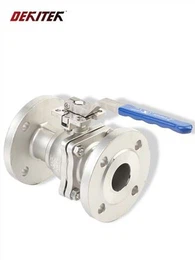

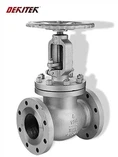
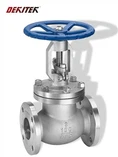
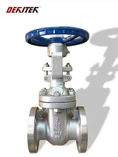
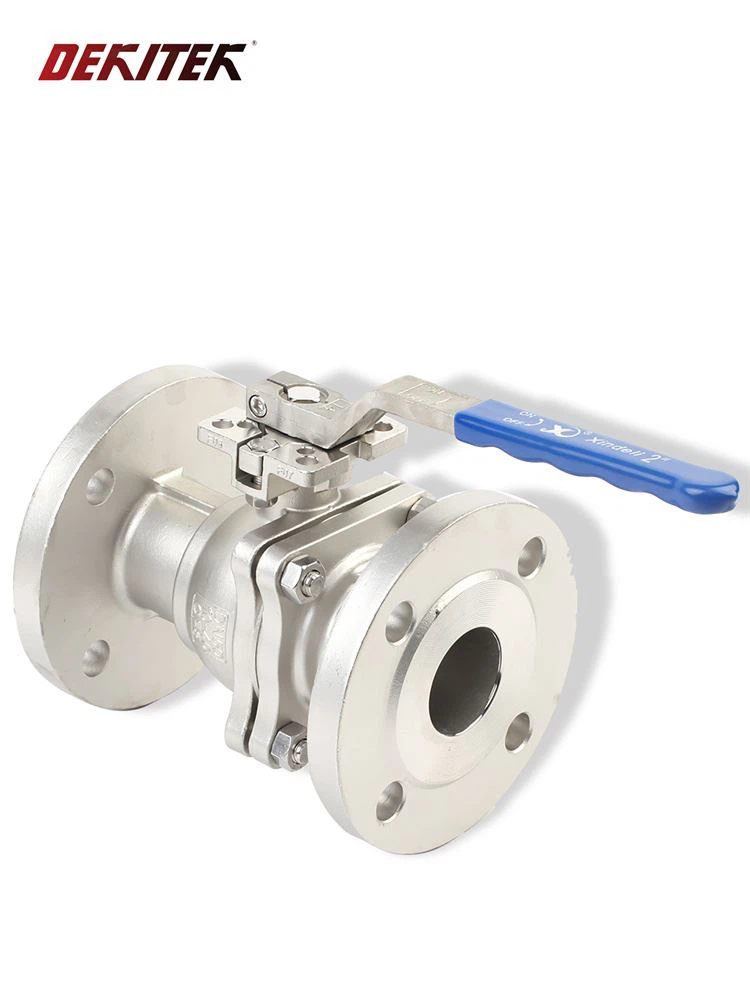
Wenzhou Deki Valve Co., Ltd., is a professional industrial valve supplier specialized in valve research, design, manufacturing, sales and services. Our company's main products include: gate valves, butterfly valves, ball valves, check valves, globe valves, plug valves, filters and etc. Our products are used by our customers in the Oil and Gas Refinery, Nuclear Power Plant, Chemical Plant, Marine Power Station and Water discharge and supply industries.
Why Choose Us
Professional Team
Our professional team collaborate and communicate effectively with one another, and are committed to delivering high-quality results. They are capable of handling complex challenges and projects that require their specialized expertise and experience.
Advanced Equipment
To keep the consistency of our product quality control, we have equipped state-of-the-art lathe machines, CNCs, and inspection labs for material inspection and valve production and testing.
One stop solution
From the begining inquiry and throughout the entire process until you receive the goods. we are dedicated to supporting you every step of the way.
High Quality
We take pride in the craftsmanship of our products and ensure that each one meets our strict standards for quality.
Global Shipping
Our products support global shipping and the logistics system is complete, so our customers are all over the world.
Competitive Price
We have professional sourcing team and cost accounting team, stive to reduce cost and profit and provide you a good price.



What is Fully Welded Ball Valve
A fully welded valve is designed with a fully welded and forged body to reduce weight and increase strength while eliminating several potential leak points. They are used to connect and shut off the flow of the medium in many different pipeline systems.
Leak-Free Valve Operation
This type of ball valve body is fully welded, which reduces the number of potential leak points. In fact, external leakage can be virtually eliminated in many cases. By enclosing the valve with welded metals instead of plastic seals, they become more durable and less likely to develop leaks over time.
Wide Pressure & Temperature Ranges
With a valve seat made up of a carbonized Teflon seal ring and spring, fully welded ball valves are highly adaptable to changes in pressure and temperature-meaning there'll be no slippage or performance issues within the specified temperature and pressure ranges. This quality makes these specialized ball valves incredibly versatile.
Superior Manufacturing & Quality Assurance
Each fully welded ball valve sphere is tracked and measured by an advanced computer scanner that detects even slight imperfections during the manufacturing process. When a rare defect is found, it returns to the machining room, where the issue is corrected, or the sphere is recycled. These precision machining practices lead to impeccably built ball valve spheres that you can depend on for years to come.
Identical Pipeline Construction Material
You can use a fully welded ball valve of the same material used in the pipeline. This consistent material use means there'll be no uneven stress and no deformation caused by earthquakes or other vibrations over time. The valve will age at the same rate as the pipeline itself, which should be incredibly age-resistant in the case of quality sanitary valves.
Fully Welded Ball Valves with Partial Carbon Sealing
Fully welded ball valves are constructed with PCTFE seal rings that contain 25% carbon or greater, ensuring complete leak-free performance. This advanced material provides strength and stiffness while retaining its shape despite exposure to chemicals.
Directly Buried Ball Valves
Welded sanitary ball valves can be directly buried underground. There's no need to build a large valve well; you only need a small shallow well, which significantly saves construction costs and time.
Adjustable Valve Stem Height & Valve Body Length
According to the construction and design requirements of the pipeline, the valve body's length and the valve stem's height can be adjusted to your specifications. This flexibility makes fully welded ball valves extremely versatile, as you can install them at multiple locations with different requirements.
What is the difference between a fully welded ball valve and an ordinary ball valve
● The welded ball valve adopts carbon steel seamless steel pipe to press and form the integral welded ball valve, which can withstand frequent operation in the presence of impurities and chemical substances, and has a long life.
● No maintenance, adjustment and lubrication are required, easy to install, and long-term reliable operation at low operating costs. The surface adopts plastic-spraying treatment technology, which has beautiful luster and is at the leading level in China. There will be no external leakage. The valve body is a welded structure, so the valve is light and easy to be insulated. It is very easy to install the adjustment mechanism. The operating handle can be removed and installed in reverse.
● The seal adopts carbon-reinforced PTFE inclined elastic sealing ring with negative pressure on the spherical surface, so that the seal can achieve zero leakage and long service life.
● The fully welded ball valve uses a floating ball, and the elasticity of the inclined surface ensures that the sealing ring is tightly pressed on the ball, and the valve can be tight in time when the pressure is unstable.
● The valve has compact structure, light weight, easy heat preservation and easy installation. This valve is generally installed horizontally.
● The leak-proof structure of the fully welded ball valve stem uses two "o" rings to make the stem rotate freely and have a tight seal.
● The stem of the welded integrated ball valve can be lengthened for easy heat preservation
● It can be persistently buried deep underground. The use of the latest engineering technology can minimize the space occupied by valve control, and greatly save construction costs and engineering time, and can prevent the danger of gas explosion.
The welded ball valve adopts carbon steel seamless steel pipe to press and form the integral welded ball valve, which can withstand frequent operation in the presence of impurities and chemical substances, and has a long life.
No maintenance, adjustment and lubrication are required, easy to install, and long-term reliable operation at low operating costs. The surface adopts plastic-spraying treatment technology, which has beautiful luster and is at the leading level in China. There will be no external leakage. The valve body is a welded structure, so the valve is light and easy to be insulated. It is very easy to install the adjustment mechanism. The operating handle can be removed and installed in reverse.
The seal adopts carbon-reinforced PTFE inclined elastic sealing ring with negative pressure on the spherical surface, so that the seal can achieve zero leakage and long service life.
The fully welded ball valve uses a floating ball, and the elasticity of the inclined surface ensures that the sealing ring is tightly pressed on the ball, and the valve can be tight in time when the pressure is unstable.


The valve has compact structure, light weight, easy heat preservation and easy installation. This valve is generally installed horizontally.
The leak-proof structure of the fully welded ball valve stem uses two "o" rings to make the stem rotate freely and have a tight seal.
The stem of the welded integrated ball valve can be lengthened for easy heat preservation
It can be persistently buried deep underground. The use of the latest engineering technology can minimize the space occupied by valve control, and greatly save construction costs and engineering time, and can prevent the danger of gas explosion.
Structure of fully welded ball valve
The valve body of the ball valve is produced by welding six partially forged shells after assembly. The structure is compact and the whole ball valve is integrated. At present, the large-caliber ball valves used in production are mostly split three-piece structures, and each part is connected by bolts. Compared with the three-piece ball valve, under the same strength, the wall thickness of the fully welded ball valve forge piece can be made to be very thin, the valve weight can be reduced by a quarter, and the resistance to pipeline bending and extrusion is enhanced.
The design of frame shaft fixed ball of fully welded ball valve
According to the form of the ball, the ball valve can be divided into two types: fixed ball and floating ball. The product generally adopts a floating ball structure. Under the pressure of the medium, the ball is pressed tightly on the sealing surface of the outlet end to achieve the purpose of sealing. Once the pressure difference between the inlet and outlet of the valve body is large, it is often difficult to open due to the large torque. The fully welded ball valve uses a high-strength satin steel valve stem, supported by a stainless steel bearing covered with PTFE, which rotates smoothly and accurately.
Design of rotary valve seat of fully welded ball valve
When the ball valve is nearly being fully closed or just opened, the narrow point between the ball valve and the valve seat is scoured at high speed due to the fluid being throttled into high-speed turbulent flow, which becomes the most severely worn area of the seal of the valve seat. The valve seat upstream and downstream of the fully welded ball valve is rotated 15 degrees by the paddles on the valve ball, so that the entire sealing surface of valve seat is washed by fluid in turn, and the same part is washed again after the valve is opened or closed 12 times. The wear of entire valve seat remains the same and the working life is greatly extended.
The valve stem and secondary valve seat seals of fully welded ball valves
The sealing material PFFE in the upper area of the valve stem of the fully welded ball valve is a low-friction and aging-resistant material with a long service life. The valve stem of fully welded ball valve is also equipped with a sealing grease injection system. Even if foreign matter enters the ball valve seat and damages the sealing surface, it can still be injected with special sealing grease through the secondary valve seat to maintain the seal. Conventional ball valves do not have a sealing grease injection structure. Once the sealing surface is damaged and internal leakage occurs, we can only replace the entire ball valve.
Pressure release device of fully welded ball valve
Although the ball valve adopts the upstream and downstream double valve seat to achieve isolation and seal, the valve seat will be inevitably worn in long-term operation; when the valve is closed, the upstream valve seat may have a certain internal leakage, and the internal leakage medium enters the valve ball cavity. The fully welded ball valve is equipped with a pressure release pipeline connected to the middle cavity and leads the pressure release pipeline out of the ground. Regardless of whether the valve is in the fully open or fully closed position, the valve cavity shut-off valve can be opened to release the pressure in the middle cavity. By releasing the cavity pressure can also test the sealing performance of the valve seat.
Steps and Considerations for Selecting Welded Ball Valves
Fluid medium: Understand the properties of the fluid medium to be controlled, including temperature, pressure, viscosity, and corrosiveness. These factors determine the requirements for the material, sealing performance, and corrosion resistance of welded ball valves.
Pressure level: Choose the appropriate pressure level according to the actual application scenario. Common pressure levels include 150 LB, 300 LB, 600 LB, 900 LB, 1500 LB, etc.
Diameter: Choose the diameter of a welded ball valve that matches the diameter of the pipeline system to ensure smooth fluid flow.
Temperature range: Select the appropriate temperature range according to the actual application scenario, and the temperature range of the welded ball valve should cover the expected working temperature.
Flow coefficient: Select appropriate flow coefficient of welding ball valves according to the flow requirements. The flow coefficient is usually expressed as Cv value or K value.
Control mode: Select manual, electric, pneumatic and other control modes according to the actual application scenario.
Material: Choose a valve body material that is suitable for the properties of the medium and the working environment, such as stainless steel, carbon steel, or alloy steel. Sealing materials usually include polytetrafluoroethylene (PTFE), polypropylene (PP), polyethylene (PE), etc. The temperature, pressure, and corrosiveness of the medium should be considered.
Brand and Performance: Choosing a well-known brand of welded ball valve can provide more reliable quality assurance and service. Consider the opening and closing performance, sealing performance, and durability of the valve to ensure its long-term stable operation.
Special requirements: If the welded ball valve needs to meet specific safety or environmental standards, or it has special design requirements (such as filtering function), these should also be considered when selecting.
Design method of fully welded ball valve split valve body
The valve body design of the Fully welded ball valve has the tubular structure and the spherical structure, the tubular structure is double weld, the heat input in the welding process is large, the residual stress is complex, and the axial and radial deformation is large.
Spherical structure is the splicing of four welds. Now, due to the progress of technology, the left and right valve bodies are hot forged and formed, and the middle single weld can be welded and formed, reducing the input of linear energy and reducing the axial and radial deformation. The split structure is generally composed of valve body and left and right connecting bodies.
The connecting body and the valve body are connected by bolts. The thickness of the connecting flange and the connection strength of the bolts shall be designed by analogy according to the flange equivalent to the inner diameter of the valve body. The connection strength must prevent the connection relaxation caused by the pipe stress, so as to make the seal fail. The valve body is in contact with the opposite side of the connecting surface, and there is no gap between them. Fully welded ball valve manufacturers remind: the above information can only be referred to, if there is an accident, it is not responsible.
Fully welded ball valves are widely used in a variety of industries and applications
Oil and Gas
These valves are commonly used in upstream, midstream and downstream operations and play a vital role in controlling the flow of oil, natural gas and other hydrocarbons.
Petrochemical
Fully welded ball valves are essential for petrochemical plants and refineries to handle various chemicals and fluids.
Power generation
In power plants, fully welded ball valves are used to control the flow of steam, water and other fluids in critical processes.
Process Industries
From pharmaceuticals to food and beverage production, fully welded ball valves are used in various process industries due to their reliable performance and leak-free operation.
Manufacturing process of fully welded ball valve
Forging method: This is a traditional processing method. It requires a complete set of smelting equipment. It requires a relatively large plant and a lot of workers. The investment is relatively large, the production process is relatively complex, and the environment is polluted. Quality, rough machining allowance is large, and waste is large. Found casting defects in the processing process will increase the cost of the product and the quality cannot be guaranteed.
Casting method: Round steel is cut and heated forged into a spherical solid blank, and then welded into a spherical blank for processing, the material utilization rate is high, and the material utilization rate is high.
Spinning method: The metal spinning method is an advanced technology with less and no chips. It belongs to a new branch of pressure processing. It integrates forging, extrusion, rolling and rolling and other technological characteristics, and has a relatively high material utilization rate. It can save a lot of processing time, and the strength of the material after spinning can be doubled.
● The precision ground stainless steel ball of the welded integrated ball valve can ensure that it can be opened and closed freely for many years, and the operation is reliable.
● The floating ball layout is selected, and the inclined elastic tube sealing ring is tightly pressed on the sphere, even in the condition of unstable pressure, the valve can be tightly tubed.
● The anti-leakage layout of the valve stem of the welded integrated ball valve uses two "o" rings to make the stem change freely and tightly sealed.
● It does not need protection, adjustment and smoothness, easy to install, and stable operation for a long time under low operating cost.
● The valve stem of the welded integrated ball valve can be lengthened and is easy to keep warm.
● The operating handle can be removed, and the reversing device.
● Manual fully welded ball valve body does not contain heavy and unstable castings.
● The device conditioning organization is very concise.
Our Factory
Our company is well in line with major international standards, such as ANSI/API, BS, DIN, JIS, GB and etc. As the rapid growth of the demands from foreign markets, we have integrated custom valve design, manufacturing, and engineering into our production. Our valves and flow control components are exported to all over the world, like Southeast Asia, Middle East, Europe, Russia, North and South America, Africa, and etc. We continue to expand our customer bases under our unwavering commitment to our customers, to meet and exceed their expectations.

FAQ
Hot Tags: fully welded ball valve, China fully welded ball valve, largest gate valve, quarter turn butterfly valve, gate valve cast steel, 8 pvc backwater valve, 2 inch backwater valve, 2 inch plastic ball valve