

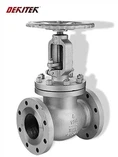
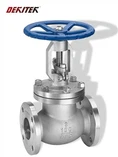
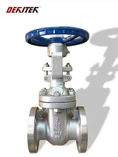
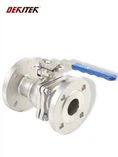
Wenzhou Deki Valve Co., Ltd., is a professional industrial valve supplier specialized in valve research, design, manufacturing, sales and services. Our company's main products include: gate valves, butterfly valves, ball valves, check valves, globe valves, plug valves, filters and etc. Our products are used by our customers in the Oil and Gas Refinery, Nuclear Power Plant, Chemical Plant, Marine Power Station and Water discharge and supply industries.
Why Choose Us
Professional Team
Our professional team collaborate and communicate effectively with one another, and are committed to delivering high-quality results. They are capable of handling complex challenges and projects that require their specialized expertise and experience.
Advanced Equipment
To keep the consistency of our product quality control, we have equipped state-of-the-art lathe machines, CNCs, and inspection labs for material inspection and valve production and testing.
One stop solution
From the begining inquiry and throughout the entire process until you receive the goods. we are dedicated to supporting you every step of the way.
High Quality
We take pride in the craftsmanship of our products and ensure that each one meets our strict standards for quality.
Global Shipping
Our products support global shipping and the logistics system is complete, so our customers are all over the world.
Competitive Price
We have professional sourcing team and cost accounting team, stive to reduce cost and profit and provide you a good price.

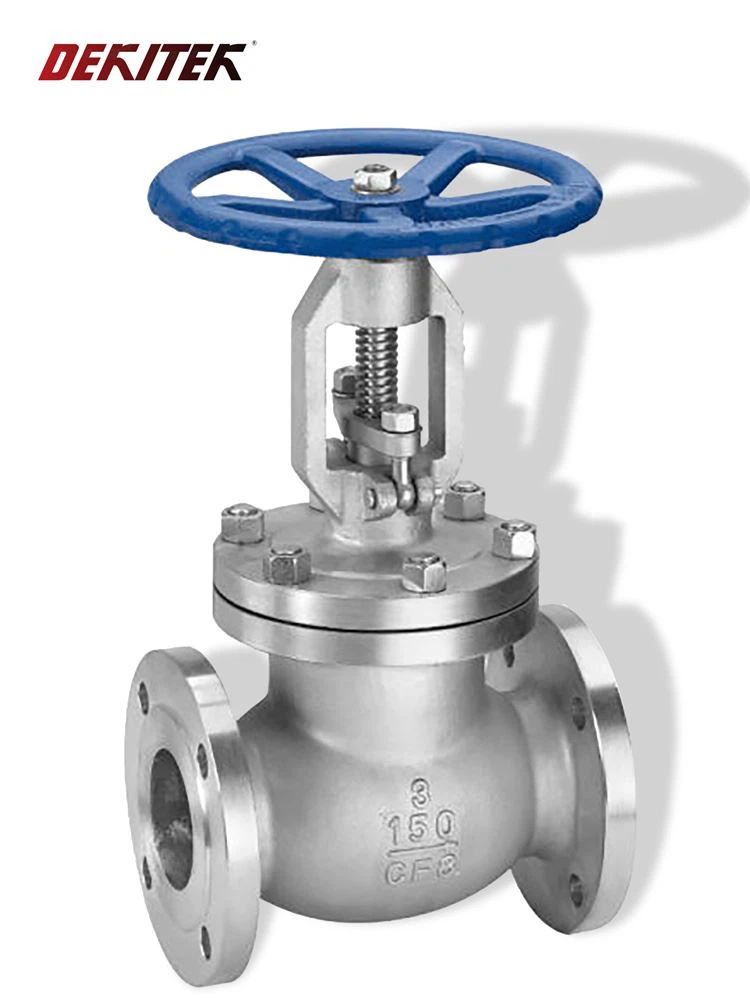


What is Duplex Steel Globe Valve
The microstructure of the duplex stainless steel globe valve consists of a mixture of an austenitic phase and a ferrite phase. Therefore, the duplex steel has both austenitic and ferritic stainless steel properties.
Exceptional throttling and modulation: Globe valves are ideal for precise flow control, allowing fine adjustments to flow rate, which is crucial in systems requiring regular modulation.
Reliable shutoff capability: They ensure a tight seal when closed, critical for stopping flow during maintenance or emergencies.
Maintenance and repair efficiency: Designed for easy maintenance, their components are readily accessible, reducing downtime and costs.
Versatility in maintenance: The disc and seat can be replaced or resurfaced, prolonging valve life and ensuring efficient operation.
Types of Globe Valves
T-Type Globe Valve
T-type is one of the most commonly found types of globe valves, and in it, the seat is placed horizontally – this means that the stem and disc travel perpendicular to the seat. This design of a standard globe valve is preferred often because it exhibits the lowest coefficient of flow along with the highest pressure drop.
This globe valve variant is a good option in cases where the pressure drop is not a problem. They are perfect for high-throttling services because of their design.
Angle Globe Valve
These valves are a slight variation of the standard T-type globe valve. Here the ends of the valve are at a 90° – this allows the fluid inside the valve to flow in a single perpendicular turn. Compared to Y-pattern globe valves, these valves possess a slightly lesser coefficient of flow.
These valves are capable of handling the slugging effect, thus they are often used in places where the flow is pulsating.
Y-Pattern Globe Valve
Given that globe valves are usually found with a high-pressure drop condition, these Y-pattern or Wye pattern globe valves act as alternatives. The seat and stem, usually found perpendicular to each other, are built at an angle of 45°. These valves can be kept open for a long time without the fear of corrosion.
When in the open position, the angle of this valve offers a straighter pathway for the flow of media. This valve also offers the least resistance during flow.
Duplex Steel Globe Key Components of a Globe Valve
Body
The body of the globe valve is the primary pressure-containing structure. It is the most substantial part of the valve and contains all the internal parts that come into contact with the fluid being controlled. The body is connected to the bonnet, which assists in containing the fluid, gas, or slurry.
Bonnet
The bonnet provides a leakproof closure for the valve body. Different types of bonnets can be used in globe valves, including screw-in, union, or bolted bonnets.
Plug or Disc
This is the closure member of the valve. The plug is attached to the stem and can be moved up or down to control the flow of fluid through the valve.
Stem
The stem acts as a connector between the actuator and the plug. It transmits the actuation force from the actuator to the plug, allowing the valve to open or close.
Cage
The cage surrounds the plug and is located within the valve body. It is crucial for guiding the plug to the seat of the valve, ensuring a good shutoff, and also plays a significant role in determining the flow within the valve.
Seat
The seat ring provides a stable and uniform surface for the plug to create a leak-tight seal when the valve is closed. The seats can be screwed in or torqued.
Water Treatment and Distribution
In water treatment facilities and distribution systems, globe valves are used to regulate the flow and pressure of water. They are essential for maintaining the correct water pressure in pipelines, controlling the flow rate during treatment processes, and ensuring the safe and efficient distribution of potable water to residential and commercial areas.
Steam Systems
Globe valves are particularly suited for steam control applications due to their ability to handle high temperatures and pressures. They are commonly found in boilers, steam engines, and steam heating systems, where precise control over steam flow is necessary to maintain efficiency and safety. Their capacity to throttle flow and shut off steam completely makes them indispensable in these settings.
Chemical and Petrochemical Industries
The chemical and petrochemical sectors rely on globe valves for the controlled flow of chemicals, solvents, and other fluids. These industries require valves that can withstand corrosive substances, high pressures, and temperatures. Globe valves, especially those made from materials resistant to corrosion and chemical degradation, are widely used for dosing, mixing, and controlling the flow of aggressive chemicals.
Oil and Gas Production
In oil and gas production, globe valves play a crucial role in controlling the flow of crude oil, natural gas, and related products. They are used in upstream, midstream, and downstream operations for tasks such as regulating pipeline flow, managing pressure in wells, and controlling the delivery of oil and gas to processing facilities and storage tanks.
Power Generation
Globe valves are critical components in power generation plants, including those that use fossil fuels, nuclear energy, and renewable resources. They regulate the flow of steam, water, and other fluids in turbines, cooling systems, and feedwater lines. Their precision and reliability ensure the efficient and safe operation of power generation facilities.

After disassembling the globe valve, remove the old valve seat (valve should be disassembled in the reverse of the valve assembly)
Ensure the new seat's surface and other surfaces are clean of foreign materials.
Ensure there is enough space around the valve body for the operation.
Apply grease to the seat surface to aid adjustment.
Attach the valve disc to the seat using a false stem.
The attachment between the valve disc and seat can be properly bonded by hammering the end of the false stem.
Ensure that the disc and stem are in line and that the stem is properly centered.
Use the false stem to position the disc.
Test the contact between disc and seat by using force on the disc to observe its impression on the seat.
When there is a uniform impression, the valve seat is ready to be reassembled.
Inspect the valve: Ensure the globe valve is in good condition with no visible cracks, dents, or other damage, especially on the disc and seat that are the two most crucial sealing surfaces. If the disc or seat is damaged, the valve will not seal properly and may leak.
The valve stem should be smooth and free of corrosion. Inspect the packing for any signs of wear or damage. The packing is a seal that prevents leakage from the valve stem.
Ensure the valve's end connections match the piping's end connections. If the valve has flanged end connections, ensure the bolts and nuts are tight and secure.
Choose the right location: Globe valves should be installed where they are accessible and can be operated easily. There should be enough clearance around the valve for easy operation and maintenance.
Determine the flow direction: Globe valves are directional valves, so installing them in the correct direction is crucial. The flow arrow on the valve body will indicate the correct flow direction. Globe valves can be installed in a horizontal or vertical orientation. Still, the vertical orientation is preferred because it helps prevent debris from accumulating in the valve's bonnet. If a globe valve must be installed horizontally, it must be installed with the stem in the upright position. This helps to prevent the stem from binding and will make it easier to operate the valve.
If the valve is to be used in a throttling application, install it with the flow under the disc. This will help extend the valve's life and reduce the risk of cavitation.
If the valve is used in a high-pressure or high-temperature application, install it with the flow under the disc. This will help to improve the sealing performance of the valve.
If the valve is to be installed in a piping system with multiple valves, ensure all valves are installed in the same direction. This will help to prevent turbulence and cavitation in the piping system.
Connect the valve to the piping: Use appropriate pipe fittings and sealant to connect the valve to the piping. Make sure the connections are tight and leak-free.
Apply a generous amount of sealant to the threads of the pipe fittings. This will help to create a watertight seal.
Connect the valve to the piping. Screw the pipe fittings onto the valve and piping until they are snug.
Tighten the connections. Use a pipe wrench to tighten the connections. Be careful not to overtighten the connections, as this could damage the valve or piping.
Install the valve packing: Wrap the packing around the valve stem and tighten the gland nut to compress the packing.
Pressure test: Once the valve is installed, it is important to pressure test it to ensure it is leak-free. To pressure test a globe valve:
Close the valve.
Apply pressure to the upstream side of the valve. You can use a hand pump, a power pump, or a pressurized air supply to apply pressure.
Check the downstream side of the valve for leaks. You can use a soap and water solution to check for leaks. If you see any bubbles, there is a leak.
If there are leaks, tighten the connections or replace the packing.
The intended function determines whether to use a ball valve or a globe valve. The important considerations to make throughout the selection process are outlined below:
Flow Rate: Ball Valves are ideal for applications requiring a high flow rate due to their full-bore design.
Pressure Drops: Ball valves have reduced pressure drops since the flow passes directly through them.
Maintenance: Ball valves are simple to maintain since they require just a little amount of oil to keep clean. Further maintenance is required when debris accumulates.
Temperature: Ball Valves perform better in high-temperature environments due to their sturdy structure.

Flow Rate and Pressure Drop: Determine your system's necessary flow rate and pressure drop. Globe valves are suitable for applications that require precise control over flow rates because of their linear flow characteristic. Make sure the valve you choose can manage the system's operating pressure without producing an excessive pressure drop.
Flow Characteristics: Consider the flow characteristics of the valve (equal %, linear, or quick-opening) in light of the particular process needs.
Valve Size: Choosing the right valve size is essential for preserving efficient flow and preventing excessive turbulence. Ensure the pipe diameter and flow needs match the valve's size.
Material Compatibility: When selecting valve materials, consider the fluid's characteristics, such as temperature, pressure, corrosiveness, and abrasiveness. Stainless steel, carbon steel, bronze, and cast iron are typical building materials.
Valve Type: Based on the particular application's requirements, select between a traditional globe valve and a Y-pattern globe valve. Y-pattern valves are perfect for high-pressure applications because they have lower-pressure drops.
Actuation: Consider whether your application requires human or automated (actuated) operation. Globe valves that operate remotely or automatically are preferred.
Leakage Class: Pay attention to the leakage class of the valve, which specifies the permitted level of leakage when the valve is completely closed. A higher leakage class indicates a tighter shutdown.
End Connections: Verify that the valve's end connections work with the piping in your system. The three most typical end connections are butt-weld, threaded, and flanged.
Industry Standards and Certifications: Check if the globe valve complies with relevant industry standards and certifications to guarantee its quality, safety, and performance.
Our Factory
Our company is well in line with major international standards, such as ANSI/API, BS, DIN, JIS, GB and etc. As the rapid growth of the demands from foreign markets, we have integrated custom valve design, manufacturing, and engineering into our production. Our valves and flow control components are exported to all over the world, like Southeast Asia, Middle East, Europe, Russia, North and South America, Africa, and etc. We continue to expand our customer bases under our unwavering commitment to our customers, to meet and exceed their expectations.

FAQ
Hot Tags: duplex steel globe valve, China duplex steel globe valve, globe valve for marine applications, 2 inch flanged gate valve, 22mm non return valve push fit, dual wafer check valve, globe valve for temperature control, globe valve for laboratory environments


