

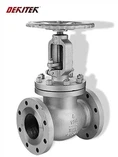
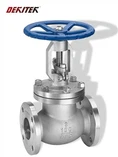
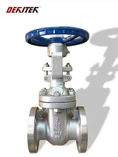
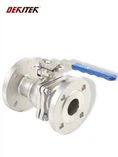

Wenzhou Deki Valve Co., Ltd., is a professional industrial valve supplier specialized in valve research, design, manufacturing, sales and services. Our company's main products include: gate valves, butterfly valves, ball valves, check valves, globe valves, plug valves, filters and etc. Our products are used by our customers in the Oil and Gas Refinery, Nuclear Power Plant, Chemical Plant, Marine Power Station and Water discharge and supply industries.
Why Choose Us
Professional Team
Our professional team collaborate and communicate effectively with one another, and are committed to delivering high-quality results. They are capable of handling complex challenges and projects that require their specialized expertise and experience.
Advanced Equipment
To keep the consistency of our product quality control, we have equipped state-of-the-art lathe machines, CNCs, and inspection labs for material inspection and valve production and testing.
One stop solution
From the begining inquiry and throughout the entire process until you receive the goods. we are dedicated to supporting you every step of the way.
High Quality
We take pride in the craftsmanship of our products and ensure that each one meets our strict standards for quality.
Global Shipping
Our products support global shipping and the logistics system is complete, so our customers are all over the world.
Competitive Price
We have professional sourcing team and cost accounting team, stive to reduce cost and profit and provide you a good price.

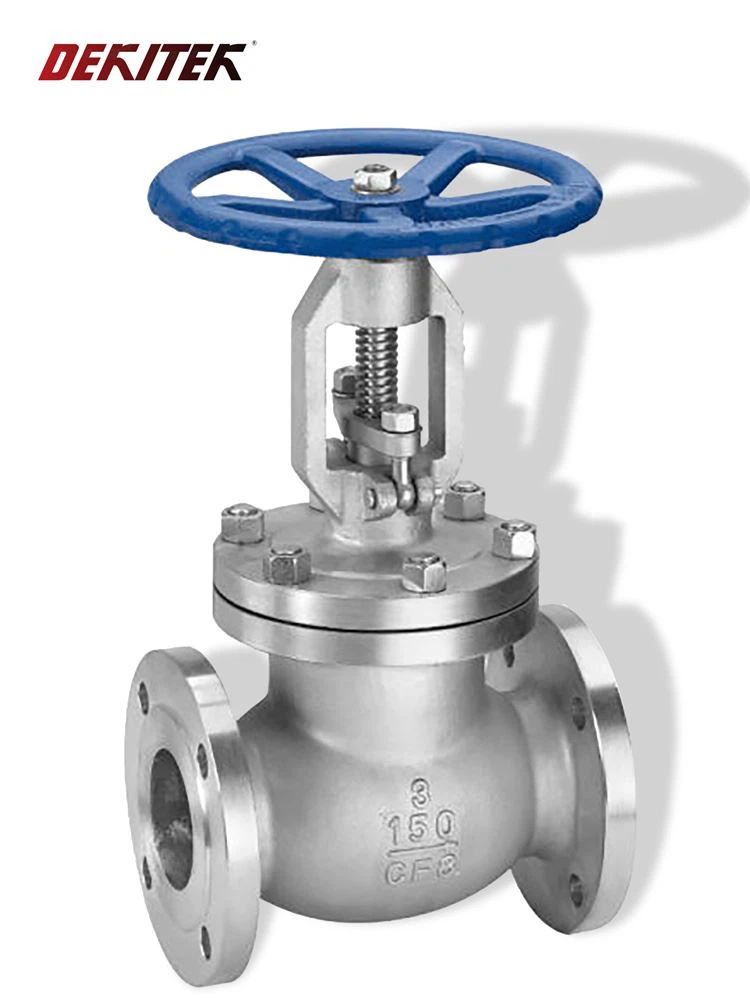


The cast steel globe valve is one of the most common forms of the valve. There are many benefits by using this valve. Then we associate the various shapes of globe valves with other kinds of valves, such as gate valves and ball valves.
Benefits of Cast Steel Globe Valve
Durability
Cast steel globe valves are known for their robustness and resilience. They can withstand high pressures and temperatures, making them suitable for demanding industrial environments. Their durability ensures long-term reliability, reducing the need for frequent replacements.
Corrosion Resistance
Cast steel is inherently resistant to corrosion, which is crucial for valves operating in corrosive environments. This resistance extends the lifespan of the valve and minimizes maintenance requirements, ultimately saving time and costs for users.
Versatility
Cast steel globe valves are versatile and can be used in a wide range of applications across different industries. Whether it's in oil and gas, petrochemicals, power generation, or water treatment, these valves offer consistent performance and reliability.
Pressure Handling Capability
Due to their sturdy construction, cast steel globe valves are capable of handling high-pressure systems effectively. They provide tight shut-off, preventing leakage even under extreme pressure conditions, thus ensuring operational safety.

Cast steel globe valves are made up of three parts: a hand wheel, a bonnet, and a body. The stem is housed in the bonnet, and it screws up and down in the bonnet when the hand wheel is turned. A disk or plug is a small section at the end of the stem that can be metallic or non-metallic and come in a variety of shapes, reliant on the use.
A seat is contained in the globe-shaped body to which the valve is entitled. The seat is a metal frame with a hole that separates the body into two chambers and lets fluid pass through. Fluid flows up through the opening in the seat when the valve is open.
When a globe valve plug or disk is kept in the seat, fluid flow is clogged. When the valve is open, the fluid must revolutionize directions twice to pass through the seat, resulting in substantial head loss.
Globe valves can throttle or control flow, which is one of their vital advantages. They might be partially open in addition to being closed or open. This lets you modify the flow without having to stop it.
Chemical Processing
Globe valves are used to control the flow of chemicals through pipelines. Their tight sealing capabilities are crucial for ensuring that hazardous materials are handled safely.
Power Generation
In power plants, these valves are used to control the flow of steam and other fluids. Their precise control is critical for the efficient generation of power.
Water and Wastewater Treatment
They are used for throttling purposes in water treatment facilities to regulate the flow of water or other treatment chemicals through the system.
Oil and Gas Industry
Globe valves are used to control the flow of oil and gas in pipelines. Their robust design and tight sealing are critical in high-pressure environments.
HVAC Systems
These valves are often used in heating, ventilation, and air conditioning systems to control the flow and pressure of coolants or refrigerants.
Marine Applications
In ships and submarines, globe valves are used for managing the flow of fluids through the intricate network of pipes.
Food and Beverage Industry
Employed for regulating the flow of liquids during various stages of processing, ensuring product quality and safety.
Clean and dust all globe valve parts.
Attach the valve stem and disc in the arrangement provided.
Rub threads with grease and, from below, screw in the stem through the yoke nut. Gland and gland flanges should be arranged in the correct order in between.
Attach the wheel handle and nut, and screw it tight.
Turn the handle and allow the valve stem and disc to move down.
Attach a new gasket to the valve body in the space provided, applying grease on it for high-temperature conditions.
Attach the valve disc to the seat and center it correctly.
Set, but do not tighten the nuts and bolts. Check from the space between the valve body and the bonnet if the valve is properly centered.
Open the valve and observe how the space between the valve body and bonnet reduces until they come together.
Set the gland packings in the stuffing box. Ensure that the cut parts do not have any space between them and that the packings are staggered.
Push the gland nut and flange down while you insert the gland bolts. Gland bolts should be loosely tightened. The bolts will be tightened during installation.
Check the valve disc movement by opening and closing several times. Check through the flanges to see if the disc is placed correctly on the valve seats when closed.
Factors Affecting the Lifespan of a Globe Valve
Material Type
Have you ever considered the significant role the material of your globe valve plays in its lifespan? Corrosion, a common issue, arises when the material of the valve clashes with the system fluid. Even the valve disc, a crucial part of the valve, doesn't escape from corrosive testing fluids. Let's now examine the impact of operating conditions on the longevity of your globe valve.
Operating Conditions
A globe valve's lifespan depends greatly on its operating conditions. When high-temperature steam flows through the valve, it creates a considerable temperature difference within the valve. As time progresses, the globe valve may become rigid, and its ability to maintain pressure could diminish. This deterioration can be seen through leakages, signalling potential problems with the valve seat or plug. Managing these operating conditions effectively is crucial to prolonging the life of your globe valve.
Techniques to Increase the Life of Globe Valve
The lifespan of a globe valve doesn't require complex knowledge. It boils down to two fundamental aspects: consistent maintenance and proper installation. Master these, and your globe valve will function effectively for an extended period. Now, we will discuss these methods in detail.
Regular Maintenance
To extend the life of your globe valve, follow these steps during your regular maintenance checks:
Set a regular inspection schedule for your valve systems.
Monitor the stem's motion closely. Exposure to the environment might cause it to accumulate dirt or grit. Regular lubrication of the stem ensures the valve operates smoothly.
During these inspections, look for signs of wear on the external hardware, such as nuts, washers, and bolts. Replace promptly if you detect wear, and tighten them adequately.
What are different globe valve parts
Body
The body is the main structure of the valve that keeps everything together. This part contains all internal parts of the globe valve to allow the control of the substance that needs regulation. The opening of the body contains ports (usually two or three ports) to enable the movement of the fluid to the inside or outside of the globe valve.
Seat Ring
The seat is among other globe valve parts that seal the space between the disk/stem and bonnet. The seat ring can be screwed into the valve or torqued. The seat is also known as a seat ring and provides a shutoff surface that's stable and also replaceable. Seat rings can hold the cage firmly to the body of the valve.
Cage
The cage is also a globe valve part which we already mentioned its name while we explained the function of the seat ring! This cage has been designed to surround the stem and the plug within the globe valve. The cage is among the parts that determine the flow within the globe valve. With the movement of the plug, the flow can increase or decrease. Based on the layout and the design of the openings, the flow of the material inside the valve differs.
Bonnet
The bonnet is one of the outer globe valve parts that's connected to the body to provide a leak-proof closure. There are different bonnet types such as bolted, screw-in, or union bonnet that are used in different globe valves. Each of these bonnet types has its own advantages. For example, the union bonnet not only adds strength to the body but is also great for applications that need regular cleaning or inspection. The screw-in bonnet with its simple design offers a pressure-tight seal. And the last bonnet type, the bolted bonnets that are attached with bolts are great for higher pressures.
Stem
The stem is part of the globe valve that connects the disk to the handwheel or the valve actuator to transmit the actuation force. Since it connects the actuator to the parts inside of the globe valve, it is considered as one of the critical globe valve parts. If the valves are controlled by actuators, the stem is smooth but for the manual valves, they are threaded.
Plug (Disk)
The plug or the disk is among the essential globe valve parts. It moves perpendicular to the seat and its movement can block or free the flow since it works as a moveable physical barrier. When the valve is closed, the plug sits against the seat to block the flow and when it sits above the seats. it enables the flow of the material.
Application and Fluid Compatibility: One of the first considerations when selecting a globe valve is the application and the type of fluid it will be handling. Different applications require different materials and designs to ensure optimal performance and durability. Consider factors such as the fluid's temperature, pressure, corrosiveness, and viscosity to choose the right materials and valve design. Consult with experienced Globe Valve Manufacturers and Suppliers who can provide guidance on material compatibility.
Valve Size and Pressure Rating: The valve size and pressure rating must match your system's requirements. Oversized or undersized globe valves can lead to inefficiencies, increased energy consumption, or even system failures. Refer to industry standards and consult with experts to determine the appropriate valve size and pressure rating for your application.
Flow Control: Globe valves are versatile when it comes to flow control. They can be used for on-off service or for throttling and regulating flow. If precise flow control is required, consider selecting a valve with a design optimized for throttling applications. Keep in mind that improper flow control can lead to excessive wear and reduced valve lifespan.
Materials of Construction: Globe valves are available in various materials, including stainless steel, brass, bronze, cast iron, and more. The choice of material depends on factors like fluid compatibility, temperature, and corrosion resistance. For example, stainless steel is suitable for corrosive fluids, while bronze is often chosen for seawater applications. Consult with Globe Valve Manufacturers and Suppliers to determine the best material for your needs.
Bonnet Type: Globe valves have two common bonnet types: bolted bonnet and pressure seal bonnet. The choice between the two depends on the pressure and temperature requirements of your system. Pressure seal bonnets are suitable for high-pressure applications, while bolted bonnets are generally used for lower-pressure systems.
Sealing Mechanism: Globe valves can have different sealing mechanisms, including globe, plug, and needle. The choice of sealing mechanism affects the valve's ability to provide a tight shut-off and control the flow accurately. Consider the level of leakage tolerance acceptable for your application and choose the appropriate sealing mechanism accordingly.
Actuation: Globe valves can be operated manually, pneumatically, electrically, or hydraulically. The choice of actuation depends on factors like the valve's size, accessibility, and the need for remote control. For large or hard-to-reach valves, automated actuation systems may be necessary for convenience and efficiency.
Maintenance and Accessibility: Globe valves, like all mechanical equipment, require regular maintenance. Consider ease of access for maintenance when selecting a valve. Valves with readily accessible components and spare parts availability can reduce downtime and maintenance costs.
Compliance with Standards: Ensure that the selected globe valve complies with relevant industry standards and certifications. Compliance with standards ensures the valve's performance, safety, and reliability in your application.
Supplier Reputation: Finally, choose Globe Valve Manufacturers and Suppliers with a strong reputation for quality, reliability, and customer support. A reputable supplier can provide valuable guidance, technical expertise, and after-sales support, ensuring a smooth and successful valve installation.
Our Factory
Our company is well in line with major international standards, such as ANSI/API, BS, DIN, JIS, GB and etc. As the rapid growth of the demands from foreign markets, we have integrated custom valve design, manufacturing, and engineering into our production. Our valves and flow control components are exported to all over the world, like Southeast Asia, Middle East, Europe, Russia, North and South America, Africa, and etc. We continue to expand our customer bases under our unwavering commitment to our customers, to meet and exceed their expectations.

FAQ
Hot Tags: cast steel globe valve, China cast steel globe valve, globe valve for middle east market, ceramic butterfly valve, globe valve for cooling, globe valve in dn65 size, b62 gate valve, ball valve for gas pipeline


