

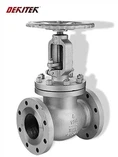
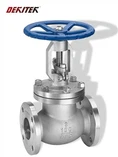
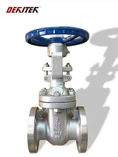
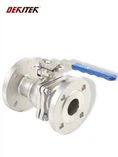

Wenzhou Deki Valve Co., Ltd., is a professional industrial valve supplier specialized in valve research, design, manufacturing, sales and services. Our company's main products include: gate valves, butterfly valves, ball valves, check valves, globe valves, plug valves, filters and etc. Our products are used by our customers in the Oil and Gas Refinery, Nuclear Power Plant, Chemical Plant, Marine Power Station and Water discharge and supply industries.
Why Choose Us
Professional Team
Our professional team collaborate and communicate effectively with one another, and are committed to delivering high-quality results. They are capable of handling complex challenges and projects that require their specialized expertise and experience.
Advanced Equipment
To keep the consistency of our product quality control, we have equipped state-of-the-art lathe machines, CNCs, and inspection labs for material inspection and valve production and testing.
One stop solution
From the begining inquiry and throughout the entire process until you receive the goods. we are dedicated to supporting you every step of the way.
High Quality
We take pride in the craftsmanship of our products and ensure that each one meets our strict standards for quality.
Global Shipping
Our products support global shipping and the logistics system is complete, so our customers are all over the world.
Competitive Price
We have professional sourcing team and cost accounting team, stive to reduce cost and profit and provide you a good price.

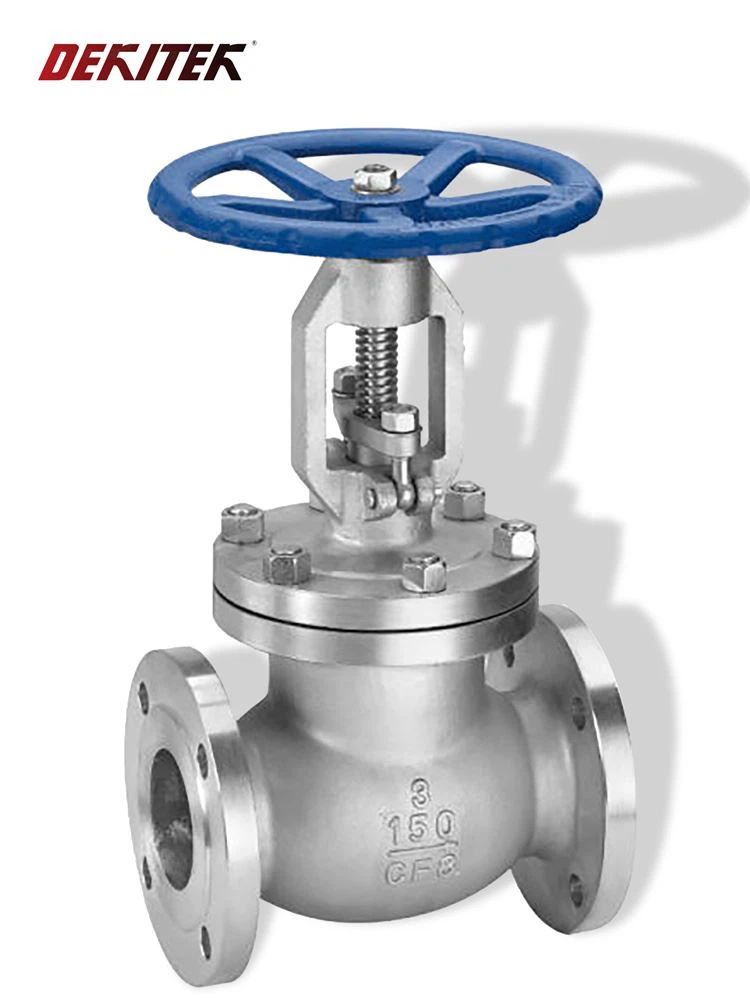


Alloy Steel Valves are used in various applications such as water lines, oil and gas transmission lines, chemical, petrochemical, food processing and in power generation plant applications. The alloys vary in mechanical and physical properties by the differences in the chemical compositions.
Ease of Operation
Globe valves are easy to operate because they only require a quarter turn to open or close. A Handle or a lever attached to the stem opens or closes the valve This makes them ideal for applications where quick operation is necessary, such as in emergency situations.
Maintainability
Operating and maintaining a globe valve is easier than other types of valves. Globe valves have a simple design and few moving parts, which makes them less likely to break down.
Leakage Rate
Globe valves have a lower leakage rate than other types of valves. This is because the disk in a globe valve seats more snugly against the port, which creates a tighter seal.
Versatility
Unlike other types of valves, globe valves are adaptable and can function in a wider range of settings. This is due to the different sizes, materials, and pressure ratings that they come in.
Clog Resistance
Globe valves are less likely to clog than other types of valves. This is because the disk in a globe valve can be easily removed for cleaning.
Long Service Life
They have a long service life of up to 20 years with proper maintenance. They can withstand high pressures and temperatures.
Contamination Resistant
Their design makes them resistant to contamination and fouling. They control fluid flow in a variety of applications, such as regulating pressure, managing temperature, and controlling the level of a liquid.
Components of Globe Valves
Seat
In the globe valve seating arrangement, there is either integration or screwed up into the body. The entire system provides a seal between the bonnet and stem and this is also known as the backseat. It prevents pressure from forming against the packing in the opening position of the valve.
The disk to seat ring connection sets close to the right angle, which minimizes the chances of seal leakage.
Actuator
This component operates the stem and disk in order to open and close the valve. Considering the needs of the system, there exist many kinds of actuators such as Manual/hand, Automatic and electric. Also, the speed of the actuators varies, and that should be selected in regard to the system and availability of energy to the actuator.
Electric actuators allow manual, automatic, and semi-automatic operation of the valve. Electric motors are reversible and useful for opening and closing functionality.
Whereas the Pneumatic actuator creates linear or rotary motion from a power source. For a variety of industrial applications, a pneumatic valve actuator is more reliable, affordable, and preferred over electric valve actuators.
Trim
In the globe valve, trim consists of the disk and the seat ring. It is enclosed within the valve body and located in the center of the valve and gets lowered with horizontal seating. The disk attached to the seat ring restricts the flow throughout the system. The disk for the globe valve is further divided into many kinds of arrangement; the most common types include the Ball type, Needle type, and composite type.
The ball type is designed to be used in low pressure and temperature systems. It helps to throttle flow, with the basic function to start or stop the flow.
In the Needle disk, the design provides better throttling in comparison to the other design types. It is easy to find many long tapered plug disks to match certain flow conditions.
Another one is the composition disk that is designed to achieve better shutoff. In this type, a hard, non-metallic insert ring is used.
Globe Valve Materials
When it comes to designing and manufacturing globe valves, different materials can be used such as metals, alloys, as well as plastics. The material selection can be made in accordance with the industrial application. Also, it is important to consider the type, construction, and temperature of the system and it is better to consult the service providers to choose the specific material in the valve.
Material
Various materials such as cast iron, steel, and plastics, are used in producing globe valves because of their application in most industries. Selecting an appropriate globe valve requires knowledge of the qualities of the media passing through the valve.
Globe valves made with stainless steel are usually used for high-temperature conditions as it is resistant to seizing and galling. Manufacturers should be consulted to know the specific globe valve for different conditions.
Design
Globe valve designs are classified into two types: Valve Body Design and Disc Design. The globe valve body design includes the standard pattern, angle pattern, and oblique pattern.
The standard pattern valve offers the most obstruction to flow, leading to a higher fluid pressure drop in this valve, while the angle pattern valve is suitable for fluids with slug flow. The oblique pattern valves are hardly susceptible to erosion.
The globe valve disc design includes the composition disc, plug disc, and ball disc. The composition disc is best suited for water system operations, while the plug discs have the best flow regulation of the three designs. The ball disc is appropriate for low temperature and pressure conditions.
Valve Sizes
Valve sizing is essential for throttling valves as the sizes determine how fluid flows through the valve. Selecting the globe valve size requires research and knowledge of the requirements.the manufacturer sizes the valve for a buyer. Sizing a globe valve is different for each of its functions.
As a throttle valve, the globe valve size is important for calculating the pressure drop at specific positions in the valve.
While functioning in on-off operations, the pressure drop is not monitored as the globe valve functions to allow or restrict fluid. A smaller valve size may restrict the flow, but it is a more economical option than the larger valve sizes.

● The right-angle fluid only needs to change its direction once, so that the pressure drop through this valve is smaller than that of a conventional shut-off valve. The valve body is mostly forged, which is suitable for shut-off valves with smaller passages and higher pressures.
● The straight-through type is the most common structure. The medium inlet and outlet channels are 180° in the same direction, but the fluid resistance is the largest.
● In the direct-flow or Y-shaped stop valve, the flow channel of the valve body is in an oblique line with the main flow channel, and the fluid resistance is small. It is mostly used for fluids containing solid particles or high viscosity.
Step-by-Step Guide to Cleaning – Globe Valve Maintenance
Preparation: Begin by shutting off the valve and relieving any pressure in the system. This is essential to ensure safety during the cleaning process.
Disassembly: Carefully disassemble the globe valve, paying close attention to the arrangement of components to facilitate reassembly. Inspect each part for signs of wear or damage.
Cleaning: Utilize a suitable cleaning agent and a soft brush to gently remove any built-up debris and contaminants from the valve components. Ensure thorough cleaning of each part to eliminate any potential sources of obstruction.
Inspection: After cleaning, inspect all components for any remaining impurities or signs of deterioration. This meticulous examination is crucial for identifying any issues that may compromise the valve's performance.
Reassembly: Once all components are thoroughly cleaned and inspected, carefully reassemble the globe valve, ensuring that each part is securely fitted in its respective position.
Testing: Conduct a comprehensive testing procedure to verify the valve's functionality and assess the effectiveness of the cleaning process.
A globe valve is a multi-directional device that can open, close or throttle fluid flow. It consists of five major parts: the valve body, bonnet, handwheel, stem, and plug.
Valve Stem: The stem of a globe valve connects with the handwheel and operates the opening or closing action of the valve. It may be either smooth sliding or threaded.
Bonnet: The bonnet of a globe valve attaches to the stem and protects it from damage. Its seal, made from wear-resistant material, provides leak-proof closure for any media inside of the valve.
Ball Disc: The valve disc is another important element of a globe valve, used for low-temperature and low-pressure applications.
Seat Ring: The seat ring of a globe valve is where the disc fits and stops the fluid flow. Generally, this part can be screwed or threaded into an existing thread cut in the valve body to prevent removal during repairs or servicing.
Disc and Seat Capabilities: Globe valve discs come in various patterns, each providing its own advantages.
Globe valves are typically mounted, so the pressure is above the disk in high-temperature steam service and below it in lower-temperature or lower-pressure applications. This makes for easier operation and protects packing while reducing erosive action on seat and disk faces.
Globe valves are designed for straight-through flow with ports oriented at right angles to the pipe axis.they come in various configurations, most often two-port but also three-port varieties.
Applications Of Globe Valves
Petrochemical Industry
In the petrochemical industry, where various fluids with different properties need to be controlled and isolated, globe valves are commonly employed. They are used in processes such as refining, distillation, and fluid transfer.
Power Generation
Power plants rely on globe valves to regulate the flow of steam and other fluids, ensuring the safe and efficient operation of turbines, boilers, and other equipment. Globe valves are particularly useful for controlling steam flow at various pressure points.
Oil And Gas Industry
The oil and gas industry extensively employs globe valves to control the flow of crude oil, natural gas, and other hydrocarbons. These valves help maintain the integrity of pipelines and prevent leaks.
Pharmaceutical And Chemical Industry
In the pharmaceutical and chemical sectors, precise control over fluid flow and shut-off capabilities are critical to maintaining product quality and safety. Globe valves are used in processes such as mixing, dosing, and chemical reactions.
HVAC Systems
Globe valves are commonly found in heating, ventilation, and air conditioning (HVAC) systems. They are used to control the flow of hot or cold water, refrigerants, and other fluids to maintain temperature and pressure in buildings.
Water Treatment
In water treatment plants, globe valves are employed to regulate the flow of water, chemicals, and wastewater. They help ensure that the right mix of chemicals is added for purification and that water is distributed efficiently.
With the development of society, the demand for valve is increasingly rising. Valves are pervasive, as it has emerged as an irreplaceable role in building, industry, people's daily life and other sectors. The wide use of valves spawns more manufacturers, then the variety of valve also increases. Among all of the valves, globe valve and gate valve are the most popular two.
Gate valve is a self-sealing valve. Traditional gate valves are basically sealed manually. As valve technology proceeds, today's gate valves are able to press the sealing face to another sealing face on the other side by the pressure generated by the medium flow. As a result, the two sealing surfaces are tightly combined to ensure a good sealing performance. This is the so-called self-sealing.
The wedge serves as the part to open and close the gate valve. However, it can only do the move completely, in other words, the gate valve can not be put in regulating the flow. Wedge moves along with the stem, vertical to the flow. Through the nut at the top of the valve and the guide groove on the upper part of the valve body, the rotary motion of the handwheel is converted into a straight-line motion of the stem, that is to say, the torque is transferred into thrust.
Globe valve is one of the most widely used valves. There will not be much friction pressure in the use of globe valve. What's more, reliable sealing performance, durability, easy manufacture and large-scale cost saving are also ensured.
The disc of globe valve is a plug. Driven by the stem, the plug rotates along the axis of the body, firmly pressing onto the sealing face of the seat. The globe valve must be installed in accordance with the given direction marked on the valve body.
Based on what are mentioned above, the differences between gate valve and globe valve are clear.
Globe valve must be sealed forcefully by external pressure. When it is fully closed, the plug will partially contact with the sealing face. Because of the small contact area, the relative friction and the damage to the sealing face are small, too. As for gate valve, it is sealed by the pressure by the flow.
When it comes to flow direction, the medium should go through the globe valve from up to down, while there is no specific requirements to gate valve.
Our Factory
Our company is well in line with major international standards, such as ANSI/API, BS, DIN, JIS, GB and etc. As the rapid growth of the demands from foreign markets, we have integrated custom valve design, manufacturing, and engineering into our production. Our valves and flow control components are exported to all over the world, like Southeast Asia, Middle East, Europe, Russia, North and South America, Africa, and etc. We continue to expand our customer bases under our unwavering commitment to our customers, to meet and exceed their expectations.

FAQ
Hot Tags: alloy steel globe valve, China alloy steel globe valve, globe valve for open environments, globe valve for retail, check valve cast iron, globe valve for tunnel environments, 15mm non return valve, globe valve with metal seat


