

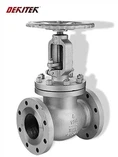
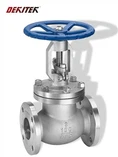
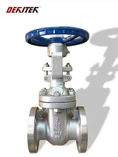
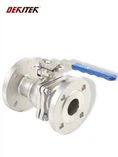
Wenzhou Deki Valve Co., Ltd., is a professional industrial valve supplier specialized in valve research, design, manufacturing, sales and services. Our company's main products include: gate valves, butterfly valves, ball valves, check valves, globe valves, plug valves, filters and etc. Our products are used by our customers in the Oil and Gas Refinery, Nuclear Power Plant, Chemical Plant, Marine Power Station and Water discharge and supply industries.
Why Choose Us
Professional Team
Our professional team collaborate and communicate effectively with one another, and are committed to delivering high-quality results. They are capable of handling complex challenges and projects that require their specialized expertise and experience.
Advanced Equipment
To keep the consistency of our product quality control, we have equipped state-of-the-art lathe machines, CNCs, and inspection labs for material inspection and valve production and testing.
One stop solution
From the begining inquiry and throughout the entire process until you receive the goods. we are dedicated to supporting you every step of the way.
High Quality
We take pride in the craftsmanship of our products and ensure that each one meets our strict standards for quality.
Global Shipping
Our products support global shipping and the logistics system is complete, so our customers are all over the world.
Competitive Price
We have professional sourcing team and cost accounting team, stive to reduce cost and profit and provide you a good price.


What is Stainless Steel Globe Valve
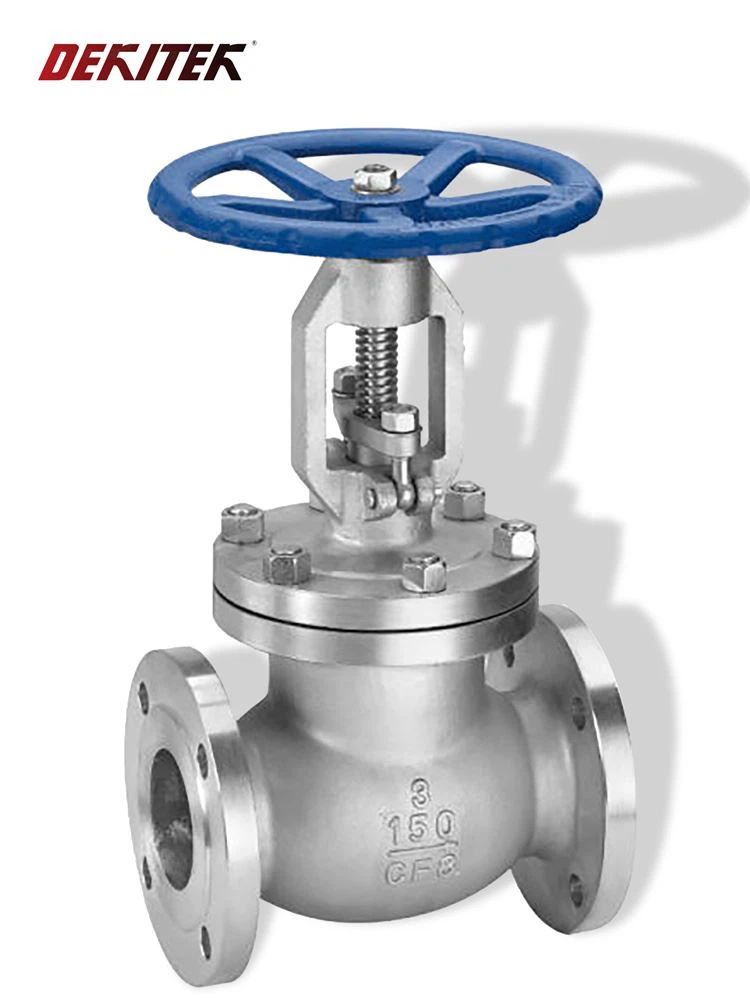
A globe valve, different from ball valve, is a type of valve used for regulating flow in a pipeline, consisting of a movable plug or disc element and a stationary ring seat in a generally spherical body.
Benefits of Stainless Steel Globe Valve
Corrosion resistance
Stainless steel is a corrosion-resistant material that is well-suited for use in a variety of applications.
Durability
Stainless steel is a durable material that can withstand a variety of conditions.
Versatility
Stainless steel globe valves can be used in a variety of applications.
Body: The body is the main housing of the valve. It is typically made of stainless steel.
Ball: The ball is the valve element that controls the flow of fluid. It is typically made of stainless steel or a hard-wearing material, such as tungsten carbide.
Seat: The seat is the surface that the ball seats against to seal the valve closed. It is typically made of stainless steel or a hard-wearing material, such as tungsten carbide.
Stem: The stem is the shaft that extends from the valve body and is used to operate the valve. It is typically made of stainless steel.
Packing: The packing is a material that is used to seal the stem against the body. It is typically made of a soft material, such as PTFE or graphite.
Choosing The Right Globe Valve: Selection Tips And Considerations
Application and Fluid Compatibility: One of the first considerations when selecting a globe valve is the application and the type of fluid it will be handling. Different applications require different materials and designs to ensure optimal performance and durability. Consider factors such as the fluid's temperature, pressure, corrosiveness, and viscosity to choose the right materials and valve design. Consult with experienced Globe Valve Manufacturers and Suppliers who can provide guidance on material compatibility.
Valve Size and Pressure Rating: The valve size and pressure rating must match your system's requirements. Oversized or undersized globe valves can lead to inefficiencies, increased energy consumption, or even system failures. Refer to industry standards and consult with experts to determine the appropriate valve size and pressure rating for your application.
Flow Control: Globe valves are versatile when it comes to flow control. They can be used for on-off service or for throttling and regulating flow. If precise flow control is required, consider selecting a valve with a design optimized for throttling applications. Keep in mind that improper flow control can lead to excessive wear and reduced valve lifespan.
Materials of Construction: Globe valves are available in various materials, including stainless steel, brass, bronze, cast iron, and more. The choice of material depends on factors like fluid compatibility, temperature, and corrosion resistance. For example, stainless steel is suitable for corrosive fluids, while bronze is often chosen for seawater applications. Consult with Globe Valve Manufacturers and Suppliers to determine the best material for your needs.
Bonnet Type: Globe valves have two common bonnet types: bolted bonnet and pressure seal bonnet. The choice between the two depends on the pressure and temperature requirements of your system. Pressure seal bonnets are suitable for high-pressure applications, while bolted bonnets are generally used for lower-pressure systems.
Sealing Mechanism: Globe valves can have different sealing mechanisms, including globe, plug, and needle. The choice of sealing mechanism affects the valve's ability to provide a tight shut-off and control the flow accurately. Consider the level of leakage tolerance acceptable for your application and choose the appropriate sealing mechanism accordingly.
Actuation: Globe valves can be operated manually, pneumatically, electrically, or hydraulically. The choice of actuation depends on factors like the valve's size, accessibility, and the need for remote control. For large or hard-to-reach valves, automated actuation systems may be necessary for convenience and efficiency.
Maintenance and Accessibility: Globe valves, like all mechanical equipment, require regular maintenance. Consider ease of access for maintenance when selecting a valve. Valves with readily accessible components and spare parts availability can reduce downtime and maintenance costs.
Compliance with Standards: Ensure that the selected globe valve complies with relevant industry standards and certifications. Compliance with standards ensures the valve's performance, safety, and reliability in your application.
Supplier Reputation: Finally, choose Globe Valve Manufacturers and Suppliers with a strong reputation for quality, reliability, and customer support. A reputable supplier can provide valuable guidance, technical expertise, and after-sales support, ensuring a smooth and successful valve installation.

In many instances, the ideal stainless steel globe valve size is based on the specific needs of a particular application.
Various projects require different sizes of this device to guarantee efficiency and performance.
Ensure you figure out the specific needs of your application to determine the suitable size of globe valve it requires.
An essential factor such as fluid flow rate determines the ideal size of stainless steel glove you'll need.
Globe valves with larger bore diameters provide better fluid flow compared to smaller bore diameters.
Nevertheless, the whole system pressure is exerted on the disc is often transferred to the valve stem.
Thus the practical size limit for a globe valve to consider is 2" – 12" (90#) unless there is a special exception.
Stainless steel globe valve sizes vary up to 2"-24" (150#).
But larger sizes would need massive force to be exerted on the stem to regulate the valve under pressure.
Several engineering applications sizing of globe valves should be in a manner it operates between 20-80% open at optimum required flow rate.
The most important thing to understand about globe valve direction flow is that they have specific flow directions. Depending on the application, a globe valve will have fluid flow above or below the disc.
Globe Valve Direction Flow Globe valves designed to have the pressure flowing under the disc are used in low-pressure and low-temperature applications such as general plumbing. This type of flow direction lets the disc rotate freely on the valve stem. This allows the disc to fit properly against the seat as the valve closes, which results in less seat leakage
Globe valves can also have pressure flow above the seat when applied as part of high-pressure and high-temperature systems. This type of flow direction helps to prevent the stem from contracting when it cools down and will keep the disc from lifting off the seat.
To determine the globe valve flow direction, simply look at its body. Here, you should find an arrow indicating the valve flow direction.

Leakage at the Stem
● Issue: Fluid leakage is observed around the valve stem.
● Solution: First, attempt to tighten the packing gland to compress the packing material and create a better seal. If the leakage persists, replace the packing material or consider repacking the entire valve.
Leakage at the Flange Connections
● Issue: Fluid leakage is detected at the flange connections.
● Solution: Inspect the flange bolts for proper tightness and ensure they are evenly tightened following a crisscross pattern. If the leakage continues, replace the flanged gasket with a new one compatible with the fluid and operating conditions.
Difficulty in Operation
● Issue: The valve becomes difficult to operate or the handwheel is hard to turn.
● Solution: Check for misalignment, bent stems, or damaged actuators. Lubricate the stem and moving parts according to the valve manufacturer's recommendations. If the problem persists, disassemble the valve to inspect for internal damage or obstructions and repair or replace the affected components as needed.
Poor Flow Control
● Issue: The valve fails to provide accurate flow control or the flow rate does not correspond to the handwheel position.
● Solution: Inspect the disc and seat for wear, damage, or contamination. Replace or recondition the disc and seat if necessary.check the stem and actuator for proper operation and alignment.
Excessive Noise or Vibration
● Issue: The valve produces excessive noise or vibration during operation.
● Solution: Excessive noise or vibration may indicate cavitation, water hammer, or turbulent flow. Address the root cause by adjusting the flow rate, installing a valve with a different design, or adding additional flow control valves, accessories, or devices like a pressure-reducing valve or a flow control valve.
Failure to Close Fully
● Issue: The valve does not close completely, leading to fluid leakage through the valve.
● Solution: Inspect the disc and seat for damage, wear, or debris that may be preventing a tight seal. Clean, repair, or replace the disc and seat as necessary.ensure that the valve stem is not bent or obstructed, preventing full closure.
Types of stainless steel globe valves
T-pattern stainless steel globe valve
This is a stainless steel globe valve that has a T-shaped body. This valve is also known as the standard pattern stainless steel globe valve. This is the most common type of stainless steel globe valve. Stainless steel globe valve manufacturers design these valves with a horizontal setting of the valve seat so that the disc and the stem can move perpendicular to the direction of fluid flow. This type of stainless steel globe valve has a flow passage that has twisting and which is known for causing fluid flow resistance in all T pattern valves. The design of a T-pattern globe valve has a high-pressure drop relative to other valves. Stainless steel globe valve manufacturers recommend these valves for use in harsh throttling applications and in applications where pressure loss is not a major technical concern.
Y-pattern stainless steel globe valve
This type of stainless steel globe valve is also known as oblique pattern stainless steel globe valve. Stainless steel globe valve manufacturers design this valve such that the stem and seat are oriented at an angle of 45o degrees to the pipeline axis. Such orientation helps to provide straight fluid flow when the valve is fully opened and which results to low pressured drop unlike in the T-pattern stainless steel globe valve. This is the valve that is used as the best alternative to the T-pattern stainless steel globe valve in case of a high-pressure drop. This is because this Y-pattern globe valve has a low-pressure drop.
Angle pattern stainless globe valve
This is a type of stainless steel globe valve in which the inlet and outlet ports are positioned at 90o degrees.the fluid flow occurs at 90o degrees. Angle pattern stainless steel globe valves have a lower coefficient of fluid flow relative to the Y pattern stainless steel globe valves. These valves are used in applications that have pulsating flow since they can handle the slugging effect of that flow. When an angle pattern stainless steel globe valve is mounted near a pipe bend it helps to reduce fluid flow resistance, unlike the T-pattern valve.when the angle globe valve is mounted near a pipe bend it helps to reduce the number of pipe joints.
Threaded bonnet stainless steel globe valve
This is a stainless steel globe valve in which the bonnet and the body are connected using threads. Stainless steel globe valve manufacturers design the body with male threads and the bonnet with female threads or vice versa. This type of stainless steel globe valve is the least expensive and it employs a simple design. The threaded bonnet stainless steel globe valve is suitable for use in low pressure and low-cost applications.
Flanged bonnet stainless steel globe valve
This is a stainless steel globe valve in which the bonnet and the body have flanged ends. Stainless steel globe valve manufacturers design these valves with flanged ends so that the bonnet and body can be connected using several bolts to guarantee a very tight seal. Flanged bonnet stainless steel globe valves are easier to assemble and install. These flange globe valves are suitable for use in high pressure and high-temperature applications such as steam power generation plants. The flanged ends and bolts result in zero leakage connection. the use of the bolts and flanges end up making these valves heavier relative to other valves.
Welded bonnet stainless steel globe valve
This is the type of stainless steel globe valve in which the bonnet and the body are connected using welding. This type of stainless steel globe valve is used where the fluid to be conveyed is very hazardous and or where the valve repair and maintenance is not desired. Such applications include the transfer of petroleum products and hazardous fluids like acids. The welding method of connection ensures that there is zero leakage of such hazardous fluids. The welded bonnet stainless steel globe valve undergoes a non-destructive test on the weld perimeter to ensure that there are no defects emanating from the weld which may cause fluid leakage. Welded stainless steel globe valves are suitable for use in high-pressure and high-temperature applications.
Our Factory
Our company is well in line with major international standards, such as ANSI/API, BS, DIN, JIS, GB and etc. As the rapid growth of the demands from foreign markets, we have integrated custom valve design, manufacturing, and engineering into our production. Our valves and flow control components are exported to all over the world, like Southeast Asia, Middle East, Europe, Russia, North and South America, Africa, and etc. We continue to expand our customer bases under our unwavering commitment to our customers, to meet and exceed their expectations.

FAQ
Hot Tags: stainless steel globe valve, China stainless steel globe valve, globe valve for filtration, globe valve for reaction, globe valve for australian market, globe valve for blending, crane check valve, electric three way valve


