


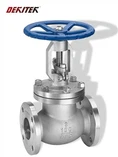

As a supplier of Pneumatic Actuator Gate Valves, I've had extensive experience with these products in various industrial applications. While pneumatic actuator gate valves offer numerous advantages such as quick operation, reliability in many cases, and ease of automation, it's essential to also discuss their disadvantages. Understanding these drawbacks can help customers make more informed decisions when choosing the right valve for their specific needs.
1. Limited Control Precision
One of the primary disadvantages of pneumatic actuator gate valves is their relatively limited control precision. Pneumatic actuators operate based on air pressure to open and close the gate. The movement of the gate is often a binary action - fully open or fully closed, or in some cases, it can be adjusted to a few pre - set intermediate positions. However, achieving fine - tuned, continuous control of the flow rate is challenging.
In applications where precise flow regulation is required, such as in chemical processing plants where the exact amount of a reactant needs to be added to a reaction vessel, or in some water treatment processes where the flow of chemicals for disinfection must be carefully calibrated, pneumatic actuator gate valves may not be the best choice. For instance, if a process requires a flow rate to be maintained at 50.5 liters per minute, a pneumatic actuator gate valve may struggle to achieve and hold this exact value due to the nature of its on - off or step - wise operation.
2. Susceptibility to Air Supply Issues
Pneumatic actuator gate valves rely on a consistent and clean air supply to function properly. Any issues with the air supply can lead to problems with the valve's operation.
- Pressure Fluctuations: If the air pressure supplied to the actuator fluctuates, it can cause inconsistent movement of the gate. For example, a sudden drop in air pressure may result in the gate not fully opening or closing, leading to leakage or improper flow control. In industrial settings where multiple pneumatic devices are connected to the same air supply system, a large - scale operation starting up or shutting down can cause significant pressure variations.
- Contamination: Airborne contaminants such as dust, moisture, and oil can also cause problems. Dust particles can clog the pneumatic lines and the actuator's internal components, leading to increased wear and tear and potentially causing the actuator to malfunction. Moisture in the air can cause corrosion within the actuator and the valve body, reducing their lifespan. Oil in the air supply can also affect the performance of the seals and other components, leading to leakage and reduced efficiency.
3. High Maintenance Requirements
Compared to some other types of valves, pneumatic actuator gate valves generally have higher maintenance requirements.
- Actuator Maintenance: The pneumatic actuator itself needs regular maintenance. This includes checking the air filters to ensure they are clean and not clogged, inspecting the seals for signs of wear and tear, and lubricating the moving parts as recommended by the manufacturer. For example, if the seals in the actuator are not replaced in a timely manner, air leakage can occur, which not only affects the valve's performance but also wastes energy.
- Valve Body Maintenance: The gate valve body also requires attention. The gate and the seat need to be inspected for erosion, especially in applications where the fluid being controlled is abrasive. If erosion occurs, it can lead to leakage and reduced sealing performance. Additionally, the valve's packing needs to be maintained to prevent external leakage.
4. Noise and Vibration
Pneumatic actuator gate valves can generate significant noise and vibration during operation.
- Noise: When the pneumatic actuator operates, the sudden release or intake of air can create a loud noise. In industrial environments where multiple valves are in operation, this noise can contribute to a high - noise workplace, which may require additional noise - reduction measures to comply with safety regulations. For example, in a large - scale manufacturing plant with a series of pneumatic actuator gate valves, the cumulative noise can be a nuisance to workers and may even cause hearing damage over time.
- Vibration: The rapid movement of the gate and the forces exerted by the pneumatic actuator can also cause vibration. This vibration can be transmitted to the surrounding piping and equipment, potentially leading to fatigue failure of the pipes and other components. In some cases, the vibration can also affect the accuracy of nearby instruments and sensors.
5. Limited Temperature and Pressure Range
Pneumatic actuator gate valves have limitations in terms of the temperature and pressure ranges they can handle.
- Temperature: Extreme temperatures can affect the performance of the pneumatic actuator and the valve body. At high temperatures, the materials used in the actuator, such as seals and gaskets, may degrade, leading to leakage. For example, in applications involving high - temperature steam, the rubber seals in the pneumatic actuator may lose their elasticity and integrity. On the other hand, at low temperatures, the air in the actuator may condense, causing moisture - related problems.
- Pressure: While there are High Pressure And High Temperature Gate Valves available, in general, pneumatic actuator gate valves may not be suitable for extremely high - pressure applications. High - pressure fluids can put a significant strain on the gate and the seat, increasing the risk of leakage and damage. The pneumatic actuator may also struggle to generate enough force to operate the gate against high - pressure differentials.
6. Cost Considerations
The overall cost of using pneumatic actuator gate valves can be relatively high.
- Initial Investment: The cost of purchasing a pneumatic actuator gate valve is often higher than that of some simpler valve types. This is due to the complexity of the pneumatic actuator and the additional components required for its operation, such as air compressors, filters, and regulators.
- Operating Costs: As mentioned earlier, the air supply system requires energy to operate the compressor, which adds to the operating costs. Additionally, the high maintenance requirements mean that there are ongoing costs associated with servicing and replacing parts.
Conclusion
Despite these disadvantages, pneumatic actuator gate valves still have their place in many industrial applications. They are well - suited for applications where on - off control is sufficient, and the cost - effectiveness of the pneumatic system is a major factor. However, for applications that demand high precision, extreme temperature or pressure resistance, and low maintenance, alternative valve types may be more appropriate.


If you're considering purchasing a gate valve for your specific application and would like to discuss further, we're here to help. Whether you're interested in Cast Steel Pressure Seal Gate Valve or Alloy Steel Pressure Seal Gate Valve, our team of experts can provide you with detailed information and guidance. Feel free to reach out to us for a consultation and to start the procurement process.
References
- Valve Handbook: Principles and Applications, Second Edition by Thangavelu Senthil Kumar
- Industrial Valves: Selection, Installation, and Maintenance by Mark A. Miller