


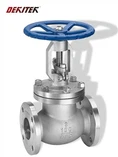

Selecting the appropriate size of a Duplex Stainless Steel Gate Valve is a critical decision that can significantly impact the efficiency, safety, and longevity of your piping system. As a trusted supplier of Duplex Stainless Steel Gate Valve, I understand the complexities involved in this process. In this blog post, I will share valuable insights and practical tips to help you make an informed choice.
Understanding the Basics of Duplex Stainless Steel Gate Valves
Before delving into the sizing process, it's essential to have a basic understanding of Duplex Stainless Steel Gate Valves. These valves are widely used in various industries, including oil and gas, chemical processing, and water treatment, due to their excellent corrosion resistance, high strength, and durability. The gate valve operates by raising or lowering a gate to control the flow of fluid through the pipeline.
Factors to Consider When Choosing the Size
- Flow Rate Requirements
The flow rate is one of the most crucial factors to consider when sizing a gate valve. It refers to the volume of fluid that passes through the valve per unit of time. To determine the appropriate size, you need to calculate the required flow rate based on the specific application. Consider factors such as the maximum and minimum flow rates, the type of fluid (e.g., water, oil, gas), and the operating conditions (e.g., pressure and temperature).
For example, in a water treatment plant, if the required flow rate is 100 cubic meters per hour, you need to select a valve size that can handle this flow without causing excessive pressure drop. A valve that is too small may restrict the flow, leading to reduced efficiency and potential damage to the system. On the other hand, a valve that is too large may be more expensive and may not provide precise control over the flow. - Pipe Size Compatibility
The size of the valve should be compatible with the size of the pipeline. In most cases, it is recommended to choose a valve with the same nominal size as the pipe. This ensures a proper fit and minimizes the risk of leakage. However, in some situations, such as when there are space constraints or specific flow requirements, you may need to use a valve with a different size. In such cases, it is important to use appropriate reducers or expanders to ensure a smooth transition between the valve and the pipe. - Pressure Rating
The pressure rating of the valve is another important consideration. It indicates the maximum pressure that the valve can withstand without failing. You need to select a valve with a pressure rating that is suitable for the operating pressure of your system. Consider factors such as the maximum and minimum pressure, the pressure fluctuations, and the safety margin.
For instance, in an oil and gas pipeline, where the operating pressure can be very high, you need to choose a valve with a high-pressure rating. Using a valve with a lower pressure rating can lead to valve failure, which can result in leaks, explosions, and other safety hazards. - Temperature Range
The temperature range of the fluid also affects the valve sizing. Different materials have different temperature limitations, and you need to select a valve that can withstand the operating temperature of your system. Consider factors such as the maximum and minimum temperature, the temperature fluctuations, and the thermal expansion of the materials.
For example, in a chemical processing plant, where the temperature of the fluid can be very high, you need to choose a valve made of a material that can withstand high temperatures, such as Duplex Stainless Steel. Using a valve made of a material with a lower temperature rating can lead to valve deformation, leakage, and other problems. - Valve Type and Design
There are different types and designs of gate valves available, such as wedge gate valves, parallel gate valves, and knife gate valves. Each type has its own advantages and disadvantages, and you need to choose the one that is most suitable for your application. Consider factors such as the flow characteristics, the sealing performance, the ease of operation, and the maintenance requirements.
For instance, in a slurry handling application, a knife gate valve may be more suitable due to its ability to cut through the slurry and provide a tight seal. On the other hand, in a high-pressure application, a wedge gate valve may be a better choice due to its superior sealing performance.
Sizing Calculations
Once you have considered all the above factors, you can use sizing calculations to determine the appropriate valve size. There are several methods available for sizing gate valves, including the use of flow coefficient (Cv) and the velocity method.


- Flow Coefficient (Cv) Method
The flow coefficient (Cv) is a measure of the valve's capacity to pass fluid. It is defined as the number of US gallons per minute of water at 60°F that will flow through the valve with a pressure drop of 1 psi. To use the Cv method, you need to calculate the required Cv value based on the flow rate, pressure drop, and fluid properties. Then, you can select a valve with a Cv value that is equal to or greater than the required Cv value.
The formula for calculating the Cv value is:
[Cv=\frac{Q}{\sqrt{\Delta P}}]
where Q is the flow rate in US gallons per minute, and (\Delta P) is the pressure drop in psi. - Velocity Method
The velocity method involves calculating the fluid velocity through the valve and ensuring that it is within the acceptable range. The acceptable velocity depends on the type of fluid, the pipe material, and the operating conditions. To use the velocity method, you need to calculate the cross-sectional area of the valve based on the flow rate and the desired velocity. Then, you can select a valve with a size that corresponds to the calculated cross-sectional area.
The formula for calculating the cross-sectional area (A) is:
[A=\frac{Q}{V}]
where Q is the flow rate in cubic meters per second, and V is the fluid velocity in meters per second.
Working with a Professional
Sizing a Duplex Stainless Steel Gate Valve can be a complex process, especially if you are not familiar with the technical details. Therefore, it is recommended to work with a professional valve supplier or engineer who can provide you with expert advice and guidance. A professional can help you analyze your specific requirements, perform the necessary calculations, and select the most suitable valve size for your application.
As a Duplex Stainless Steel Gate Valve supplier, I have extensive experience in valve sizing and selection. I can offer you a wide range of high-quality valves, including Stainless Steel Pressure Seal Gate Valve and Duplex Stainless Steel Pressure Seal Gate Valve, to meet your specific needs. I also provide technical support and after-sales service to ensure that you have a smooth and trouble-free experience.
Conclusion
Choosing the right size of a Duplex Stainless Steel Gate Valve is crucial for the efficient and safe operation of your piping system. By considering factors such as the flow rate, pipe size, pressure rating, temperature range, valve type, and design, and using appropriate sizing calculations, you can select a valve that meets your specific requirements. Working with a professional valve supplier or engineer can also help you make an informed decision and ensure that you get the best value for your investment.
If you are in need of a Duplex Stainless Steel Gate Valve or have any questions about valve sizing and selection, please feel free to contact me. I will be happy to assist you and provide you with the necessary information and support.
References
- Valve Handbook, Emerson Process Management
- Pipeline Rules of Thumb Handbook, 4th Edition, Gregory G. Kress
- ASME B16.34 - Valves - Flanged, Threaded, and Welded End
- API 600 - Steel Gate Valves - Flanged and Butt - Welding Ends for Petroleum, Petrochemical, and Related Industries