

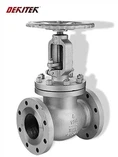
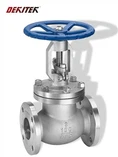
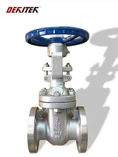
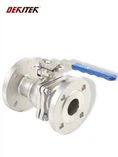
Valve sealing is an important guarantee of valve quality. Valve product quality and technical level are related to the development of various fields such as petroleum, chemical industry, electric power, nuclear industry, oil and gas transmission and marine engineering. Valve companies should start from the needs of downstream users, attach importance to the research and development of core technologies, strengthen management, change the current situation of low-level competition in the industry, and promote valve products to develop in the direction of high technology content, high parameters, strong corrosion resistance and long life, so as to improve the overall competitiveness of the industry.
The internal leakage of water heating valves seriously threatens the normal operation of the device, and it is difficult to find whether there is internal leakage in the operating valves. The survey results show that various valves used by petrochemical enterprises have internal leakage problems to varying degrees. The reasons include that the sealing surface materials of the valve plate and valve seat do not meet the use requirements, the processing accuracy is not enough, the wedge angles of the valve plate and valve seat of the gate valve do not match, the sealing surface width is different, the fit is poor, the gate is not in place, and it cannot be closed.
For example, for Z41Y-25, the sealing surface material code Y should refer to the sealing surface material with relatively soft hardness in the sealing pair, and the corresponding other sealing surface material should obviously be at least hard alloy. In fact, some valves only have hard alloy welded on one of the sealing surfaces, while the other sealing surface is made of carbon steel. Not long after being put into use, internal leakage occurs due to wear.
Another example is that a certain pipeline system uses a wafer-type butterfly valve, and the valve seat sealing material is polytetrafluoroethylene. From the perspective of the operating conditions, the requirements are not high, all at normal temperature and pressure, but during the trial operation, it was found that a large number of valves were not closed tightly, and the internal leakage was serious, so that they could not be used normally, and finally had to be replaced with gate valves. After dismantling and checking, it was found that there was a large gap between the valve plate and the valve seat in the closed state, and even light was transparent.
The reasons may be as follows! The structural design of the valve sealing pair is unreasonable or the manufacturing and assembly accuracy does not meet the requirements; the valve installation is not constructed as required, so that it is subjected to excessive force; during the construction process, impurities such as welding slag, sand, and metal chips enter the valve cavity, affecting the sealing effect. In fact, the more practical and most fundamental reason is that the standard requirements were not followed during the manufacturing, transportation or installation process.