

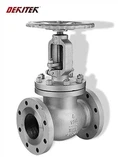
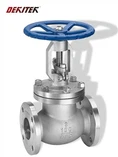
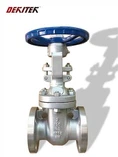
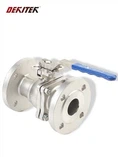
steel gate valves, as an important control element in industrial piping systems, plays an important role in many industries. Their unique structural characteristics determine their performance and application range. The main structural characteristics of stainless steel gate valves will be introduced in detail.
Valve structure
Material Advantages: steel gate valve is generally made of stainless steel, common materials such as 304, 316. These stainless steel have excellent corrosion resistance, can effectively resist corrosion of various corrosive media. For example, in pipes carrying corrosive liquids such as acid and alkalis, stainless steel valve body can operate steadily for a long time without leakage due to corrosion, greatly extending the valve's service life compared to conventional carbon steel valves. This property makes stainless steel gate valves widely used in chemical, pharmaceutical, food and beverage industries, in which the high purity and corrosion resistance of media are of great importance.
Manufacturing process and strength: Some high quality stainless steel gate valves valve bodies is made of solid stainless steel block, such as the stainless steel gate valve produced by German manufacturer Stoehr. This manufacturing method ensures the structural strength and integrity of the valve body and provides high pressure resistance. In high pressure piping system such as oil and gas pipelines pipeline, valve must be able to withstand immense pressure, stainless steel solid steel valve body can meet this requirement, effectively prevent valve rupture due to excessive pressure and other safety accidents.
Sealing Structure
Diverse Sealing Options: Stainless steel gate valves provide multiple seals for the valve seat, such as metal/PCTFE, metal/PTFE, metal/metal, etc. Different sealing materials suitable for different working conditions and leakage rate requirements. For example, the leakage rates of a metal/PCTFE seal can be as low as 1 × 10⁻⁶ mbar L /s in the transport of gases and liquids at very low temperatures, where leakage rate must be very low. The variety of sealing options enables stainless steel gate valves to meet the different needs of different industries, from general industrial applications to demanding applications.
Reliable stem seal: Many stainless steel gate valves use stainless steel bellows as the core seal element of the stem. Stainless steel bellows are very flexible and resistant to rust, which makes sure that the valve stem moves smoothly and creates a strong, long-lasting seal that considerably lowers the danger of leaks. Stainless steel bellows seal gate valves are great for places where environmental safety is very important, such nuclear power plant coolant pipeline systems. They can keep radioactive materials from getting out and keep people and the environment safe. Some gate valves feature extra seals, including safety O-rings or groove rings (typically made of fluorine rubber), that give them even more protection.
Valve stem design features
Motion: Common valve stem movements include rising stem and rising rotary stem. In an ascending stem, the stem moves independently up and down while the handwheel remains stationary; in an ascendingrotating stem, the handwheel moves with the stem and the nut is on the valve body. Both types have their own advantages: rising stem type are more intuitive to operate, allowing operators to easily control the position of the valve; rising rotary stem type save installation space. The appropriate type can be selected according to the specific installation environment and operational requirements.
Material characteristics: Stem materials are usually selected for their superior overall performance, such as nitrided steel. Nitrogen significantly increases stem surface hardness, providing excellent wear resistance, abrasion resistance and corrosion resistance. During frequent valve opening and closing, stem friction packing and other components. Nitrided steel stem can effectively resist this wear and tear, ensuring long valve service life and stable operation.
INTRODUCTION Connection Method Features
Stainless steel gate valves provides a variety of end connection modes, including butt welding and flange connection. Spot welding has high connection strength and sealing performance, and is suitable for high quality pipeline connection and high pressure media, such as high temperature and high pressure pipeline in petrochemical enterprises. Flange connections is easy to install and remove, and easy to maintain and replace. Customized connection methods can also be provided to meet specific project requirements.
Overall Structural Advantages
The gate valve's overall structure is rather compact, notably the opening height of the disc, which is normally only a quarter of the diameter of the valve seat. This means that valves need less space to be installed, which is great for piping systems that don't have a lot of room, such ship engine room piping systems. Smaller installation space not only saves valuable space, but also contributes to the overall layout and maintenance of the piping system.
Easy to maintain: compared to some complex valves, stainless steel gate valve valve design is relatively simple, the general valve body and disc only have a sealed cover. This makes the manufacturing process simpler, cheaper and easier to maintain. When the seal is worn or malfunctioning, maintenance personnel can easily inspect and replace it, reduce the difficulty and cost of maintenance and improve the usability of the equipment.
steel gate valve, with its unique structural characteristics, plays an important role in piping systems in all walks of life and provides strong support for the safe and stable operation of industrial production.
Main structural features of Stainless Steel Gate Valves
Sep 17, 2025 Leave a message
Send Inquiry