


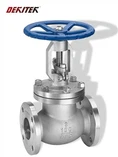

A fully welded ball valve is a crucial component in various industrial applications, known for its reliability, durability, and high - performance capabilities. As a supplier of fully welded ball valves, I am well - versed in their dynamic characteristics, which play a significant role in determining their suitability for different operating conditions.
1. Sealing Performance
One of the most important dynamic characteristics of a fully welded ball valve is its sealing performance. The valve is designed to provide a tight seal, preventing leakage of the fluid or gas flowing through it. This is achieved through a combination of factors, including the quality of the sealing materials and the precision of the valve's manufacturing.
The fully welded construction eliminates potential leakage paths that are common in bolted or flanged valves. The welded body ensures a continuous and homogeneous structure, which is less prone to external influences such as vibration, temperature changes, and pressure fluctuations. The ball and seat of the valve are also designed to have a precise fit. For example, in a Fully Welded Ball Valve, the seat is often made of high - quality elastomers or metals, depending on the application. Elastomeric seats provide excellent sealing at low to medium pressures and temperatures, while metal seats are more suitable for high - temperature and high - pressure applications.
When the valve is in the closed position, the ball presses against the seat, creating a tight seal. The dynamic sealing performance is maintained even under varying operating conditions. For instance, as the pressure inside the pipeline increases, the ball is forced more firmly against the seat, enhancing the sealing effect. This self - energizing sealing mechanism is a key feature of fully welded ball valves, ensuring reliable operation in a wide range of applications.
2. Flow Characteristics
The flow characteristics of a fully welded ball valve are another important aspect of its dynamic performance. These valves are known for their excellent flow control capabilities, offering low flow resistance and high flow capacity.
The design of the ball valve allows for a straight - through flow path when the valve is fully open. This means that the fluid or gas can pass through the valve with minimal obstruction, resulting in a low pressure drop across the valve. In comparison to other types of valves, such as gate valves or globe valves, fully welded ball valves offer a much higher flow coefficient (Cv). A higher Cv value indicates that the valve can handle a larger volume of fluid or gas at a given pressure difference.
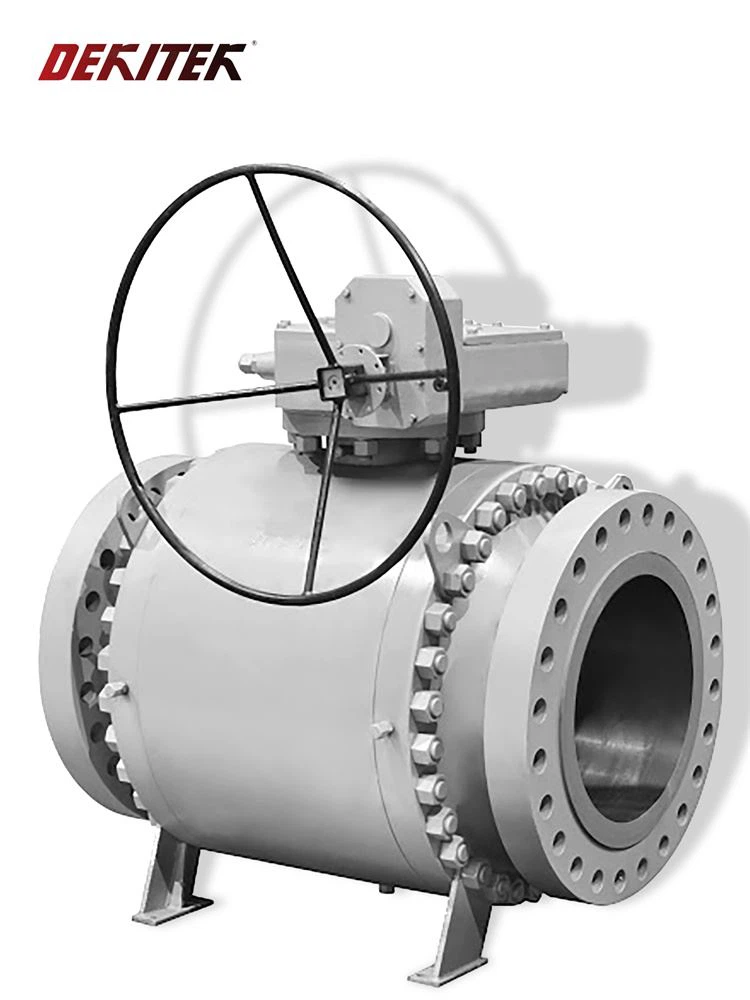
The ball of the valve can be either floating or trunnion - mounted. Floating ball valves are suitable for low to medium - pressure applications, where the ball is free to move and is pushed against the seat by the fluid pressure. Trunnion - mounted ball valves, on the other hand, are designed for high - pressure applications. In a Trunnion Mounted Soft Seated Ball Valve or a Trunnion Mounted Metal Seated Ball Valve, the ball is supported by trunnions at the top and bottom. This design reduces the load on the seat and allows for smooth operation even at high pressures.
The ability to control the flow rate precisely is also an important dynamic characteristic. By rotating the ball, the valve can be adjusted to different opening positions, from fully open to fully closed. This allows for accurate flow regulation in various industrial processes, such as in oil and gas pipelines, chemical plants, and power generation facilities.
3. Actuation and Response Time
The actuation of a fully welded ball valve and its response time are critical for its dynamic performance. These valves can be actuated manually, electrically, pneumatically, or hydraulically, depending on the application requirements.
Manual actuation is suitable for small - scale applications or where remote operation is not required. It provides a simple and cost - effective way to operate the valve. However, for larger valves or applications where quick and precise operation is needed, automated actuation methods are preferred.
Pneumatic actuators are commonly used in fully welded ball valves. They offer fast response times, allowing the valve to open or close quickly in case of an emergency or to adjust the flow rate rapidly. The compressed air used in pneumatic actuators provides a clean and reliable source of power. Electric actuators, on the other hand, are suitable for applications where precise control and remote operation are required. They can be programmed to open or close the valve at specific times or in response to certain signals.
The response time of a fully welded ball valve is an important consideration, especially in applications where rapid flow control is necessary. A fast - acting valve can help to prevent over - pressure situations, control the flow of hazardous materials, or respond to changes in the process conditions. For example, in a chemical plant, a fully welded ball valve with a quick - acting actuator can be used to isolate a section of the pipeline in case of a leak or a process upset.
4. Durability and Resistance to Wear
Fully welded ball valves are designed to withstand harsh operating conditions and have a long service life. Their welded construction provides excellent mechanical strength and resistance to external forces. The materials used in the construction of the valve, such as carbon steel, stainless steel, or alloy steels, are selected for their durability and corrosion resistance.
In addition to the body material, the internal components of the valve, such as the ball and the seat, are also designed to resist wear. The ball is often hardened or coated to reduce friction and wear, especially in applications where the fluid contains abrasive particles. The seat is also designed to withstand repeated contact with the ball without significant wear.
The valve's durability is further enhanced by its ability to resist corrosion. In corrosive environments, such as offshore oil and gas platforms or chemical processing plants, the fully welded ball valve can be coated with anti - corrosion materials or made of corrosion - resistant alloys. This ensures that the valve can operate reliably for an extended period without significant degradation of its performance.
5. Operating Temperature and Pressure Range
The dynamic performance of a fully welded ball valve is also affected by the operating temperature and pressure range. These valves are designed to operate within a specific range of temperatures and pressures, and their performance can vary depending on the conditions.
For low - temperature applications, the materials used in the valve must be able to withstand the cold without becoming brittle. Special low - temperature alloys or elastomers are often used in the construction of the valve to ensure reliable operation at temperatures as low as - 46°C or even lower.
At high temperatures, the valve must be able to maintain its structural integrity and sealing performance. Metal - seated valves are more suitable for high - temperature applications, as they can withstand temperatures up to 800°C or higher. The design of the valve also takes into account the thermal expansion of the materials. For example, the clearance between the ball and the seat is carefully calculated to allow for thermal expansion without affecting the sealing performance.
In terms of pressure, fully welded ball valves are available in a wide range of pressure ratings, from low - pressure applications (up to 10 bar) to high - pressure applications (up to 1000 bar or more). The valve's design and construction are optimized to withstand the internal pressure without deformation or leakage.
6. Noise and Vibration Characteristics
Noise and vibration are important considerations in the dynamic performance of fully welded ball valves, especially in applications where quiet operation is required. These valves are designed to minimize noise and vibration during operation.
The smooth flow path of the ball valve reduces the likelihood of turbulence, which is a major cause of noise and vibration in pipelines. When the fluid or gas flows through the valve, it does not encounter sudden changes in direction or cross - sectional area, resulting in a more laminar flow. This laminar flow helps to reduce the generation of noise and vibration.
In addition, the welded construction of the valve provides a rigid and stable structure, which further dampens vibrations. The valve is often installed with proper supports and gaskets to minimize the transmission of vibrations to the surrounding equipment.
Conclusion
As a supplier of fully welded ball valves, I understand the importance of these dynamic characteristics in ensuring the reliable and efficient operation of industrial processes. The sealing performance, flow characteristics, actuation and response time, durability, operating temperature and pressure range, and noise and vibration characteristics all contribute to the overall performance of the valve.
If you are in need of high - quality fully welded ball valves for your industrial applications, we are here to provide you with the best solutions. Our valves are designed and manufactured to meet the highest standards of quality and performance. Whether you need a Fully Welded Ball Valve, a Trunnion Mounted Soft Seated Ball Valve, or a Trunnion Mounted Metal Seated Ball Valve, we can offer you the right product for your specific requirements. Contact us today to discuss your needs and start a procurement negotiation.

References
- Valve Handbook, Second Edition, by J. F. S. Lee
- Fluid Mechanics and Thermodynamics of Turbomachinery, Fourth Edition, by S. L. Dixon and C. A. Hall
- Handbook of Valves, by R. K. Sinha