



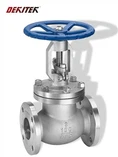

Hey there! As a supplier of Pneumatic Actuator Gate Valves, I've had my fair share of experiences with these nifty pieces of equipment. Today, I'm gonna dive into the different actuation modes of a pneumatic actuator for a gate valve.
First off, let's get a basic understanding of what a pneumatic actuator gate valve is. A pneumatic actuator gate valve is a type of valve that uses compressed air to open and close the gate, which controls the flow of fluid through a pipeline. It's widely used in various industries like oil and gas, water treatment, and chemical processing because it's reliable, efficient, and can handle high-pressure applications. You can check out our range of Pneumatic Actuator Gate Valve on our website.
Now, let's talk about the different actuation modes.


Double - Acting Pneumatic Actuators
The double - acting pneumatic actuator is a popular choice. In this mode, compressed air is used to both open and close the gate valve. When air is supplied to one side of the actuator piston, it moves the piston in one direction, opening the valve. When air is then supplied to the other side of the piston, it moves in the opposite direction, closing the valve.
The advantage of a double - acting actuator is that it provides a lot of control. You can adjust the opening and closing speed of the valve by regulating the air pressure. This is great for applications where you need precise control over the flow rate. For example, in a chemical processing plant, you might need to slowly open or close the valve to prevent sudden changes in pressure that could damage the equipment.
However, it does require a continuous supply of compressed air. If there's a loss of air pressure, the valve won't be able to operate properly. Also, it's a bit more complex than some other actuation modes, which means it might be more expensive to install and maintain.
Spring - Return Pneumatic Actuators
Spring - return pneumatic actuators are another option. In this mode, compressed air is used to open the valve, but a spring is used to close it. When you supply compressed air to the actuator, it overcomes the force of the spring and moves the piston to open the valve. When the air supply is cut off, the spring automatically returns the piston to its original position, closing the valve.
One of the biggest advantages of spring - return actuators is their fail - safe feature. In case of a power failure or loss of air pressure, the valve will automatically close. This is crucial in applications where safety is a top priority, like in a nuclear power plant or an oil refinery. If there's an emergency, you want the valve to close quickly to prevent any leaks or accidents.
On the downside, the closing speed of the valve is determined by the spring, and it might not be as adjustable as in a double - acting actuator. Also, the spring can wear out over time, which means you'll need to replace it periodically.
Pneumatic Diaphragm Actuators
Pneumatic diaphragm actuators work a bit differently. Instead of a piston, they use a flexible diaphragm. When compressed air is applied to one side of the diaphragm, it flexes and moves a rod, which in turn opens or closes the gate valve.
These actuators are known for their simplicity and low cost. They don't have as many moving parts as piston - type actuators, which means they're less likely to break down. They're also lightweight, making them easy to install.
However, they have limited force output compared to piston - type actuators. So, they're usually used in applications where the valve doesn't need to handle high pressures or large flow rates. For example, they might be used in small - scale water treatment systems or in some residential plumbing applications.
Pneumatic Rotary Actuators
Pneumatic rotary actuators are used for gate valves that require a rotational movement to open and close. Instead of a linear motion like in piston or diaphragm actuators, these actuators provide a rotary motion.
They're often used in applications where space is limited. Since they can be designed to fit into tight spaces, they're a great choice for compact industrial setups. They can also be used to operate valves in hard - to - reach areas.
But, like double - acting actuators, they require a continuous supply of compressed air. And they can be a bit more difficult to install and align correctly compared to linear actuators.
When choosing the right actuation mode for your gate valve, you need to consider several factors. First, think about the application. If safety is the main concern, a spring - return actuator might be the best choice. If you need precise control over the opening and closing speed, a double - acting actuator could be more suitable.
You also need to consider the cost. Double - acting and rotary actuators are usually more expensive than spring - return and diaphragm actuators. And don't forget about maintenance. Some actuators require more frequent maintenance than others.
We offer a wide range of gate valves with different actuation modes to meet your specific needs. For example, our Stainless Steel Flexible Wedge Gate Valve is available with different pneumatic actuation options. And if you're looking for something more heavy - duty, our Duplex Stainless Steel Pressure Seal Gate Valve can also be equipped with the right pneumatic actuator.
If you're in the market for a pneumatic actuator gate valve, I encourage you to get in touch with us. We have a team of experts who can help you choose the right valve and actuation mode for your application. Whether you're a small business or a large industrial corporation, we're here to provide you with high - quality products and excellent service. So, don't hesitate to reach out and start a conversation about your procurement needs.
References
- "Valve Handbook" - A comprehensive guide on different types of valves and their actuation methods.
- Industry standards and guidelines from relevant organizations such as the American Petroleum Institute (API) and the International Organization for Standardization (ISO).