



Duplex steel globe valves are essential components in various industrial applications, renowned for their ability to control the flow rate of fluids effectively. As a leading supplier of Duplex Steel Globe Valves, I am excited to delve into the intricate mechanisms behind how these valves manage to regulate the flow of liquids and gases.
The Basics of a Duplex Steel Globe Valve
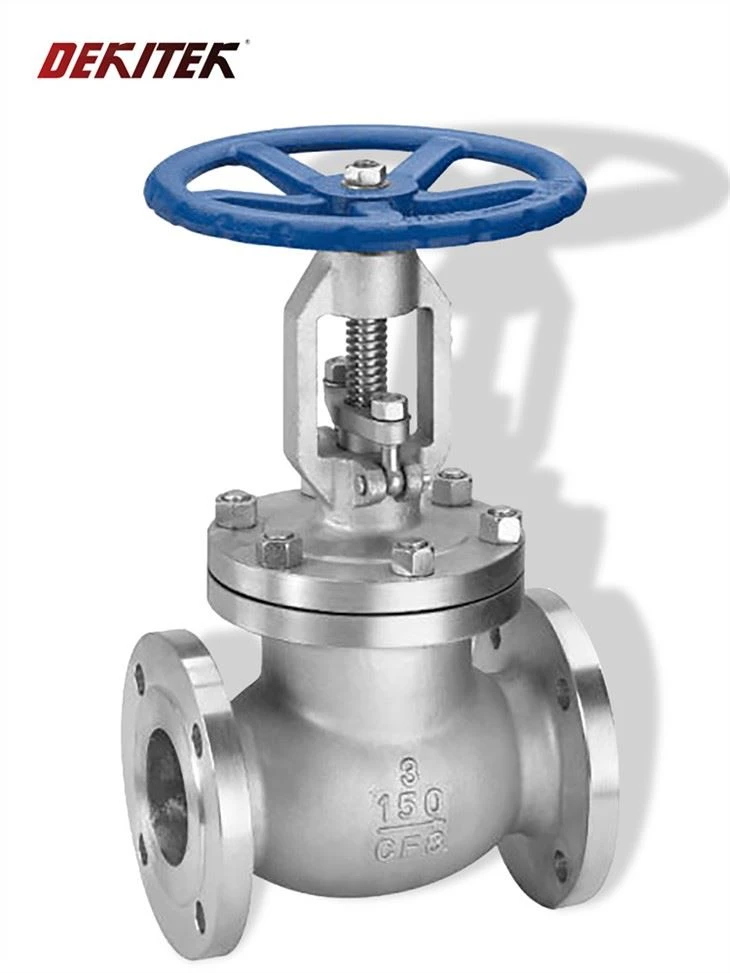
Before we explore the flow - rate control mechanism, let's understand the fundamental structure of a duplex steel globe valve. A globe valve consists of a body, a bonnet, a disc, a stem, and a seat. The body is typically made of duplex steel, a material that combines the properties of austenitic and ferritic stainless steels. This results in high strength, excellent corrosion resistance, and good weldability, making it suitable for harsh environments such as chemical processing plants, offshore oil and gas platforms, and power generation facilities.
The disc of the globe valve is connected to the stem, which can be moved up and down to control the opening between the disc and the seat. When the stem is raised, the disc moves away from the seat, allowing fluid to flow through the valve. Conversely, when the stem is lowered, the disc comes into contact with the seat, blocking the flow.
Flow - Rate Control Mechanisms
Linear Movement of the Disc
The most basic way a duplex steel globe valve controls the flow rate is through the linear movement of the disc. As the stem is turned, the disc moves either towards or away from the seat in a straight - line motion. The position of the disc relative to the seat determines the size of the flow passage. When the disc is fully open, the maximum flow rate is achieved as the fluid can pass through the valve with minimal obstruction. As the disc is gradually closed, the flow passage narrows, and the flow rate decreases.
This linear relationship between the disc position and the flow rate is not always perfectly proportional. In the initial stages of closing the valve, a small movement of the disc can cause a significant reduction in the flow rate. As the valve approaches the fully closed position, further movement of the disc has a relatively smaller impact on the flow rate.
Flow Resistance and Pressure Drop
Another important aspect of flow - rate control is the concept of flow resistance and pressure drop. When fluid flows through a duplex steel globe valve, it encounters resistance due to the shape of the valve and the presence of the disc. The resistance causes a pressure drop across the valve, which is the difference in pressure between the inlet and the outlet of the valve.
The pressure drop is directly related to the flow rate. According to the Bernoulli's principle and the laws of fluid mechanics, as the flow rate increases, the pressure drop also increases. By adjusting the position of the disc, we can change the resistance to flow and thus control the pressure drop. A more closed valve creates a higher resistance, resulting in a larger pressure drop and a lower flow rate.

Valve Trim Design
The design of the valve trim, which includes the disc and the seat, also plays a crucial role in flow - rate control. Different types of valve trims are available, each with its own flow characteristics. For example, a quick - opening trim is designed to provide a large change in flow rate for a small movement of the stem near the fully open position. This type of trim is suitable for applications where rapid flow adjustment is required.
On the other hand, an equal - percentage trim provides a more gradual change in flow rate relative to the stem movement. In an equal - percentage trim, the change in flow rate is proportional to the existing flow rate. This makes it ideal for applications where precise control of the flow rate over a wide range is necessary, such as in chemical dosing systems.
Applications and Advantages of Duplex Steel Globe Valves in Flow - Rate Control
Chemical Processing
In chemical processing plants, duplex steel globe valves are used to control the flow of various corrosive chemicals. The excellent corrosion resistance of duplex steel ensures the long - term reliability of the valves, even when handling aggressive substances. The ability to precisely control the flow rate is crucial in chemical reactions, where the correct proportion of reactants is essential for the quality of the final product.
Oil and Gas Industry
In the oil and gas industry, especially in offshore platforms, duplex steel globe valves are employed to control the flow of oil, gas, and other fluids. The high strength of duplex steel makes the valves suitable for high - pressure applications, while the flow - rate control capabilities are vital for maintaining the efficiency of the production process. For example, in a pipeline, the valve can be adjusted to regulate the flow of crude oil to different processing units.
Power Generation
In power generation plants, whether it is a thermal power plant or a nuclear power plant, duplex steel globe valves are used to control the flow of steam, water, and other working fluids. Precise flow - rate control is necessary for optimizing the performance of the turbines and ensuring the safety of the power - generation process.
Comparison with Other Valve Types
Ball Valves
Ball valves are another common type of valve used for flow - rate control. Unlike duplex steel globe valves, ball valves use a rotating ball with a hole in the middle to control the flow. Ball valves can provide a quick on - off operation and are suitable for applications where a large flow rate needs to be shut off rapidly. However, they may not offer the same level of precise flow - rate control as globe valves, especially in the intermediate positions.
Gate Valves
Gate valves are designed primarily for on - off service rather than flow - rate control. They use a gate that slides up and down to open or close the flow passage. While gate valves can provide a low - resistance flow path when fully open, they are not well - suited for throttling applications as the gate can cause excessive vibration and erosion when partially open.
Why Choose Our Duplex Steel Globe Valves
As a supplier of Duplex Steel Globe Valves, we offer a range of high - quality valves that are designed to meet the most demanding industrial requirements. Our valves are manufactured using the latest technology and strict quality control measures to ensure reliable performance and long service life.
We understand the importance of flow - rate control in different applications, and our valves are engineered to provide precise and accurate control. Whether you need a valve for a chemical processing plant, an oil and gas facility, or a power generation plant, we have the right solution for you.
If you are interested in learning more about our Stainless Steel Globe Valve or Stainless Steel Globe Valve or Cast Steel Globe Valve, or if you have any specific requirements for flow - rate control in your project, please feel free to contact us. Our team of experts is ready to assist you in selecting the most suitable valve and providing technical support.
References
- Crane Co., "Flow of Fluids Through Valves, Fittings, and Pipe", Technical Paper No. 410.
- Miller, R. W., "Flow Measurement Engineering Handbook", McGraw - Hill.
- ASME Boiler and Pressure Vessel Code, Section VIII, Division 1.