


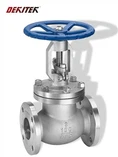

As a reliable supplier of Alloy Steel Globe Valves, I often encounter inquiries from customers regarding the suitability of these valves for vacuum systems. In this blog post, I will delve into the technical aspects and considerations to determine whether an Alloy Steel Globe Valve can indeed be used in a vacuum system.
Understanding Vacuum Systems
Before discussing the compatibility of Alloy Steel Globe Valves with vacuum systems, it's essential to understand the characteristics of vacuum systems. A vacuum system is designed to create and maintain a pressure lower than the ambient atmospheric pressure. These systems are widely used in various industries, including semiconductor manufacturing, chemical processing, and food packaging.
The performance of a vacuum system depends on several factors, such as the level of vacuum required, the type of gas being handled, and the presence of contaminants. Vacuum systems can be classified into different categories based on the pressure range, including low vacuum (1 to 10^-3 mbar), medium vacuum (10^-3 to 10^-6 mbar), and high vacuum (10^-6 to 10^-9 mbar).
Characteristics of Alloy Steel Globe Valves
Alloy Steel Globe Valves are a type of linear motion valve that uses a disc-shaped closure element to control the flow of fluid. These valves are known for their excellent shut-off capabilities, precise flow control, and durability. Alloy steel is a type of steel that contains various alloying elements, such as chromium, nickel, and molybdenum, which enhance its mechanical properties and corrosion resistance.


The design of an Alloy Steel Globe Valve consists of a body, bonnet, stem, disc, and seat. The body is the main housing of the valve, which contains the flow passage and the connection ports. The bonnet is attached to the body and provides access to the internal components of the valve. The stem is connected to the disc and is used to move the disc up and down to open and close the valve. The disc is the closure element that seals against the seat to stop the flow of fluid.
Compatibility of Alloy Steel Globe Valves with Vacuum Systems
The suitability of an Alloy Steel Globe Valve for a vacuum system depends on several factors, including the valve design, material selection, and sealing performance. Here are some key considerations:
Valve Design
The design of the valve plays a crucial role in its performance in a vacuum system. The valve should be designed to minimize leakage and provide a tight seal. The seat and disc should be machined to a high precision to ensure a proper fit and prevent any gaps that could allow air or gas to leak into the system.
In addition, the valve should be designed to withstand the pressure differential between the vacuum side and the atmospheric side. The body and bonnet should be thick enough to prevent deformation under the vacuum conditions. The stem should also be designed to prevent any leakage along its length.
Material Selection
The material selection is another important factor in determining the compatibility of an Alloy Steel Globe Valve with a vacuum system. The valve should be made of materials that are compatible with the gas or fluid being handled and can withstand the vacuum conditions.
Alloy steel is a suitable material for vacuum systems due to its high strength, corrosion resistance, and low outgassing properties. Outgassing is the release of gas from the surface of a material under vacuum conditions. Materials with high outgassing rates can contaminate the vacuum system and affect its performance. Alloy steel has a relatively low outgassing rate, making it a good choice for vacuum applications.
Sealing Performance
The sealing performance of the valve is critical in a vacuum system. The valve should be able to provide a tight seal to prevent any leakage of air or gas into the system. The seat and disc should be made of materials that have good sealing properties and can withstand the pressure differential.
In addition, the valve should be equipped with appropriate sealing elements, such as gaskets or O-rings, to ensure a reliable seal. The sealing elements should be made of materials that are compatible with the gas or fluid being handled and can withstand the vacuum conditions.
Advantages of Using Alloy Steel Globe Valves in Vacuum Systems
There are several advantages of using Alloy Steel Globe Valves in vacuum systems:
Excellent Shut-Off Capabilities
Alloy Steel Globe Valves are known for their excellent shut-off capabilities. The disc-shaped closure element provides a tight seal against the seat, preventing any leakage of air or gas into the system. This is essential in vacuum systems, where even a small amount of leakage can affect the performance of the system.
Precise Flow Control
Alloy Steel Globe Valves offer precise flow control, allowing for accurate regulation of the flow rate in the vacuum system. The linear motion of the disc provides a smooth and predictable flow control, making it suitable for applications where precise flow control is required.
Durability
Alloy steel is a strong and durable material that can withstand the harsh conditions of vacuum systems. The valve is designed to be resistant to corrosion, erosion, and wear, ensuring a long service life and reliable performance.
Compatibility with Different Gases and Fluids
Alloy Steel Globe Valves are compatible with a wide range of gases and fluids, making them suitable for various applications in vacuum systems. The valve can be used with different types of gases, such as nitrogen, oxygen, and hydrogen, as well as with various fluids, such as water, oil, and chemicals.
Applications of Alloy Steel Globe Valves in Vacuum Systems
Alloy Steel Globe Valves are widely used in various applications in vacuum systems, including:
Semiconductor Manufacturing
In the semiconductor manufacturing industry, vacuum systems are used to create a clean and controlled environment for the production of microchips and other electronic components. Alloy Steel Globe Valves are used to control the flow of gases and fluids in these vacuum systems, ensuring precise process control and high-quality production.
Chemical Processing
In the chemical processing industry, vacuum systems are used for various processes, such as distillation, evaporation, and drying. Alloy Steel Globe Valves are used to control the flow of chemicals and solvents in these vacuum systems, ensuring safe and efficient operation.
Food Packaging
In the food packaging industry, vacuum systems are used to remove air from the packaging to extend the shelf life of the food products. Alloy Steel Globe Valves are used to control the flow of air and gas in these vacuum systems, ensuring a tight seal and preventing any contamination of the food products.
Conclusion
In conclusion, an Alloy Steel Globe Valve can be used in a vacuum system if it is designed and selected appropriately. The valve should be designed to minimize leakage, withstand the pressure differential, and provide a tight seal. The material selection should be based on the compatibility with the gas or fluid being handled and the vacuum conditions.
As a supplier of Alloy Steel Globe Valves, we offer a wide range of valves that are suitable for vacuum systems. Our valves are made of high-quality alloy steel and are designed to meet the strict requirements of vacuum applications. We also provide customized solutions to meet the specific needs of our customers.
If you are interested in using an Alloy Steel Globe Valve in your vacuum system, please feel free to contact us for more information. Our team of experts will be happy to assist you in selecting the right valve for your application and provide you with all the necessary technical support.
References
- ASME B16.34 - Valves - Flanged, Threaded, and Welding End
- ISO 5208 - Industrial valves - Pressure testing of valves
- API 600 - Steel Gate Valves - Flanged and Butt - Welding Ends, Bolted Bonnet