


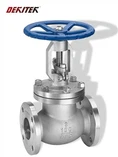

Hey there! As a supplier of Duplex Stainless Steel Gate Valves, I've been in the valve game for quite a while. Over the years, I've learned a thing or two about what standards these valves need to meet. So, let's dive right in and talk about it.
Material Quality
First off, the material is super important. Duplex stainless steel is a special type of steel that combines austenitic and ferritic microstructures. This gives it some really great properties, like high strength and excellent corrosion resistance.
The chemical composition of the duplex stainless steel used in gate valves has to be spot - on. For example, it usually contains around 22 - 25% chromium, 3 - 5% nickel, and about 2 - 3% molybdenum. These elements work together to make the valve resistant to various corrosive environments, whether it's in a chemical plant or an offshore oil rig.
When we're sourcing the duplex stainless steel, we make sure it meets international standards like ASTM (American Society for Testing and Materials) or EN (European Norms). These standards define the exact chemical composition and mechanical properties that the steel should have. If the steel doesn't meet these standards, the valve won't perform as expected, and it could lead to some serious problems down the line.
Design and Manufacturing Standards
The design of a Duplex Stainless Steel Gate Valve also has to meet certain standards. One of the key aspects is the valve's pressure - temperature rating. This tells you how much pressure and what temperature the valve can handle safely.
We follow standards like API (American Petroleum Institute) 600 or ASME (American Society of Mechanical Engineers) B16.34. API 600, for example, is specifically for gate valves used in the petroleum and natural gas industries. It sets out detailed requirements for the valve's dimensions, materials, and testing procedures.


During the manufacturing process, we use advanced machining techniques to ensure that the valve components are made with high precision. The gate, seat, and body of the valve need to be machined to very tight tolerances. Any small deviation can affect the valve's sealing performance and its ability to open and close smoothly.
We also pay a lot of attention to the surface finish of the valve. A smooth surface finish not only improves the valve's appearance but also helps to prevent the build - up of dirt and debris, which can cause the valve to malfunction.
Sealing Performance
Sealing is another crucial factor. A good Duplex Stainless Steel Gate Valve should provide a tight seal to prevent any leakage. There are different types of seals used in gate valves, such as soft seals and metal - to - metal seals.
For soft seals, we use materials like PTFE (Polytetrafluoroethylene) or rubber. These materials can provide a very good seal, even at low pressures. However, they have limitations when it comes to high - temperature applications. Metal - to - metal seals, on the other hand, are more suitable for high - pressure and high - temperature environments.
The valve has to meet standards like ISO (International Organization for Standardization) 5208 for leakage testing. This standard defines the maximum allowable leakage rates for different types of valves under various test conditions. We test each valve to make sure it meets these requirements before it leaves our factory.
Actuation and Operation
Many of our Duplex Stainless Steel Gate Valves come with actuators to make them easier to operate. One popular type is the Electric Actuator Gate Valve. Electric actuators offer precise control and can be easily integrated into automated systems.
The actuators also have to meet certain standards. For example, they should be able to operate within a specified temperature and humidity range. They should also have a certain level of protection against dust and water, which is usually indicated by an IP (Ingress Protection) rating.
When it comes to the overall operation of the valve, it should be smooth and reliable. The valve should open and close without any jamming or excessive force. We conduct extensive testing on the valve's operation to ensure that it meets these requirements.
Pressure Seal Design
Some of our products, like the Duplex Stainless Steel Pressure Seal Gate Valve and Stainless Steel Pressure Seal Gate Valve, use a pressure seal design. This design is especially useful for high - pressure applications.
The pressure seal design has its own set of standards. The pressure - containing components need to be designed to withstand the high pressures without any failure. The sealing mechanism in a pressure seal valve is also different from a regular gate valve. It relies on the pressure inside the valve to enhance the sealing performance.
We follow standards like ASME B16.48 for pressure seal bonnets. This standard ensures that the pressure seal bonnet is designed and manufactured correctly to provide a reliable seal under high - pressure conditions.
Testing and Certification
Before we send our Duplex Stainless Steel Gate Valves to our customers, we subject them to a series of tests. These tests include hydrostatic testing, where the valve is filled with water and pressurized to check for any leaks. We also do non - destructive testing, such as ultrasonic testing or magnetic particle testing, to detect any internal defects in the valve components.
Once the valves pass all the tests, we can get them certified. Certifications like CE (Conformité Européene) or API Monogram are important as they show that our valves meet the relevant European or American standards. These certifications give our customers confidence in the quality of our products.
Why Choose Our Valves?
We've put a lot of effort into making sure that our Duplex Stainless Steel Gate Valves meet all the necessary standards. Our valves are made from high - quality duplex stainless steel, designed with precision, and tested rigorously.
Whether you're in the oil and gas industry, chemical processing, or any other industry that requires reliable valves, our products are a great choice. We can also customize the valves according to your specific requirements, such as different sizes, pressure ratings, or actuation options.
If you're interested in our Duplex Stainless Steel Gate Valves, don't hesitate to reach out to us for a quote or to discuss your needs. We're always happy to help you find the right valve for your application.
References
- American Society for Testing and Materials (ASTM) Standards
- European Norms (EN)
- American Petroleum Institute (API) Standards
- American Society of Mechanical Engineers (ASME) Standards
- International Organization for Standardization (ISO) Standards