


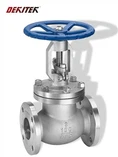

Globe valves are essential components in many industrial and commercial systems, controlling the flow of liquids and gases. As a globe valve supplier, I often get asked about the materials used to make these valves. In this blog, I'll break down the common materials and their unique properties, so you can understand which is best for your needs.
Cast Iron
Cast iron is one of the oldest and most widely used materials for making globe valves. It's known for its excellent casting properties, which means it can be easily formed into complex shapes. Cast iron globe valves are relatively inexpensive, making them a popular choice for general - purpose applications where corrosion resistance isn't a major concern.
One of the main advantages of cast iron is its high strength and durability. It can withstand high pressures and is suitable for use in water supply systems, heating systems, and some low - corrosive chemical applications. However, cast iron is prone to rust and corrosion, especially in environments with high humidity or when exposed to certain chemicals. So, it's often coated with a protective layer to extend its lifespan.
Carbon Steel
Carbon steel is another commonly used material for globe valves. It contains a small amount of carbon, which gives it enhanced strength and hardness compared to cast iron. Carbon steel globe valves are more resistant to wear and can handle higher pressures and temperatures.
These valves are widely used in industries such as oil and gas, power generation, and chemical processing. They are suitable for applications involving steam, water, and non - corrosive gases. Carbon steel can be further classified into different grades based on its carbon content and other alloying elements. For example, low - carbon steel is more ductile and easier to weld, while high - carbon steel offers higher strength but is less malleable.
Alloy Steel
Alloy steel globe valves are made by adding various alloying elements to carbon steel, such as chromium, nickel, molybdenum, and vanadium. These elements improve the valve's mechanical properties, corrosion resistance, and heat resistance. Alloy Steel Globe Valve is a great choice for applications in harsh environments, such as offshore oil rigs, chemical refineries, and high - temperature power plants.
For instance, adding chromium to the steel can form a passive oxide layer on the surface, which protects the valve from corrosion. Molybdenum enhances the steel's strength at high temperatures, making it suitable for steam applications. Alloy steel valves can be more expensive than carbon steel valves, but their superior performance often justifies the cost in critical applications.
Stainless Steel
Stainless steel is a popular choice for globe valves, especially in applications where corrosion resistance is crucial. It contains a minimum of 10.5% chromium, which forms a thin, protective oxide layer on the surface, preventing rust and corrosion. Stainless Steel Globe Valve is widely used in the food and beverage industry, pharmaceutical industry, and marine applications.


There are different grades of stainless steel, each with its own set of properties. For example, 304 stainless steel is a general - purpose grade that offers good corrosion resistance in most environments. 316 stainless steel contains molybdenum, which provides even better resistance to pitting and crevice corrosion, making it suitable for applications in saltwater or highly corrosive chemical environments.
Duplex Steel
Duplex steel is a type of stainless steel that has a two - phase microstructure, consisting of austenite and ferrite. This unique structure gives Duplex Steel Globe Valve excellent strength and corrosion resistance. Duplex steel valves are commonly used in the oil and gas industry, especially in offshore platforms where they are exposed to harsh seawater conditions.
Compared to traditional austenitic stainless steels, duplex steel has higher yield strength, which means it can withstand greater pressures without deforming. It also has better resistance to stress - corrosion cracking, making it a reliable choice for long - term use in corrosive environments.
Brass
Brass is an alloy of copper and zinc, and it's often used to make small - sized globe valves for residential and light - commercial applications. Brass valves are known for their good corrosion resistance, especially in water - based systems. They are also relatively easy to machine, which allows for the production of intricate valve designs.
Brass globe valves are commonly used in plumbing systems, such as in faucets, water heaters, and irrigation systems. They are cost - effective and provide a reliable solution for controlling the flow of water at low to moderate pressures.
Bronze
Bronze is an alloy of copper and tin, and it has been used for valve manufacturing for centuries. Bronze globe valves have excellent corrosion resistance, especially in seawater and other corrosive environments. They are also known for their good wear resistance and low friction properties.
These valves are often used in marine applications, such as on ships and offshore platforms, as well as in some industrial processes where corrosion is a concern. Bronze valves can be more expensive than brass valves, but their superior performance in corrosive conditions makes them a worthwhile investment.
Choosing the Right Material
When choosing the material for a globe valve, several factors need to be considered. First, you need to think about the type of fluid or gas that the valve will be handling. If it's a corrosive substance, such as acid or saltwater, then a valve made of a corrosion - resistant material like stainless steel, duplex steel, or bronze would be a better choice.
The operating pressure and temperature are also important. High - pressure and high - temperature applications require materials with high strength and heat resistance, such as alloy steel or carbon steel. In addition, cost is always a consideration. You need to balance the performance requirements with your budget to find the most cost - effective solution.
As a globe valve supplier, I can help you select the right material for your specific application. We offer a wide range of globe valves made from different materials to meet the diverse needs of our customers. Whether you need a small brass valve for a residential plumbing project or a large alloy steel valve for an industrial plant, we've got you covered.
If you're interested in purchasing globe valves or have any questions about the materials or valve selection, feel free to get in touch with me. I'm here to assist you in finding the perfect valve solution for your needs.
References
- ASME B16.34 - Valves - Flanged, Threaded, and Welding End
- API 602 - Compact Steel Gate, Globe, and Check Valves
- ASTM Standards for Metals and Alloys