


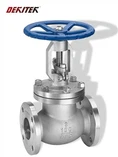

What is the torque requirement for operating a globe valve?
As a leading globe valve supplier, I've encountered numerous inquiries from clients regarding the torque requirements for operating globe valves. Understanding these requirements is crucial for ensuring the proper functioning, safety, and efficiency of valve operations. In this blog post, I'll delve into the factors that influence the torque requirement for operating a globe valve and provide insights to help you make informed decisions.
Factors Affecting Torque Requirement
Valve Size
The size of a globe valve is one of the primary factors that determine the torque requirement. Larger valves typically require more torque to operate because they have a greater surface area in contact with the fluid and a larger stem diameter. As the valve size increases, the force needed to move the disc against the fluid pressure and the friction between the stem and the packing also increases. For example, a 2-inch globe valve may require significantly less torque to operate compared to a 10-inch globe valve.


Fluid Pressure
Fluid pressure plays a significant role in determining the torque requirement for operating a globe valve. Higher fluid pressures exert more force on the valve disc, making it more difficult to move. When the valve is in the closed position, the fluid pressure acts on the disc, creating a sealing force. To open the valve, the operator must overcome this sealing force, which requires a certain amount of torque. Similarly, when closing the valve, the operator must apply sufficient torque to ensure a tight seal against the fluid pressure.
Valve Design
The design of a globe valve can also affect the torque requirement. Different valve designs have different flow characteristics, which can impact the force needed to operate the valve. For example, a globe valve with a straight-through design may require less torque to operate compared to a valve with an angle design because the straight-through design offers less resistance to fluid flow. Additionally, the type of seat and disc used in the valve can also affect the torque requirement. A soft-seated valve may require less torque to operate compared to a metal-seated valve because the soft seat provides a better seal with less friction.
Stem Friction
Stem friction is another important factor that influences the torque requirement for operating a globe valve. The stem of the valve passes through the packing, which creates friction as the stem moves. The amount of friction depends on several factors, including the type of packing material, the packing compression, and the stem surface finish. A well-lubricated stem with a smooth surface finish and properly adjusted packing will have less friction, requiring less torque to operate.
Operating Conditions
The operating conditions of the valve can also affect the torque requirement. For example, if the valve is operating in a high-temperature environment, the packing material may expand, increasing the friction between the stem and the packing. This can result in an increase in the torque requirement. Similarly, if the valve is operating in a corrosive environment, the stem and other components may be subject to corrosion, which can also increase the friction and the torque requirement.
Calculating Torque Requirement
Calculating the exact torque requirement for operating a globe valve can be complex because it depends on multiple factors. However, there are some general guidelines and formulas that can be used to estimate the torque requirement. One common method is to use the following formula:
[T = F \times r]
Where:
- (T) is the torque (in lb-ft or N-m)
- (F) is the force required to move the disc (in lb or N)
- (r) is the radius of the stem (in ft or m)
To calculate the force (F), you need to consider the fluid pressure, the valve size, and the friction forces. The fluid pressure force can be calculated using the formula:
[F_p = P \times A]
Where:
- (F_p) is the fluid pressure force (in lb or N)
- (P) is the fluid pressure (in psi or Pa)
- (A) is the cross-sectional area of the valve disc (in in² or m²)
The friction forces can be estimated based on the stem friction and the packing friction. These forces can be determined through testing or by using empirical data.
It's important to note that the above formulas provide only an estimate of the torque requirement. In practice, the actual torque requirement may vary depending on the specific valve design, the operating conditions, and other factors. Therefore, it's recommended to consult with the valve manufacturer or a qualified engineer to determine the exact torque requirement for your application.
Importance of Proper Torque
Using the correct torque when operating a globe valve is essential for several reasons. First, it ensures the proper functioning of the valve. If the torque is too low, the valve may not open or close fully, leading to leakage or improper flow control. On the other hand, if the torque is too high, it can damage the valve components, such as the stem, the disc, or the seat. This can result in premature failure of the valve and costly repairs or replacements.
Second, proper torque is important for safety. Over-tightening a valve can cause excessive stress on the valve and the piping system, increasing the risk of a rupture or a leak. This can pose a significant safety hazard, especially in applications where the fluid is hazardous or under high pressure.
Finally, using the correct torque can improve the efficiency of the valve operation. A valve that is operated with the proper torque will require less energy to open and close, reducing the overall operating costs.
Our Globe Valve Offerings
At our company, we offer a wide range of globe valves to meet the diverse needs of our customers. Our Duplex Steel Globe Valve is made from high-quality duplex steel, which offers excellent corrosion resistance and high strength. This valve is suitable for use in a variety of applications, including chemical processing, oil and gas, and marine industries.
Our Alloy Steel Globe Valve is designed for high-temperature and high-pressure applications. It is made from alloy steel, which provides superior mechanical properties and resistance to wear and tear. This valve is commonly used in power generation, refineries, and other industrial applications.
We also offer Stainless Steel Globe Valve, which is ideal for applications where corrosion resistance is a primary concern. Our stainless steel valves are available in various grades and sizes to suit different requirements.
Contact Us for Procurement
If you are in the market for a globe valve and need assistance in determining the torque requirement or selecting the right valve for your application, please don't hesitate to contact us. Our team of experts is ready to provide you with the necessary information and support to help you make an informed decision. We can also offer customized solutions to meet your specific needs.
We look forward to the opportunity to work with you and provide you with high-quality globe valves that meet your expectations.
References
- Valve Handbook, 4th Edition, by Robert W. McKetta
- Fluid Mechanics and Thermodynamics of Turbomachinery, 3rd Edition, by S. L. Dixon
- Standards of the American Petroleum Institute (API)