


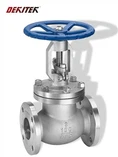

Hey there! As a supplier of Duplex Stainless Steel Gate Valves, I often get asked about the torque requirements for operating these valves. It's a crucial topic, and I'm here to break it down for you in a simple and easy - to - understand way.
First off, let's talk a bit about what a Duplex Stainless Steel Gate Valve is. Duplex stainless steel is an alloy that combines austenitic and ferritic stainless steel characteristics. This gives it excellent corrosion resistance, high strength, and good weldability. You can learn more about these valves on our Duplex Stainless Steel Gate Valve page.
Now, when it comes to the torque requirements for operating a gate valve, there are several factors at play. The size of the valve is one of the most significant factors. Larger valves generally require more torque to open and close. This is because they have a greater surface area in contact with the fluid, and the force needed to move the gate against the fluid pressure is higher. For example, a 2 - inch valve will have a much lower torque requirement compared to a 12 - inch valve.
The pressure of the system also affects the torque. In high - pressure systems, the gate valve has to withstand a large amount of force from the fluid. So, more torque is needed to overcome this force and operate the valve. That's why High Pressure And High Temperature Gate Valves are designed to handle these extreme conditions, but they also come with higher torque requirements.
The type of fluid flowing through the valve is another factor. Viscous fluids, like oil or thick slurries, create more resistance as the gate moves through them. This means more torque is required to open and close the valve compared to a valve handling a low - viscosity fluid like water.
The design of the valve itself plays a role too. Some gate valves have a wedge - shaped gate, while others have a parallel - slide gate. Wedge - shaped gates can provide a better seal but may require more torque to operate, especially when they are fully seated.
Let's take a closer look at how to calculate the torque requirements. There isn't a one - size - fits - all formula, but there are some general guidelines. Most valve manufacturers provide torque charts based on the valve size, pressure rating, and other factors. These charts can give you a good starting point.
For a rough estimate, you can consider the friction between the gate and the seat, the fluid pressure acting on the gate, and the mechanical efficiency of the valve stem and actuator. The friction force depends on the material of the gate and seat and the surface finish. A smoother surface finish will reduce friction and thus lower the torque requirement.
If you're using an actuator to operate the valve, such as a Pneumatic Actuator Gate Valve, the actuator needs to be sized correctly to provide enough torque. Pneumatic actuators use compressed air to generate the force needed to operate the valve. The size of the actuator is determined by the torque requirement of the valve. If the actuator is too small, it won't be able to open or close the valve properly.
Another important aspect is the operating frequency. If the valve is opened and closed frequently, it's important to ensure that the torque requirement doesn't cause excessive wear and tear on the valve components. In such cases, you might need to choose a valve with a lower torque requirement or a more robust design.
Now, I want to stress the importance of getting the torque requirement right. If you use too little torque, the valve may not close properly, leading to leaks. On the other hand, using too much torque can damage the valve, the actuator, or other components in the system.
As a supplier, we have a team of experts who can help you determine the exact torque requirements for your specific application. We understand that every project is unique, and we take into account all the factors I've mentioned above to provide you with the best - suited valve and actuator combination.
Whether you're working on a small - scale industrial project or a large - scale infrastructure development, getting the torque requirement for your Duplex Stainless Steel Gate Valve right is essential for the smooth operation of your system.
If you're in the market for a Duplex Stainless Steel Gate Valve and want to discuss the torque requirements or any other aspect of our products, don't hesitate to reach out. We're here to help you make the right choice and ensure that your valve operates efficiently and reliably.


References
- Valve Handbook: A Guide to Valve Selection, Design, and Operation, Various Authors
- ASME Standards on Valves and Piping Systems
- Manufacturer's Technical Documents on Duplex Stainless Steel Gate Valves