


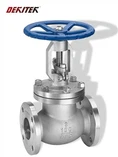

Hey there! As a supplier of Cast Steel Pressure Seal Gate Valves, I often get asked about the pressure drop across these valves. So, I thought I'd take a few minutes to break it down for you.
First off, let's talk about what pressure drop actually is. Pressure drop is the difference in pressure between two points in a fluid system. In the case of a gate valve, it's the difference in pressure between the inlet and the outlet of the valve. When fluid flows through a valve, it encounters resistance, and this resistance causes a drop in pressure.
Now, the pressure drop across a Cast Steel Pressure Seal Gate Valve can vary depending on a few factors. One of the main factors is the size of the valve. Generally speaking, larger valves tend to have a lower pressure drop because they offer less resistance to the flow of fluid. For example, a 10 - inch valve will typically have a lower pressure drop than a 2 - inch valve when the same flow rate is applied.
Another important factor is the flow rate of the fluid. The higher the flow rate, the greater the pressure drop. This is because at higher flow rates, the fluid has more energy and encounters more resistance as it passes through the valve. Think of it like trying to run through a narrow doorway. If you're walking slowly, it's not too difficult. But if you're running full - speed, you're going to hit the sides of the doorway and slow down, which is similar to what happens to the fluid in a valve.


The design of the gate valve also plays a role in the pressure drop. Cast Steel Pressure Seal Gate Valves are designed to have a relatively low pressure drop compared to some other types of valves. The pressure seal design helps to ensure a tight seal and reduces the amount of leakage, which in turn can minimize the pressure drop. The gate itself is usually flat and moves perpendicular to the flow of the fluid. When the gate is fully open, it provides a relatively straight path for the fluid, reducing the resistance and thus the pressure drop.
However, if the valve is not fully open, the pressure drop can increase significantly. A partially open gate valve creates a restriction in the flow path, causing the fluid to speed up and creating turbulence. This turbulence leads to an increase in resistance and a higher pressure drop.
Now, let's take a look at how the pressure drop can impact your system. In some applications, a high pressure drop can be a problem. For example, in a pipeline where the fluid needs to be transported over a long distance, a large pressure drop can require more energy to pump the fluid. This means higher operating costs and more wear and tear on the pumps. On the other hand, in some systems where a certain level of pressure control is needed, a controlled pressure drop across the valve can be beneficial.
As a supplier, I understand the importance of minimizing the pressure drop in your system. That's why our Cast Steel Pressure Seal Gate Valves are carefully engineered to provide the best performance. We use high - quality cast steel materials that are durable and can withstand high pressures and temperatures. Our valves are also precision - machined to ensure a smooth flow path and a tight seal.
If you're interested in other types of gate valves, we also offer Carbon Steel Flexible Wedge Gate Valve. These valves are great for applications where there might be some thermal expansion or contraction. The flexible wedge design allows the valve to adapt to these changes and maintain a good seal.
Another option is our Electric Actuator Gate Valve. These valves are convenient because they can be automated, allowing for easy control of the valve opening and closing. This can be especially useful in large - scale industrial applications where precise control is required.
We also have Stainless Steel Pressure Seal Gate Valve. Stainless steel is corrosion - resistant, making these valves suitable for applications where the fluid might be corrosive or in environments with high humidity.
If you're in the market for a gate valve and want to discuss your specific requirements, don't hesitate to reach out. Whether you need to minimize pressure drop, deal with corrosive fluids, or automate your system, we can help you find the right valve for your needs. Our team of experts is always ready to answer your questions and provide you with the best solutions. Let's have a chat and see how we can work together to improve your fluid system.
References
- Fluid Mechanics textbooks for general principles of fluid flow and pressure drop
- Valve design and engineering handbooks for specific information on gate valve design and performance