


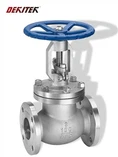

A ball valve is a type of valve that uses a spherical disc to control the flow of fluid through a pipe. The ball in a ball valve plays a crucial role in the valve's operation, and understanding its function is essential for anyone involved in the design, installation, or maintenance of fluid systems. As a ball valve supplier, I've had the opportunity to work with a wide range of ball valves and understand the intricacies of their operation. In this blog post, I'll delve into the function of the ball in a ball valve, explore its design and materials, and discuss how it impacts the performance of the valve.
The Basic Function of the Ball in a Ball Valve
At its core, the ball in a ball valve serves as the primary flow control element. The ball has a hole, or port, through its center. When the valve is open, the port aligns with the pipe, allowing fluid to flow through the valve with minimal resistance. When the valve is closed, the ball is rotated 90 degrees so that the port is perpendicular to the pipe, blocking the flow of fluid. This simple yet effective design provides a reliable way to start, stop, and regulate the flow of liquids and gases in a pipeline.
Design and Materials of the Ball
The design and materials of the ball are critical factors that determine the performance and durability of a ball valve. The size and shape of the port can vary depending on the application. Full-port ball valves have a port that is the same size as the pipe, which minimizes pressure drop and allows for maximum flow. Reduced-port ball valves, on the other hand, have a smaller port, which can be used to control the flow rate more precisely.
The materials used to manufacture the ball also vary depending on the application. For general-purpose applications, balls are often made of stainless steel, brass, or carbon steel. These materials offer good corrosion resistance and durability. In more demanding applications, such as those involving high temperatures, high pressures, or corrosive fluids, balls may be made of exotic materials like Inconel, Hastelloy, or ceramic. These materials can withstand harsh conditions and provide long service life.
Sealing Mechanism
One of the most important functions of the ball in a ball valve is to provide a tight seal when the valve is closed. The ball is typically seated against two seals, known as seats, which are located on either side of the ball. When the valve is closed, the ball is forced against the seats, creating a seal that prevents fluid from leaking past the valve.
The type of seal used in a ball valve can vary depending on the application. Soft seats, made of materials like PTFE (polytetrafluoroethylene) or NBR (nitrile butadiene rubber), are commonly used in applications where a tight seal is required and the operating pressures and temperatures are relatively low. Soft seats provide excellent sealing performance and can conform to minor irregularities on the surface of the ball.
Metal seats, on the other hand, are used in applications where the operating pressures and temperatures are high, or where the fluid is abrasive or corrosive. Metal seats are more durable than soft seats and can withstand higher temperatures and pressures. However, they may not provide as tight a seal as soft seats.
Impact on Valve Performance
The design and function of the ball have a significant impact on the performance of a ball valve. A well-designed ball can provide a smooth and reliable flow control, while a poorly designed ball can lead to problems such as leakage, pressure drop, and premature wear.
For example, the surface finish of the ball is critical for achieving a tight seal. A rough surface can cause the seats to wear prematurely, leading to leakage. Similarly, the alignment of the ball and the seats is important for ensuring proper sealing. If the ball is not properly aligned, it may not seat correctly against the seats, resulting in a leak.
The size and shape of the port also affect the flow characteristics of the valve. A full-port ball valve will have a lower pressure drop than a reduced-port ball valve, which can be important in applications where energy efficiency is a concern. However, a reduced-port ball valve may provide better flow control in applications where precise regulation of the flow rate is required.
Types of Ball Valves and Their Balls
There are several types of ball valves, each with its own unique design and function. Some of the most common types of ball valves include floating ball valves, trunnion-mounted ball valves, and top entry ball valves.


- Floating Ball Valves: In a floating ball valve, the ball is not fixed in place but is free to move slightly within the valve body. When the valve is closed, the pressure of the fluid forces the ball against the downstream seat, creating a seal. Floating ball valves are typically used in low to medium-pressure applications.
- Trunnion-Mounted Ball Valves: Trunnion-mounted ball valves are designed for high-pressure applications. In a trunnion-mounted ball valve, the ball is supported by a shaft, or trunnion, at the top and bottom. This design helps to reduce the load on the seats and provides a more reliable seal. There are two main types of trunnion-mounted ball valves: Trunnion Mounted Soft Seated Forged Ball Valve and Trunnion Mounted Metal Seated Ball Valve. The former uses soft seats for a tight seal in less demanding applications, while the latter uses metal seats for high-temperature and high-pressure applications.
- Top Entry Ball Valves: Top Entry Ball Valves are designed for easy maintenance. In a top entry ball valve, the valve body is split into two parts, and the ball and seats can be accessed from the top of the valve. This makes it easy to inspect, repair, or replace the internal components of the valve without removing the valve from the pipeline.
Conclusion
The ball in a ball valve is a critical component that plays a vital role in the valve's operation. Its design, materials, and sealing mechanism all affect the performance and durability of the valve. As a ball valve supplier, I understand the importance of providing high-quality balls that are designed to meet the specific needs of each application.
Whether you're looking for a ball valve for a simple water supply system or a complex industrial process, it's important to choose a valve that is designed and manufactured to the highest standards. If you have any questions about ball valves or need help selecting the right valve for your application, please don't hesitate to contact us. We're here to help you find the best solution for your fluid control needs.
References
- ASME B16.34 - Valves - Flanged, Threaded, and Welding End
- API 6D - Pipeline Valves - Specification for Pipeline Valves
- ISO 17292 - Petroleum, petrochemical and natural gas industries - Ball valves