


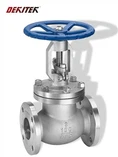

Hey there! As a supplier of Alloy Steel Globe Valves, I often get asked about the difference between soft - seated and hard - seated ones. So, I thought I'd break it down for you in this blog post.
Let's start with the basics. A globe valve is a type of valve used for regulating flow in a pipeline. It has a spherical body with an internal baffle that divides the body into two halves. The valve disc moves up and down to control the flow of fluid through the valve. Now, when it comes to the seating, that's where the difference between soft - seated and hard - seated comes in.
Soft - Seated Alloy Steel Globe Valves
Soft - seated valves have a seat made of a soft material like rubber, PTFE (polytetrafluoroethylene), or other elastomers. These materials are known for their flexibility and ability to create a tight seal.
One of the biggest advantages of soft - seated valves is their excellent sealing performance. The soft material can conform to the surface of the valve disc, even if there are minor irregularities. This means that they can provide a bubble - tight seal, which is great for applications where leakage is a major concern, like in the food and beverage industry or in pharmaceutical processes.
Another plus is their low torque requirement. Since the soft material is more forgiving, it doesn't take as much force to open and close the valve. This can lead to energy savings, especially in large - scale operations where valves are opened and closed frequently.
However, soft - seated valves also have their limitations. The soft materials are not as durable as hard materials. They can be easily damaged by high - temperature fluids, abrasive particles, or chemicals. For example, if you're dealing with a process that involves hot steam or a fluid with a lot of suspended solids, the soft seat may wear out quickly. Also, the temperature range for soft - seated valves is usually more limited compared to hard - seated ones.
Hard - Seated Alloy Steel Globe Valves
On the other hand, hard - seated valves have seats made of hard materials such as alloy steel, tungsten carbide, or ceramic. These materials are known for their high hardness and wear resistance.
The main advantage of hard - seated valves is their durability. They can withstand high temperatures, high pressures, and abrasive fluids. In industries like oil and gas, mining, and power generation, where the operating conditions are harsh, hard - seated valves are often the go - to choice. For instance, in an oil refinery, the valves need to handle high - pressure crude oil and various chemicals, and a hard - seated valve can better withstand these conditions without significant wear.
Hard - seated valves also have a longer service life compared to soft - seated ones. They can last for many years, even in demanding environments. This reduces the need for frequent replacements, which can save on maintenance costs in the long run.
But there are also some drawbacks. Hard - seated valves may not provide as tight a seal as soft - seated ones. The hard materials are less likely to conform to minor irregularities on the valve disc surface, which can result in a small amount of leakage. Also, they usually require a higher torque to open and close, which means more energy is needed to operate them.
Applications
The choice between soft - seated and hard - seated alloy steel globe valves depends largely on the application.
If you're in an industry where a tight seal is crucial and the operating conditions are relatively mild, like in the water treatment industry or in some chemical processing applications where the fluids are not too aggressive, a soft - seated valve might be the best option. You can check out our Stainless Steel Globe Valve for some great soft - seated options.
On the other hand, if you're dealing with high - temperature, high - pressure, or abrasive fluids, a hard - seated valve is the way to go. Our Cast Steel Globe Valve and Duplex Steel Globe Valve are excellent choices for such demanding applications.
Cost Considerations
Cost is also an important factor. Soft - seated valves are generally less expensive to manufacture. The soft materials are cheaper, and the manufacturing process is often simpler. However, you need to factor in the cost of replacement due to their shorter service life.
Hard - seated valves, while more expensive upfront, can save you money in the long term. Their longer service life means fewer replacements and less downtime for maintenance.


Making the Right Choice
When choosing between a soft - seated and a hard - seated alloy steel globe valve, you need to consider several factors. First, think about the operating conditions, including temperature, pressure, and the nature of the fluid. Second, consider the importance of a tight seal. If leakage is a major issue, a soft - seated valve might be better. Third, think about the long - term cost. If you're willing to invest more upfront for a valve that will last longer, a hard - seated valve could be the right choice.
As a supplier of alloy steel globe valves, I'm here to help you make the best decision for your specific needs. Whether you need a soft - seated valve for a precise sealing application or a hard - seated valve for a harsh environment, we've got you covered.
If you're interested in purchasing alloy steel globe valves or have any questions about which type is right for you, don't hesitate to reach out. We can provide you with detailed product information, technical support, and competitive pricing. Let's have a chat and find the perfect valve solution for your business.
References
- Valve Handbook, Emerson Process Management
- Valve Selection Guide, Crane Co.
- Industrial Valves: Theory and Practice, Peter Nash