


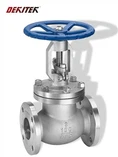

As a seasoned gate valve supplier, I've encountered numerous inquiries about the cavitation phenomenon in gate valves. Cavitation is a complex and potentially damaging process that can significantly impact the performance and lifespan of gate valves. In this blog post, I'll delve into what cavitation is, how it occurs in gate valves, its effects, and preventive measures.
What is Cavitation?
Cavitation is a physical phenomenon that happens when the pressure of a liquid drops below its vapor pressure, leading to the formation of vapor bubbles. These bubbles, also known as cavities, are created in areas where the liquid experiences a rapid decrease in pressure. When these bubbles move to regions of higher pressure, they collapse suddenly. This collapse generates high - intensity shockwaves that can cause damage to nearby surfaces.
In a more scientific sense, the process of cavitation can be explained by Bernoulli's principle. According to this principle, as the velocity of a fluid increases, its pressure decreases. When the pressure drops below the vapor pressure of the liquid, vaporization occurs, and bubbles are formed.
How Cavitation Occurs in Gate Valves
In gate valves, cavitation typically occurs during the throttling process. A gate valve is designed to be either fully open or fully closed. However, in some cases, operators may partially open the valve to control the flow rate. When a gate valve is partially open, the flow area is restricted, causing the fluid to accelerate through the narrow passage between the gate and the valve seat.
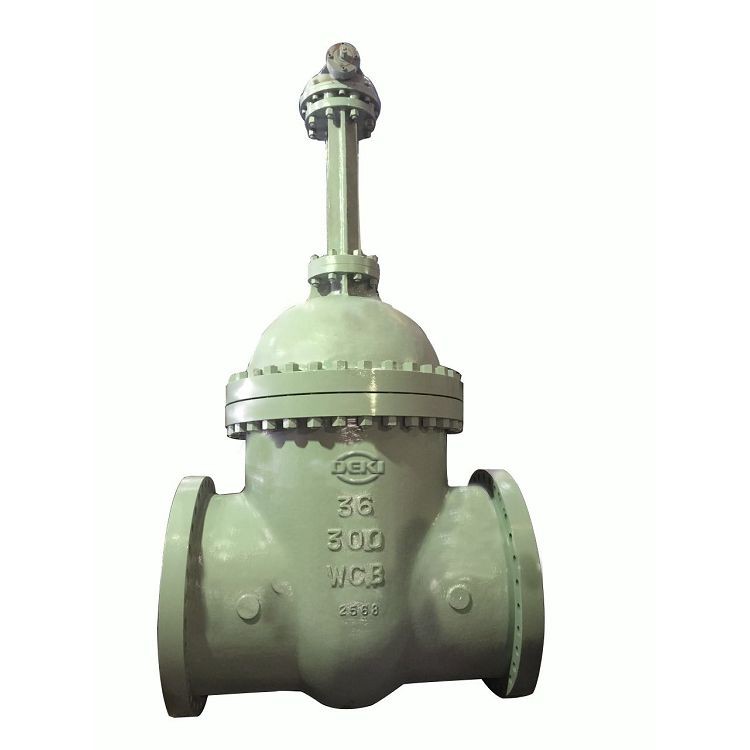

As the fluid accelerates, its pressure drops according to Bernoulli's principle. If the pressure drops below the vapor pressure of the fluid, cavitation bubbles start to form. These bubbles then travel downstream with the fluid. When they reach an area of higher pressure, they collapse violently.
For example, in a water - based system, if the water pressure drops below the vapor pressure of water at the operating temperature, vapor bubbles will form. As these bubbles move into a region where the pressure is higher, they implode, creating shockwaves.
Effects of Cavitation on Gate Valves
The effects of cavitation on gate valves can be quite severe. One of the most obvious effects is physical damage to the valve components. The high - intensity shockwaves generated by the collapsing bubbles can erode the valve seat, gate, and other internal parts. This erosion can lead to leakage, reduced flow control accuracy, and eventually, valve failure.
Over time, the continuous impact of the collapsing bubbles can cause pitting and scarring on the metal surfaces of the valve. This not only weakens the structural integrity of the valve but also increases the friction between moving parts, making it more difficult to operate the valve.
In addition to physical damage, cavitation can also cause noise and vibration. The collapsing bubbles produce a characteristic popping or cracking sound, which can be quite loud in some cases. The vibration caused by cavitation can also be transmitted to the surrounding piping system, potentially causing damage to other equipment and increasing the risk of pipe failure.
Preventive Measures for Cavitation in Gate Valves
To prevent cavitation in gate valves, several strategies can be employed.
Avoid Partial Opening
The simplest way to prevent cavitation is to avoid partially opening the gate valve. As mentioned earlier, cavitation is most likely to occur during the throttling process. By ensuring that the valve is either fully open or fully closed, the risk of cavitation can be significantly reduced.
Use Appropriate Valve Sizing
Proper valve sizing is crucial to prevent cavitation. A valve that is too small for the application may require partial opening to control the flow, increasing the risk of cavitation. On the other hand, a valve that is too large may be more difficult to operate and may also lead to inefficient flow control. Therefore, it's important to select a gate valve with the appropriate size based on the flow rate, pressure, and other operating conditions of the system.
Install Anti - Cavitation Devices
There are various anti - cavitation devices available in the market that can be installed in gate valves to prevent cavitation. These devices work by reducing the pressure drop across the valve or by controlling the flow pattern to minimize the formation of low - pressure areas.
For example, some anti - cavitation trims can be installed inside the valve to create multiple stages of pressure reduction. This helps to maintain the pressure above the vapor pressure of the fluid, preventing the formation of cavitation bubbles.
Our Gate Valve Products and Cavitation Resistance
As a gate valve supplier, we offer a wide range of gate valve products designed to resist cavitation. Our Electric Actuator Gate Valve is equipped with advanced control systems that ensure precise opening and closing, reducing the likelihood of partial opening and cavitation.
Our High Pressure And High Temperature Gate Valves are specifically designed to withstand extreme operating conditions. They are made from high - quality materials that can resist the erosive effects of cavitation.
In addition, our Carbon Steel Flexible Wedge Gate Valve features a flexible wedge design that provides a better seal and reduces the risk of cavitation - induced leakage.
Conclusion
Cavitation is a serious issue that can affect the performance and lifespan of gate valves. By understanding what cavitation is, how it occurs, and its effects, operators can take appropriate preventive measures to protect their gate valves. As a gate valve supplier, we are committed to providing high - quality gate valve products that are resistant to cavitation.
If you are in the market for gate valves and want to learn more about how our products can help you prevent cavitation, please feel free to contact us for procurement and further discussions. We are always ready to assist you in finding the best valve solutions for your specific needs.
References
- Streeter, V. L., & Wylie, E. B. (1981). Fluid Mechanics. McGraw - Hill.
- Idelchik, I. E. (1986). Handbook of Hydraulic Resistance. Hemisphere Publishing Corporation.
- ASME B16.34 - 2017, Valves - Flanged, Threaded, and Welding End.