


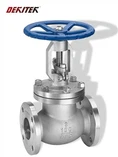

When it comes to fluid control systems, check valves play a crucial role in ensuring the proper flow of liquids and gases. As a leading check valve supplier, I often encounter inquiries about the differences between wafer - type and lug - type check valves. In this blog post, I will delve into the characteristics, applications, and advantages of each type to help you make an informed decision for your specific needs.
Structural Design
The most obvious difference between wafer - type and lug - type check valves lies in their structural design.
A wafer - type check valve is designed to be installed between two flanges. It is relatively thin and compact, with a disc that swings or lifts to allow forward flow and then closes to prevent backflow. The valve is held in place by the compression of the flanges on either side. This design makes it a space - saving option for applications where space is limited.
On the other hand, a lug - type check valve has threaded lugs on its body. These lugs are used to bolt the valve between two flanges, and they also allow the valve to be installed in a pipeline without the need for additional gaskets in some cases. The lugs provide a more secure connection and can be used to isolate the valve from the pipeline for maintenance or replacement.


Installation and Maintenance
Installation of wafer - type check valves is generally quicker and easier, especially in tight spaces. Since they are installed between flanges, there is no need for complex bolting patterns. However, they require proper alignment during installation to ensure a good seal. If the alignment is off, it can lead to leakage.
Lug - type check valves, while taking a bit more time to install due to the bolting process, offer greater flexibility. They can be installed in a pipeline with only one side of the flange connected, which is useful for maintenance. For example, if there is a need to service the valve, the downstream flange can be removed while the upstream flange remains in place, isolating the valve from the flow. This reduces downtime and makes maintenance more efficient.
Pressure and Flow Capacity
In terms of pressure and flow capacity, both types can handle a wide range of conditions. However, lug - type check valves are often better suited for high - pressure applications. The lugs provide additional support to the valve body, allowing it to withstand higher pressures without deforming.
Wafer - type check valves are suitable for low - to medium - pressure applications. They are commonly used in HVAC systems, water treatment plants, and general industrial pipelines where the pressure is not extremely high.
Applications
The choice between wafer - type and lug - type check valves also depends on the specific application.
Wafer - type check valves are widely used in systems where space is a constraint. For example, in building plumbing systems, where there are many pipes running in a limited space, wafer - type valves can be easily installed. They are also commonly used in chemical processing plants for handling corrosive fluids, as their compact design reduces the amount of material in contact with the fluid.
Lug - type check valves are preferred in applications where isolation and maintenance are important. In oil and gas pipelines, for instance, where regular maintenance and inspection are required, lug - type valves allow for easy access without disrupting the entire pipeline. They are also used in power generation plants, where high - pressure steam or water flow needs to be controlled.
Advantages and Disadvantages
Wafer - Type Check Valves
Advantages:
- Compact design, saving space in the pipeline system.
- Lower cost compared to lug - type valves, making them a cost - effective option for many applications.
- Easy to install in systems with limited access.
Disadvantages:
- Less suitable for high - pressure applications.
- Require precise alignment during installation to prevent leakage.
- Limited isolation capabilities during maintenance.
Lug - Type Check Valves
Advantages:
- Suitable for high - pressure and high - temperature applications.
- Provide better isolation for maintenance, reducing downtime.
- Can be installed in a pipeline with only one side connected.
Disadvantages:
- Bulkier and more expensive than wafer - type valves.
- Installation takes more time due to the bolting process.
Our Product Offerings
As a check valve supplier, we offer a wide range of both wafer - type and lug - type check valves. Our API 6D BW Check Valve is a high - quality option for applications that require a robust and reliable valve. It meets the strict standards of API 6D, ensuring its performance in demanding environments.
We also have the API6D Flange End Swing Type Check Valve, which is available in both wafer - type and lug - type designs. This valve is suitable for a variety of industries, including oil and gas, chemical, and power generation.
Conclusion
In conclusion, the choice between a wafer - type and a lug - type check valve depends on several factors, including the application, pressure and flow requirements, installation space, and maintenance needs. Wafer - type valves are ideal for space - constrained and low - to medium - pressure applications, while lug - type valves are better suited for high - pressure applications and those requiring easy maintenance.
If you are in the market for a check valve and need further assistance in choosing the right type for your application, do not hesitate to contact us. Our team of experts is ready to help you find the best solution for your fluid control needs. Whether you are a small business or a large industrial enterprise, we have the products and expertise to meet your requirements. Reach out to us today to start a discussion about your check valve needs and let us work together to find the perfect valve for your system.
References
- Valve Handbook, Third Edition, by J. Paul Tullis
- API 6D Standard for Pipeline Valves
- ASME B16.34 Standard for Valves - Flanged, Threaded, and Welding End