



Hey there! As a ball valve supplier, I've seen my fair share of damaged ball valves over the years. Ball valves are crucial components in many industrial and commercial systems, used to control the flow of liquids and gases. But like any mechanical part, they can get damaged. In this blog, I'll share some signs that your ball valve might be in trouble.
1. Leakage
One of the most obvious signs of a damaged ball valve is leakage. If you notice any fluid or gas seeping out around the valve body, bonnet, or stem, that's a red flag. Leakage can happen for several reasons. For instance, the valve seat might be worn out. The seat is what creates a tight seal when the valve is closed. Over time, constant friction from the ball and the flow of media can wear down the seat material, leading to gaps where fluid can escape.
Another cause could be a damaged stem packing. The stem packing is responsible for preventing leakage along the valve stem. If it gets damaged due to factors like improper installation, high temperatures, or chemical corrosion, it won't be able to do its job properly.
Let's say you have a Trunnion Mounted Soft Seated Ball Valve. These valves are often used in high-pressure applications. If you detect leakage in one of these valves, it's essential to address it quickly. A small leak can turn into a big problem, causing loss of product, potential safety hazards, and increased operating costs.
2. Difficulty in Operation
Is it becoming harder to turn the valve handle? That's a sign that something might be wrong. A ball valve should open and close smoothly with relatively little effort. If you're having to use excessive force to operate the valve, there could be internal damage.
One possible cause is debris or foreign objects inside the valve. Over time, particles can accumulate in the valve cavity, getting stuck between the ball and the seat. This can prevent the ball from rotating freely, making it difficult to open or close the valve.
Corrosion can also lead to difficult operation. When the valve components corrode, the surfaces become rough, increasing friction. For example, in a Fully Welded Ball Valve, which is commonly used in pipelines, corrosion can affect the internal parts, making the valve harder to operate.
3. Unusual Noises
Do you hear strange noises when you operate the ball valve? Sounds like grinding, rattling, or clicking can indicate damage. Grinding noises often suggest that there's something rubbing against the ball or the valve seat. This could be due to debris or a misaligned ball.
Rattling noises might mean that some internal parts are loose. In a ball valve, the ball is held in place by various components. If these components become loose, they can move around and cause rattling sounds.
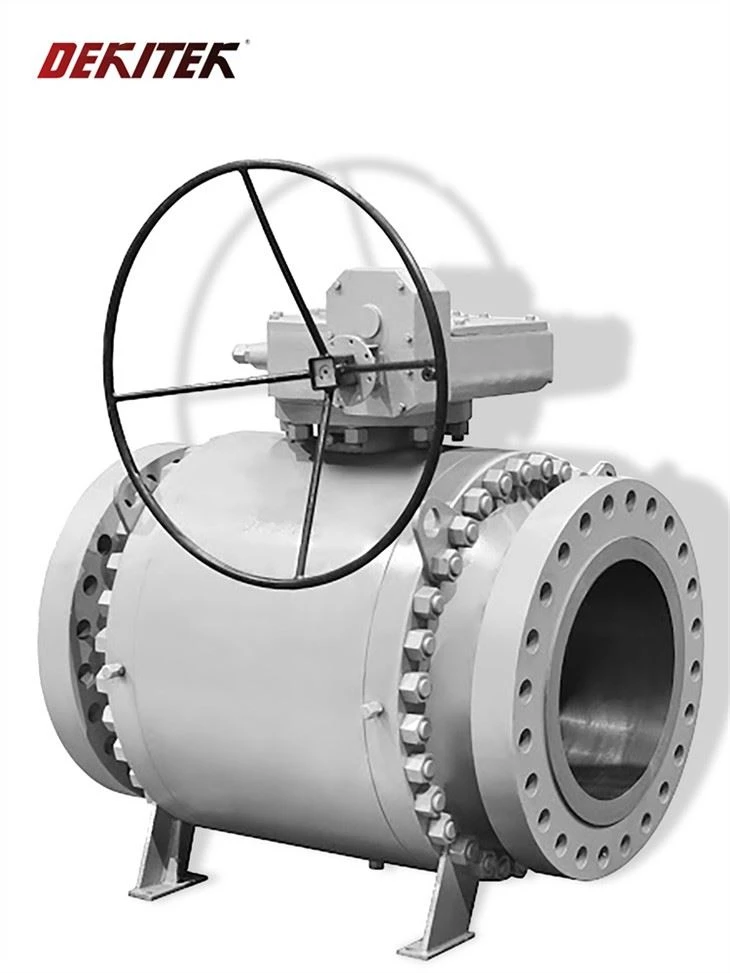

Clicking noises can be a sign of a problem with the valve's locking mechanism or a damaged stem. For a Top Entry Ball Valve, which is designed for easy maintenance, unusual noises should be investigated promptly to avoid further damage.
4. Inconsistent Flow Control
A ball valve is supposed to provide precise control over the flow of media. If you notice that the flow rate is inconsistent, even when the valve position remains the same, it could be a sign of damage.
This could be due to a damaged ball. If the ball has a crack or a chip, it won't be able to create a proper seal, allowing media to flow through even when the valve is supposed to be closed. Or, if the valve seat is unevenly worn, it can cause variations in the flow rate.
In a process where accurate flow control is critical, such as in a chemical plant or a water treatment facility, inconsistent flow can disrupt the entire operation. So, if you experience this issue with your ball valve, it's important to take action.
5. High Pressure Drop
A significant increase in pressure drop across the valve can also indicate damage. Pressure drop is the difference in pressure between the inlet and the outlet of the valve. A normal ball valve should have a relatively low pressure drop.
If the pressure drop is higher than usual, it could be because the valve is partially blocked. As mentioned earlier, debris or a damaged internal component can restrict the flow of media, causing an increase in pressure drop.
In a pipeline system, a high pressure drop can lead to increased energy consumption as pumps have to work harder to maintain the flow. So, it's important to identify and fix the problem as soon as possible.
6. Visible Damage
Sometimes, the signs of damage are right in front of your eyes. Look for cracks, dents, or other visible signs of physical damage on the valve body. These can occur due to external impacts, improper handling, or excessive pressure.
Cracks in the valve body can be particularly dangerous as they can lead to sudden failure. If you notice any visible damage on your ball valve, it's best to replace it immediately to avoid potential disasters.
7. Corrosion
Corrosion is a common problem in ball valves, especially in environments where the media is corrosive or the valve is exposed to moisture. Corrosion can eat away at the valve components, weakening them and reducing their lifespan.
Look for signs of rust, discoloration, or pitting on the valve surface. In severe cases, corrosion can cause holes in the valve body or damage the internal parts, leading to leakage and other problems.
If you're using ball valves in a corrosive environment, it's important to choose valves made from materials that are resistant to corrosion. And if you notice any signs of corrosion, take steps to address it, such as applying a protective coating or replacing the affected parts.
What to Do If You Notice These Signs
If you observe any of these signs in your ball valve, don't ignore them. The first step is to shut down the system and isolate the valve to prevent further damage or safety hazards. Then, you can inspect the valve to determine the extent of the damage.
In some cases, you might be able to repair the valve. For example, if the problem is just a damaged stem packing, you can replace it relatively easily. However, if the damage is more severe, such as a cracked valve body or a damaged ball, it's usually best to replace the valve.
As a ball valve supplier, I can offer you a wide range of high-quality ball valves to meet your needs. Whether you need a Trunnion Mounted Soft Seated Ball Valve, a Fully Welded Ball Valve, or a Top Entry Ball Valve, I've got you covered.
If you're experiencing any issues with your ball valves or are looking to purchase new ones, feel free to reach out. I'm here to help you find the right solutions for your specific applications. Let's work together to ensure the smooth and efficient operation of your systems.
References
- Valves Handbook: A Guide to Valve Selection, Installation, and Maintenance
- Industrial Valve Technology: Principles and Applications
So, that's all about the signs of a damaged ball valve. Keep an eye out for these signs, and don't hesitate to contact me if you need any assistance.