



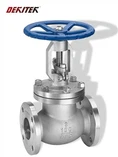

Hey there! As a ball valve supplier, I often get asked about how electric actuators work on ball valves. It's a pretty cool topic, so I thought I'd break it down for you in this blog post.
First off, let's talk about what a ball valve is. A ball valve is a type of valve that uses a spherical disc to control the flow of fluid through a pipe. The ball has a hole in the middle, and when the valve is open, the hole aligns with the pipe, allowing fluid to flow through. When the valve is closed, the ball is rotated so that the hole is perpendicular to the pipe, blocking the flow of fluid.
Now, let's add an electric actuator to the mix. An electric actuator is a device that uses an electric motor to control the movement of the ball valve. It's like giving the valve a little robotic helper to open and close it.
So, how does it all work? Well, it starts with the control signal. The control signal can come from a variety of sources, such as a control panel, a programmable logic controller (PLC), or a remote control. This signal tells the electric actuator whether to open or close the ball valve.
Once the electric actuator receives the control signal, it activates the electric motor. The motor then converts electrical energy into mechanical energy, which is used to turn a gearbox or a screw mechanism. This mechanical movement is transferred to the ball valve stem, causing the ball to rotate.
If the control signal is to open the valve, the electric actuator will rotate the ball so that the hole aligns with the pipe, allowing fluid to flow through. If the signal is to close the valve, the actuator will rotate the ball so that the hole is perpendicular to the pipe, stopping the flow of fluid.
One of the great things about electric actuators is that they can be very precise. They can be programmed to open or close the valve to a specific position, which is really useful in applications where you need to control the flow rate of the fluid. For example, in a chemical processing plant, you might need to precisely control the amount of a certain chemical that is being added to a reaction vessel.
Another advantage of electric actuators is that they can be automated. You can set up a control system to open and close the valve based on certain conditions, such as time, temperature, or pressure. This can save a lot of time and effort, especially in large industrial applications.
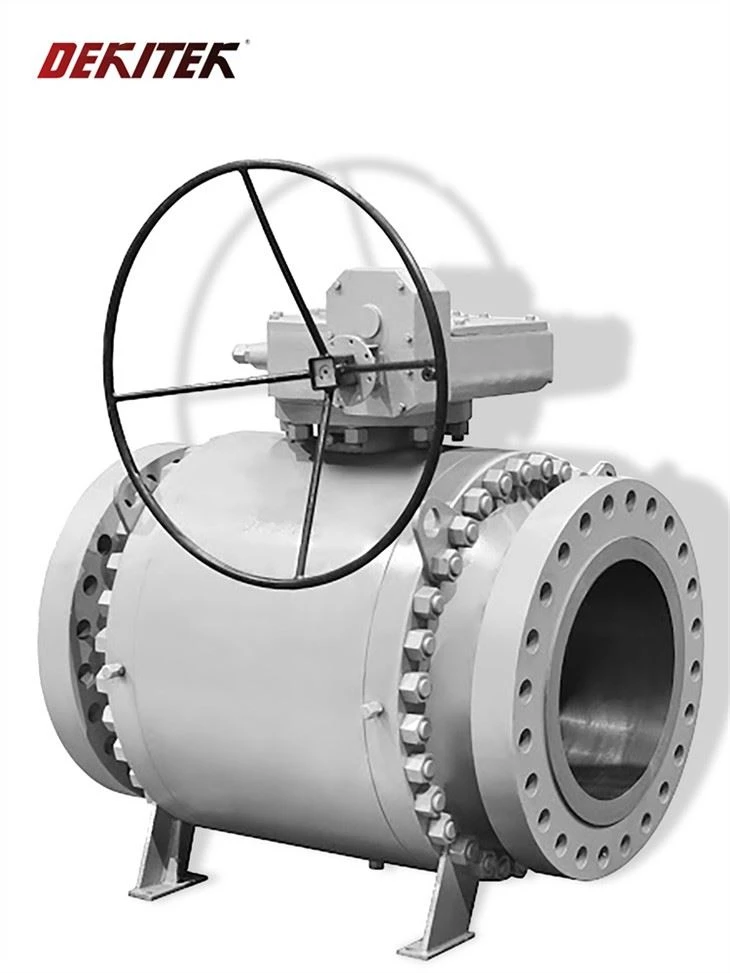
Now, let's take a look at some of the different types of ball valves that can be used with electric actuators. We offer a wide range of ball valves, including Fully Welded Ball Valve, Trunnion Mounted Soft Seated Ball Valve, and Cast Steel Soft Seated Floating Ball Valve.
Fully welded ball valves are great for applications where you need a high level of reliability and safety. They are designed to be leak-proof, which is important in industries such as oil and gas, where any leakage could be dangerous.
Trunnion mounted soft seated ball valves are ideal for applications where you need to control the flow of high-pressure fluids. The trunnion design provides additional support to the ball, making it more stable and less likely to wear out.
Cast steel soft seated floating ball valves are a popular choice for general industrial applications. They are relatively inexpensive and easy to install, making them a great option for smaller projects.
When choosing an electric actuator for your ball valve, there are a few things you need to consider. First, you need to make sure that the actuator is compatible with the valve. This means that the actuator needs to have the right torque and speed to operate the valve properly.

You also need to consider the environment in which the valve will be used. If the valve is going to be used in a harsh or corrosive environment, you might need to choose an actuator that is designed to withstand these conditions.
Finally, you need to think about the control system that you are going to use. Make sure that the actuator is compatible with your control system, and that it can be programmed to meet your specific requirements.
In conclusion, electric actuators are a great way to automate the operation of ball valves. They offer precise control, automation capabilities, and can be used with a variety of different ball valve types. If you're in the market for a ball valve and an electric actuator, we'd love to help you find the right solution for your needs. Whether you're working on a small project or a large industrial application, we have the expertise and the products to get the job done.
If you're interested in learning more about our ball valves and electric actuators, or if you have any questions, please don't hesitate to get in touch. We're always happy to have a chat and discuss your requirements. You can reach out to us to start a conversation about your project and see how we can assist you in getting the best ball valve and electric actuator combination.
References
- Smith, J. (2020). Valves and Actuators Handbook. New York: Industrial Press.
- Johnson, R. (2019). Understanding Electric Actuators. London: Engineering Publications.