

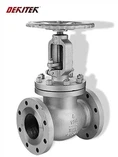
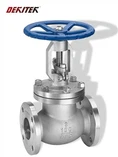
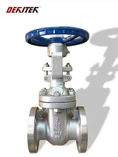
What is a disadvantage of the globe valve compared to the gate valve?
Introduction:
A globe valve and a gate valve are two commonly used types of valves in various industries. While both valves serve the purpose of controlling the flow of fluids, they have distinct features that make each suitable for specific applications. In this article, we will explore the disadvantages of the globe valve when compared to the gate valve. Understanding these drawbacks can help engineers and decision-makers make informed choices while selecting valves for their systems.
Disadvantages of the Globe Valve:
1. Flow Restriction:
One major disadvantage of the globe valve is its relatively high flow resistance compared to the gate valve. The design of the globe valve involves a baffle and a disc that obstruct the fluid flow. This obstruction leads to a pressure drop across the valve, resulting in reduced flow rates. As a result, the globe valve is not suitable for applications that require high flow rates and minimal pressure loss.
2. Limited Opening Sizes:
Globe valves have limited opening sizes, which can restrict the flow capacity of larger pipelines. The disc and seat arrangement of the globe valve limits the effective orifice size, making it unsuitable for applications that demand large flow volumes. Gate valves, on the other hand, offer a full-bore opening, allowing unrestricted flow and better performance in high flow applications.
3. Higher Pressure Drop:
Due to the design of a globe valve, fluid passes through multiple changes in direction. This leads to a higher pressure drop across the valve compared to gate valves. The increased pressure drop can result in greater energy consumption and reduced efficiency in systems where a globe valve is installed. Gate valves, with their unobstructed flow path, provide lower pressure drops, resulting in more energy-efficient operations.
4. Lower Shut-Off Capability:
Compared to gate valves, globe valves have a lower shut-off capability. When fully closed, globe valves tend to leave a small passage open for fluid flow due to the design of the seat and disc. This characteristic restricts their application in systems that demand tight shut-off to prevent leaks or to isolate sections of pipelines completely. Gate valves, with their parallel disc design, provide excellent shut-off capability and are often preferred in critical systems.
5. Complexity and Maintenance:
Globe valves are more complex in design compared to gate valves. They consist of multiple components, including a disc, stem, baffle, and seat. These components require precise alignment and machining for proper functioning. The complexity of the globe valve makes maintenance and repairs more challenging, requiring skilled personnel and specialized tools. In contrast, gate valves have a simpler construction and are relatively easier to maintain.
6. Slower Operation:
Another disadvantage of the globe valve, especially when compared to gate valves, is its slower operation. The baffle and disc arrangement of the globe valve require multiple turns of the stem to open or close the valve fully. This slower operation can be inconvenient in applications where quick and frequent valve adjustments are required. Gate valves, with their simple upward or downward motion, provide faster operation and better control over the fluid flow.
7. Higher Cost:
Globe valves are generally more expensive compared to gate valves. The intricate design, additional components, and higher precision requirements contribute to the increased cost of globe valves. In projects where cost is a significant factor, opting for gate valves can provide a cost-effective solution without compromising the required functionality.
Conclusion:
Although globe valves have their advantages in certain applications, it is essential to recognize their disadvantages when compared to gate valves. The flow restriction, limited opening sizes, higher pressure drop, lower shut-off capability, complexity, slower operation, and higher cost are some significant drawbacks of the globe valve. Understanding these limitations can help engineers make informed decisions and select the most suitable valve type for their specific requirements. Ultimately, choosing the right valve ensures optimal performance, reliability, and cost-efficiency in fluid control systems.