



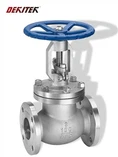

Hey there! As a supplier of API6D Flange End Swing Type Check Valve, I often get asked about the opening pressure of these valves. So, I thought I'd write a blog post to explain it in a more casual and easy-to-understand way.
First off, let's talk about what a check valve is. A check valve is a type of valve that allows fluid to flow in only one direction. It's like a one-way street for your plumbing system. The API6D Flange End Swing Type Check Valve, in particular, is designed to prevent backflow in pipelines. It has a swinging disc that opens when the fluid flows in the right direction and closes when the flow reverses.
Now, the opening pressure of a check valve is the minimum pressure required to open the valve and allow the fluid to pass through. It's an important factor to consider because if the pressure is too low, the valve won't open, and if it's too high, it can cause damage to the valve or the pipeline.
So, what is the opening pressure of an API6D Flange End Swing Type Check Valve? Well, it depends on a few factors, such as the size of the valve, the type of fluid, and the application. Generally speaking, the opening pressure of these valves ranges from 0.5 to 2 psi (pounds per square inch). However, this can vary depending on the specific valve and its design.
For example, if you're using the valve in a high-pressure application, you may need a valve with a higher opening pressure. On the other hand, if you're using it in a low-pressure application, a valve with a lower opening pressure may be sufficient. It's always a good idea to consult with a valve expert or the manufacturer to determine the appropriate opening pressure for your specific application.
Another thing to keep in mind is that the opening pressure can also be affected by the type of fluid you're using. For instance, if you're using a viscous fluid, such as oil or syrup, the valve may require a higher opening pressure to overcome the resistance of the fluid. Conversely, if you're using a low-viscosity fluid, such as water or gas, the valve may require a lower opening pressure.


In addition to the opening pressure, there are other factors to consider when choosing an API6D Flange End Swing Type Check Valve. These include the valve's material, size, and connection type. The material of the valve is important because it needs to be compatible with the fluid you're using. For example, if you're using a corrosive fluid, you'll need a valve made of a corrosion-resistant material, such as stainless steel or bronze.
The size of the valve is also important because it needs to be appropriate for the flow rate and pressure of your application. If the valve is too small, it can cause a restriction in the flow, which can lead to increased pressure and reduced efficiency. On the other hand, if the valve is too large, it can be more expensive and may not function properly.
Finally, the connection type of the valve is important because it needs to be compatible with the pipeline. The most common connection types for API6D Flange End Swing Type Check Valves are flange connections, which are easy to install and provide a secure seal.
So, there you have it! That's a brief overview of the opening pressure of API6D Flange End Swing Type Check Valves. If you have any questions or need more information, feel free to reach out to us. We're here to help you choose the right valve for your application.
And if you're interested in purchasing an API6D Flange End Swing Type Check Valve, you can check out our product page here. We also offer a variety of other check valves, including API 6D BW Check Valve, so be sure to take a look!
Thanks for reading, and I hope this blog post has been helpful. If you have any feedback or suggestions for future blog posts, please let me know. I'd love to hear from you!
References:
- API 6D: Specification for Pipeline Valves
- Valve Handbook: A Guide to Valve Selection and Application