


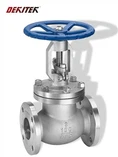

What is the flow coefficient of a Duplex Stainless Steel Gate Valve?
As a trusted supplier of Duplex Stainless Steel Gate Valves, I often encounter inquiries regarding the flow coefficient of these essential components. Understanding the flow coefficient is crucial for engineers, designers, and end - users alike, as it directly impacts the valve's performance in various applications. In this blog, we'll delve into the concept of the flow coefficient, its significance in Duplex Stainless Steel Gate Valves, and how it affects your operations.
Understanding the Flow Coefficient (Cv)
The flow coefficient, commonly denoted as Cv, is a measure of a valve's capacity to pass fluid. It is defined as the number of US gallons of water at 60°F that will flow through a fully open valve with a pressure drop of 1 psi across the valve. In simpler terms, the Cv value indicates how much fluid a valve can handle under specific conditions.


A higher Cv value means the valve can pass more fluid for a given pressure drop. This is particularly important in systems where large volumes of fluid need to be transported efficiently. For example, in industrial processes such as chemical manufacturing, power generation, and water treatment, valves with appropriate Cv values are essential to ensure smooth and cost - effective operations.
Factors Affecting the Flow Coefficient of Duplex Stainless Steel Gate Valves
Several factors influence the flow coefficient of a Duplex Stainless Steel Gate Valve:
- Valve Size: The physical size of the valve is a primary determinant of its Cv value. Larger valves generally have higher flow coefficients because they offer a larger cross - sectional area for fluid to pass through. For instance, a 10 - inch Duplex Stainless Steel Gate Valve will typically have a much higher Cv than a 2 - inch valve.
- Valve Design: The internal design of the gate valve, including the shape of the gate and the flow path, can significantly affect the flow coefficient. Well - designed valves with streamlined flow paths minimize turbulence and pressure losses, resulting in higher Cv values.
- Sealing Mechanism: The type of sealing mechanism used in the valve can also impact the flow coefficient. Valves with tight - fitting seals may have slightly lower Cv values due to the restricted flow area near the sealing surfaces. However, proper sealing is crucial for preventing leaks and ensuring the valve's long - term reliability.
- Fluid Properties: The properties of the fluid flowing through the valve, such as viscosity and density, can affect the flow coefficient. For example, more viscous fluids will experience greater resistance to flow, resulting in a lower effective Cv compared to less viscous fluids.
Measuring the Flow Coefficient of Duplex Stainless Steel Gate Valves
Determining the flow coefficient of a Duplex Stainless Steel Gate Valve typically involves conducting flow tests in a controlled laboratory environment. During these tests, the valve is fully opened, and water is passed through it at a known pressure. The flow rate and pressure drop across the valve are measured, and the Cv value is calculated using the following formula:
[C_v=\frac{Q}{\sqrt{\Delta P}}]
where (Q) is the flow rate in US gallons per minute (GPM) and (\Delta P) is the pressure drop across the valve in psi.
Manufacturers often provide Cv values in their product catalogs for different valve sizes and configurations. These values are based on standardized test conditions and can serve as a useful reference for selecting the appropriate valve for your application.
Importance of the Flow Coefficient in Applications
The flow coefficient plays a vital role in the performance of Duplex Stainless Steel Gate Valves in various applications:
- System Design: Engineers use Cv values to size valves correctly for a given system. By selecting a valve with the appropriate flow coefficient, they can ensure that the system operates at the desired flow rate and pressure. This helps to optimize the overall efficiency of the system and reduce energy consumption.
- Flow Control: In applications where precise flow control is required, such as in chemical dosing systems or HVAC systems, the Cv value is used to determine the valve's opening position needed to achieve the desired flow rate. Valves with well - defined Cv characteristics allow for accurate and reliable flow control.
- Pressure Drop Management: Understanding the flow coefficient helps in managing pressure drops across the valve. Excessive pressure drops can lead to increased energy costs and reduced system performance. By selecting a valve with a high enough Cv value, the pressure drop can be minimized, ensuring efficient operation.
Comparing with Other Types of Gate Valves
When considering the flow coefficient, it's also useful to compare Duplex Stainless Steel Gate Valves with other types of gate valves, such as [Carbon Steel Flexible Wedge Gate Valve](/gate - valve/carbon - steel - flexible - wedge - gate - valve.html) and [Stainless Steel Flexible Wedge Gate Valve](/gate - valve/stainless - steel - flexible - wedge - gate - valve.html).
Carbon Steel Flexible Wedge Gate Valves are commonly used in applications where cost - effectiveness is a primary concern. However, their flow coefficients may be slightly lower compared to Duplex Stainless Steel Gate Valves, especially in applications where corrosion resistance is required.
Stainless Steel Flexible Wedge Gate Valves offer good corrosion resistance and are suitable for a wide range of applications. While they may have similar flow coefficients to Duplex Stainless Steel Gate Valves in some cases, Duplex Stainless Steel Gate Valves generally provide better performance in high - pressure and highly corrosive environments.
Our Duplex Stainless Steel Pressure Seal Gate Valve
One of our flagship products is the [Duplex Stainless Steel Pressure Seal Gate Valve](/gate - valve/duplex - stainless - steel - pressure - factory.html). This valve is designed to meet the demanding requirements of high - pressure applications, such as those found in the oil and gas industry.
The unique pressure seal design of this valve ensures reliable sealing even at high pressures, while the use of Duplex Stainless Steel provides excellent corrosion resistance. Our engineers have carefully optimized the internal design of the valve to achieve a high flow coefficient, allowing for efficient fluid flow in high - pressure systems.
Conclusion
In conclusion, the flow coefficient of a Duplex Stainless Steel Gate Valve is a critical parameter that determines its performance in fluid handling systems. By understanding the factors that affect the Cv value and its importance in various applications, you can make informed decisions when selecting the right valve for your needs.
As a supplier of Duplex Stainless Steel Gate Valves, we are committed to providing high - quality products with accurate Cv values. Our team of experts is available to assist you in selecting the most suitable valve for your application and answering any questions you may have.
If you're interested in learning more about our Duplex Stainless Steel Gate Valves or need to discuss a specific project, we encourage you to contact us for a procurement discussion. We look forward to working with you to meet your valve requirements.
References
- ASME B16.34 - Valves - Flanged, Threaded, and Welding End
- API 600 - Steel Gate Valves - Flanged and Butt - Welding Ends, Bolted Bonnet