


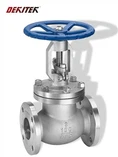

Hey there! As a supplier of Cast Steel Pressure Seal Gate Valves, I've had my fair share of discussions with customers about how different factors affect these valves. One question that pops up quite often is: What is the effect of valve opening degree on the pressure drop of a Cast Steel Pressure Seal Gate Valve? Let's dive right in and explore this topic.
First off, let's quickly understand what a Cast Steel Pressure Seal Gate Valve is. It's a type of valve commonly used in high - pressure and high - temperature applications. The pressure seal design ensures a tight seal even under extreme conditions, and the cast steel construction gives it durability and strength.
Now, let's talk about pressure drop. Pressure drop is the decrease in pressure that occurs as a fluid (like gas or liquid) flows through a valve. It's an important factor because it can impact the efficiency of a system. If the pressure drop is too high, it can lead to increased energy consumption and reduced performance.
So, how does the valve opening degree come into play? Well, when the valve is fully open, the flow path through the valve is at its maximum. This means that the fluid can flow relatively freely, and the pressure drop is minimized. In this state, the valve offers the least resistance to the flow, much like a wide - open highway allows cars to move quickly with little hindrance.
On the other hand, as the valve opening degree decreases, the flow area through the valve gets smaller. This restricts the flow of the fluid, causing it to speed up and creating more turbulence. The increased turbulence leads to a higher pressure drop. It's similar to when you put your thumb over the end of a garden hose. The water has less space to flow through, so it comes out faster, but there's also more resistance, and you can feel the pressure build up in the hose.
Let's look at some real - world implications of this relationship. In industrial processes, if a Cast Steel Pressure Seal Gate Valve is not fully open, it can cause problems. For example, in a pipeline carrying steam, a significant pressure drop due to a partially open valve can result in reduced steam pressure at the end - use point. This can affect the performance of steam - powered equipment, such as turbines or heaters.
In a chemical processing plant, a high pressure drop can disrupt the flow of chemicals through the system. This can lead to inaccurate mixing ratios and affect the quality of the final product. So, it's crucial to ensure that the valve is opened to the appropriate degree to maintain the desired pressure and flow rate.
Now, let's consider some of the other factors that can interact with the valve opening degree to affect pressure drop. The type of fluid flowing through the valve matters a lot. For instance, a viscous fluid like oil will experience a higher pressure drop than a less viscous fluid like water, even at the same valve opening degree. The density of the fluid also plays a role. Heavier fluids generally cause more pressure drop as they require more energy to move through the valve.

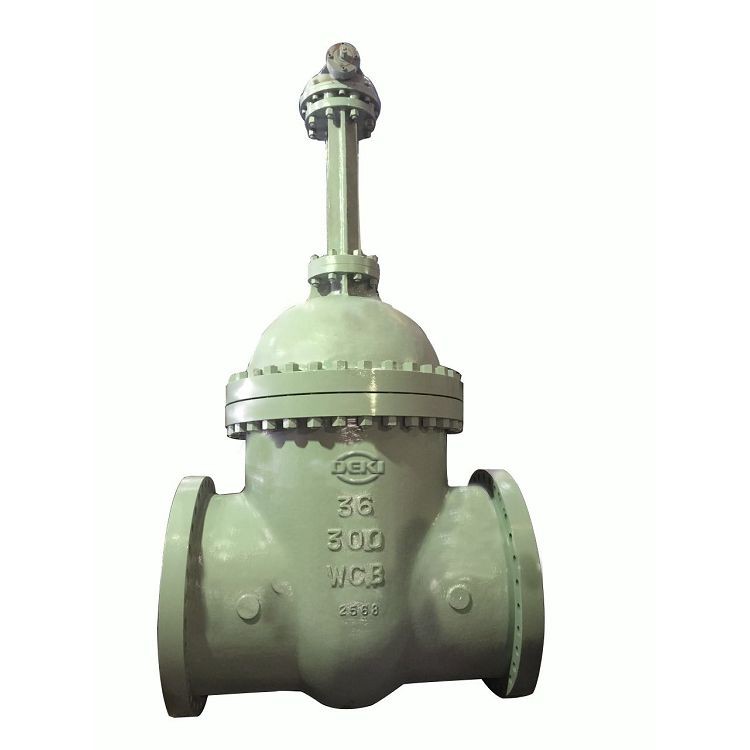
The size of the valve is another important factor. A larger valve will typically have a lower pressure drop at the same opening degree compared to a smaller valve. This is because the larger valve provides a larger flow area, reducing the resistance to flow.
As a supplier, I often recommend our customers to choose the right valve size based on their specific application requirements. We also offer different types of valves to suit various needs. For example, if you're looking for a more automated solution, you might be interested in our Electric Actuator Gate Valve. This valve can be easily controlled remotely, allowing for precise adjustment of the opening degree and better management of pressure drop.
If you're dealing with applications that require a more flexible design, our Carbon Steel Flexible Wedge Gate Valve could be a great option. The flexible wedge design helps to ensure a tight seal and can handle different flow conditions more effectively.
For those working in high - pressure and high - temperature environments, our High Pressure And High Temperature Gate Valves are specifically designed to withstand these extreme conditions while maintaining optimal performance and controlling pressure drop.
To accurately predict the pressure drop based on the valve opening degree, engineers often use mathematical models and flow simulation software. These tools take into account factors such as fluid properties, valve geometry, and opening degree to provide a more precise estimate of the pressure drop. However, in real - world applications, it's also important to conduct field tests to verify the performance of the valve.
In conclusion, the valve opening degree has a significant impact on the pressure drop of a Cast Steel Pressure Seal Gate Valve. Understanding this relationship is crucial for ensuring the efficient operation of industrial systems. Whether you're in the power generation, chemical processing, or any other industry that relies on these valves, choosing the right valve and operating it at the appropriate opening degree can save you time, energy, and money.
If you're interested in learning more about our Cast Steel Pressure Seal Gate Valves or need help in selecting the right valve for your application, don't hesitate to reach out. We're here to assist you in finding the best solution for your specific needs and ensuring that your systems run smoothly.
References
- Fluid Mechanics textbooks (e.g., "Fluid Mechanics" by Frank M. White)
- Valve manufacturer's technical documents
- Industry research papers on valve performance and flow characteristics