


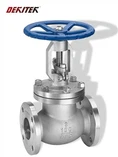

As a seasoned supplier of Carbon Steel Flexible Wedge Gate Valves, I've witnessed firsthand how the manufacturing process can significantly impact the quality of these essential industrial components. In this blog post, I'll delve into the various stages of the manufacturing process and explain how each step contributes to the overall quality of the valve.
Material Selection
The journey of a high - quality Carbon Steel Flexible Wedge Gate Valve begins with the selection of the right materials. Carbon steel is a popular choice due to its excellent strength, durability, and cost - effectiveness. However, not all carbon steels are created equal. The chemical composition of the steel must be carefully controlled to ensure it meets the required standards for the valve's intended application.
For instance, the carbon content can affect the hardness and ductility of the steel. A higher carbon content generally results in a harder but more brittle material, while a lower carbon content makes the steel more ductile but less hard. Other alloying elements such as manganese, silicon, and sulfur also play crucial roles in determining the steel's properties.
At our company, we source our carbon steel from reputable suppliers who adhere to strict quality control measures. We conduct thorough material testing to verify the chemical composition and mechanical properties of the steel before using it in the manufacturing process. This ensures that our valves are made from high - quality materials that can withstand the rigors of various industrial environments.
Casting and Forging
Once the appropriate carbon steel material is selected, the next step is to shape it into the desired valve components. Two common methods used in the manufacturing of Carbon Steel Flexible Wedge Gate Valves are casting and forging.
Casting involves pouring molten steel into a mold to create the valve body, bonnet, and other components. This method is suitable for producing complex shapes with relatively low cost. However, casting can sometimes result in internal defects such as porosity, inclusions, and shrinkage cavities. These defects can weaken the valve and reduce its overall quality and reliability.
To minimize these issues, we use advanced casting techniques and strict quality control during the casting process. We carefully monitor the temperature, pouring speed, and solidification time to ensure a uniform and defect - free casting. Additionally, we perform non - destructive testing such as ultrasonic testing and X - ray inspection to detect any hidden defects in the cast components.
Forging, on the other hand, is a process of shaping the steel by applying compressive forces. Forged components generally have better mechanical properties than cast components because the forging process aligns the grain structure of the steel, resulting in higher strength and toughness. Forging also helps to eliminate internal defects and improve the overall quality of the valve.
We use precision forging equipment to produce high - quality valve components. The forging process is carefully controlled to ensure that the components have the correct dimensions and mechanical properties. After forging, the components are heat - treated to further enhance their strength and hardness.
Machining
After the valve components are cast or forged, they need to be machined to achieve the required dimensions and surface finish. Machining involves cutting, drilling, milling, and grinding the components to create the precise shapes and features needed for the valve to function properly.
Precision machining is crucial for the quality of the Carbon Steel Flexible Wedge Gate Valve. Any deviation from the specified dimensions can lead to problems such as leakage, improper sealing, and reduced flow capacity. We use state - of the - art machining equipment and highly skilled machinists to ensure that each component is machined to the highest standards.
During the machining process, we also pay close attention to the surface finish of the components. A smooth surface finish is essential for proper sealing and reduced friction between the valve components. We use advanced grinding and polishing techniques to achieve the desired surface finish on the valve seats, wedges, and other critical areas.
Assembly
Once all the individual valve components are machined, they are assembled into a complete valve. The assembly process is a critical step that can significantly affect the quality of the valve. Proper assembly ensures that the valve functions smoothly and reliably.
We follow strict assembly procedures to ensure that all components are correctly installed and aligned. The valve body and bonnet are carefully bolted together, and the gaskets are properly seated to prevent leakage. The wedge and seat are also precisely aligned to ensure a tight seal when the valve is closed.
During the assembly process, we also perform functional testing to verify that the valve operates as intended. We test the valve's opening and closing torque, flow capacity, and sealing performance. Any issues detected during the testing are immediately addressed to ensure that the valve meets our high - quality standards.
Heat Treatment
Heat treatment is an important process in the manufacturing of Carbon Steel Flexible Wedge Gate Valves. It is used to improve the mechanical properties of the steel, such as strength, hardness, and toughness. Heat treatment involves heating the valve components to a specific temperature and then cooling them at a controlled rate.
There are several types of heat treatment processes, including annealing, normalizing, quenching, and tempering. Annealing is used to relieve internal stresses in the steel and improve its ductility. Normalizing is similar to annealing but results in a more uniform grain structure and higher strength. Quenching is a rapid cooling process that increases the hardness of the steel, while tempering is used to reduce the brittleness caused by quenching.
We carefully select the appropriate heat treatment process based on the specific requirements of the valve. The heat treatment parameters such as temperature, time, and cooling rate are precisely controlled to ensure that the valve components achieve the desired mechanical properties. After heat treatment, we conduct further testing to verify the effectiveness of the process.
Coating and Finishing
To protect the valve from corrosion and improve its appearance, a coating or finishing is applied to the valve surface. There are various types of coatings available, including epoxy coatings, zinc coatings, and powder coatings.
Epoxy coatings are commonly used for Carbon Steel Flexible Wedge Gate Valves because they provide excellent corrosion resistance and adhesion. Zinc coatings, such as galvanizing, are also effective in preventing corrosion. Powder coatings offer a durable and aesthetically pleasing finish.
We carefully select the coating material and application method based on the valve's intended environment. The coating process is carried out in a controlled environment to ensure a uniform and high - quality coating. After coating, the valve is inspected to ensure that the coating meets the required thickness and adhesion standards.
Quality Control and Testing
Throughout the entire manufacturing process, we implement a comprehensive quality control system to ensure that our Carbon Steel Flexible Wedge Gate Valves meet the highest quality standards. We conduct a series of tests at each stage of the manufacturing process, from material testing to final assembly and functional testing.


In addition to the non - destructive testing and functional testing mentioned earlier, we also perform pressure testing to verify the valve's pressure - holding capacity. The valve is subjected to a specified pressure for a certain period of time to ensure that there are no leaks or failures.
We also test the valve's performance under different operating conditions, such as high pressure, high temperature, and corrosive environments. This helps us to ensure that our valves can perform reliably in real - world applications.
Impact on Valve Quality
The manufacturing process has a profound impact on the quality of a Carbon Steel Flexible Wedge Gate Valve. A well - executed manufacturing process ensures that the valve has the following qualities:
- Reliability: A valve manufactured with high - quality materials and strict quality control measures is more likely to operate reliably over a long period of time. It is less prone to failures such as leakage, valve sticking, and component breakage.
- Performance: The precision machining, proper assembly, and heat treatment processes contribute to the valve's excellent performance. The valve can open and close smoothly, provide a tight seal, and maintain a stable flow rate.
- Durability: High - quality materials and effective corrosion protection ensure that the valve can withstand the harsh conditions of industrial environments. The valve has a longer service life and requires less maintenance.
Conclusion
In conclusion, the manufacturing process of a Carbon Steel Flexible Wedge Gate Valve is a complex and multi - step process that requires careful attention to detail at every stage. From material selection to quality control and testing, each step plays a crucial role in determining the quality of the valve.
As a supplier of Carbon Steel Flexible Wedge Gate Valves, we are committed to providing our customers with high - quality valves that meet their specific requirements. Our strict manufacturing processes and quality control measures ensure that our valves are reliable, high - performing, and durable.
If you are in the market for high - quality Carbon Steel Flexible Wedge Gate Valves, or other types of valves such as High Pressure And High Temperature Gate Valves, Duplex Stainless Steel Pressure Seal Gate Valve, or Electric Actuator Gate Valve, please feel free to contact us for more information and to discuss your procurement needs. We look forward to working with you to provide the best valve solutions for your industrial applications.
References
- ASME Standards for Valves
- API Standards for Oil and Gas Industry Valves
- ASTM Standards for Carbon Steel Materials