


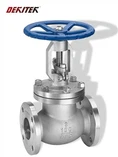

As an established supplier of API 6D BW Check Valves, I am well - versed in the rigorous testing procedures these valves undergo to meet the highest quality and performance standards. In this article, I will take you through the various testing methods employed for API 6D BW Check Valves, highlighting the importance of each step and how it contributes to the valve's reliability in industrial applications.
Visual Inspection
The testing process of API 6D BW Check Valves begins with a thorough visual inspection. This is a fundamental yet crucial step that allows us to identify any obvious surface defects, such as cracks, porosity, or improper machining. During the visual inspection, our experienced inspectors examine the valve body, bonnet, disc, and other components under proper lighting conditions.
We check the valve's dimensions against the engineering drawings to ensure they are within the specified tolerances. Any deviation in dimensions can affect the valve's fit and function, potentially leading to leakage or other performance issues. Surface finish is also critical. A smooth and uniform surface finish not only enhances the valve's appearance but also reduces the risk of corrosion and improves the sealing performance.
Material Testing
Material quality is the foundation of a reliable API 6D BW Check Valve. We start by verifying the material certificates provided by the raw material suppliers. These certificates contain information about the chemical composition, mechanical properties, and heat treatment history of the materials.
To further ensure material integrity, we may conduct additional laboratory tests. Chemical analysis, for example, can be carried out using techniques such as spectrochemical analysis. This allows us to confirm the exact composition of the valve materials, ensuring that they meet the API 6D standards.
Mechanical property testing is also essential. Tensile tests are performed to determine the material's strength and ductility. We measure parameters such as yield strength, ultimate tensile strength, and elongation at break. Hardness testing is another common method, which helps us assess the material's resistance to wear and deformation. By comparing the test results with the standard requirements, we can ensure that the valve materials are suitable for the intended application.
Hydrostatic Testing
Hydrostatic testing is one of the most important tests for API 6D BW Check Valves. This test is designed to check the valve's pressure - bearing capacity and its ability to prevent leakage.
The valve is first filled with water and then pressurized to a specified test pressure. For API 6D valves, the hydrostatic test pressure is typically 1.5 times the valve's rated pressure. The pressure is maintained for a specific duration, usually around 15 minutes, to allow for a thorough inspection.
During the pressure - holding period, inspectors carefully examine the valve for any signs of leakage. This includes checking the valve body, bonnet joints, and seat seals. Even a small leak can compromise the valve's performance, so any leakage detected during the test requires immediate corrective action, such as tightening the bolts or replacing the seals.
Hydrostatic testing not only verifies the valve's pressure - tightness but also helps to identify any potential weak points in the valve structure. If the valve fails the hydrostatic test, it may indicate a problem with the casting quality, welding, or machining, which needs to be addressed before the valve can be approved for use.
Non - Destructive Testing (NDT)
Non - destructive testing methods are used to detect internal defects in API 6D BW Check Valves without causing damage to the valves themselves. These methods are particularly useful for detecting hidden flaws that may not be visible during visual inspection.
One of the most commonly used NDT methods is ultrasonic testing (UT). UT uses high - frequency sound waves to detect internal flaws such as cracks or voids in the valve materials. The sound waves are transmitted into the material, and any reflections from internal defects are detected by a receiver. This allows us to determine the size, location, and orientation of the defects.
Magnetic particle testing (MT) is another effective NDT method for ferromagnetic materials. It is mainly used to detect surface and near - surface defects. A magnetic field is applied to the valve surface, and iron particles are then spread over it. If there are any surface or near - surface defects, the magnetic field will be distorted, causing the iron particles to accumulate at the defect sites, making them visible.
Radiographic testing (RT), such as X - ray or gamma - ray testing, can also be used to inspect the internal structure of the valve. This method provides a detailed image of the internal components, allowing us to detect subtle defects such as porosity or internal cracks.
Function Testing
Function testing is carried out to ensure that the API 6D BW Check Valve operates correctly under normal and abnormal conditions. This test mimics the actual working environment of the valve to verify its performance.
During the function test, the valve is installed in a test rig, and fluid flow is simulated. The valve is designed to allow flow in one direction and prevent flow in the reverse direction. We check if the valve's disc can open smoothly under forward flow and close tightly under reverse flow.
The response time of the valve is also an important parameter. A fast - acting check valve is crucial in applications where sudden flow reversals can occur. We measure the time it takes for the valve to close when the flow reverses to ensure it meets the design requirements.
In addition, we also test the valve's ability to operate at different flow rates and pressures. This helps us to determine the valve's performance envelope and ensure its reliability in a wide range of operating conditions.
Fire - Safe Testing
In industrial applications, especially in the oil and gas industry, fire - safe performance is a critical requirement for API 6D BW Check Valves. Fire - safe testing is designed to evaluate the valve's ability to prevent the spread of fire and maintain its sealing performance during and after a fire.
The valve is subjected to a high - temperature fire for a specified duration, usually around 30 minutes. During the fire test, the valve is exposed to a flame at a temperature of around 1000°C. After the fire, the valve is tested for leakage. If the valve can still prevent significant leakage after the fire, it indicates that it has good fire - safe performance.
Fire - safe valves typically use special seat materials and design features to ensure their performance under fire conditions. These may include graphite seats, fire - resistant coatings, and self - sealing features.
Conclusion
In conclusion, the testing of API 6D BW Check Valves is a comprehensive and multi - step process that ensures these valves meet the strictest quality and performance standards. From visual inspection and material testing to hydrostatic testing, non - destructive testing, function testing, and fire - safe testing, each step plays a vital role in guaranteeing the reliability and safety of the valves in industrial applications.


As a professional [Your Role in the Company] of API 6D BW Check Valves, I take pride in our commitment to quality and testing. Our products, such as the API 6D BW Check Valve and API6D Flange End Swing Type Check Valve, have undergone all the necessary tests to ensure they provide reliable performance in various industries.
If you are in the market for high - quality API 6D BW Check Valves, I encourage you to reach out for a detailed discussion. We are ready to provide you with the best solutions tailored to your specific needs.
References
- American Petroleum Institute (API). Specification for Pipeline Valves - API 6D.
- Valve Manufacturers Standards Organization (VMSPO). Various standards related to valve testing and performance.