


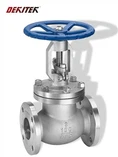

Can a Duplex Stainless Steel Gate Valve be automated?
Hey there! As a supplier of Duplex Stainless Steel Gate Valves, I often get asked this question: Can a Duplex Stainless Steel Gate Valve be automated? Well, the short answer is yes, and in this blog, I'll dive into the details of how and why you might want to automate these valves.
First off, let's talk a bit about Duplex Stainless Steel Gate Valves. These valves are pretty awesome. Duplex stainless steel is a type of steel that combines the best of both austenitic and ferritic stainless steels. It has high strength, good corrosion resistance, and can handle a wide range of temperatures and pressures. That's why it's a popular choice in industries like oil and gas, chemical processing, and power generation.
Now, onto the automation part. Automating a Duplex Stainless Steel Gate Valve means using some kind of device to open and close the valve without manual intervention. There are a few different ways to do this, and each has its own advantages.
One common method is using an electric actuator. Electric actuators are great because they're easy to install and control. You can connect them to a control system, like a programmable logic controller (PLC), and set them to open or close the valve at specific times or in response to certain conditions. For example, in an oil pipeline, you might want the valve to close automatically if the pressure gets too high. An electric actuator can do that job quickly and accurately.
Another option is a pneumatic actuator. Pneumatic actuators use compressed air to move the valve. They're often used in industries where there's a lot of air available, like in a factory with an air compressor system. Pneumatic actuators are known for their fast operation and high torque, which means they can open and close large valves quickly. They're also relatively simple and reliable, making them a popular choice for many applications.
Hydraulic actuators are also an option for automating Duplex Stainless Steel Gate Valves. These actuators use hydraulic fluid to generate force. They're typically used in applications where a lot of force is needed, like in high-pressure systems. Hydraulic actuators can provide very precise control and can handle heavy loads, but they're also more complex and require a hydraulic power unit.
So, why would you want to automate a Duplex Stainless Steel Gate Valve? There are several reasons. First of all, automation can improve safety. In industries where there are hazardous materials or high pressures, having a valve that can close automatically in an emergency can prevent accidents and protect workers. For example, in a chemical plant, if there's a leak, an automated valve can quickly shut off the flow of chemicals, reducing the risk of exposure.
Automation can also increase efficiency. By automating the valve operation, you can reduce the need for manual labor. Workers don't have to physically go to the valve to open or close it, which saves time and reduces the risk of human error. In a large industrial facility, this can add up to significant cost savings over time.


In addition, automation allows for better control and monitoring. You can use sensors to measure things like pressure, temperature, and flow rate, and then adjust the valve position accordingly. This can help optimize the process and ensure that the system is running at its best. For example, in a power plant, you can adjust the valve to maintain the right steam pressure, which can improve the efficiency of the turbine.
Now, I know what you might be thinking. Automating a valve sounds great, but is it compatible with Duplex Stainless Steel Gate Valves? The answer is yes. Most modern actuators are designed to be compatible with a wide range of valve types, including Duplex Stainless Steel Gate Valves. You just need to make sure that the actuator is the right size and has the right torque for the valve.
When choosing an actuator for your Duplex Stainless Steel Gate Valve, there are a few things to consider. First, you need to think about the size and weight of the valve. Larger valves will require more torque to open and close, so you'll need a more powerful actuator. You also need to consider the operating conditions, such as the temperature, pressure, and environment. For example, if the valve is in a corrosive environment, you'll need an actuator that's made of materials that can withstand corrosion.
Another important factor is the control system. You need to make sure that the actuator can be integrated with your existing control system. This might require some programming and configuration, but most actuators come with software that makes it relatively easy to set up.
If you're in the market for a Duplex Stainless Steel Gate Valve or are considering automating your existing valves, I'd be happy to help. We offer a wide range of Duplex Stainless Steel Gate Valves and can provide you with the right actuator for your application. Whether you need a Cast Steel Pressure Seal Gate Valve for a high-pressure system or a High Pressure And High Temperature Gate Valves for a demanding environment, we've got you covered.
If you have any questions or want to discuss your specific needs, feel free to reach out. We can provide you with more information, technical specifications, and even offer a quote. Let's work together to find the best solution for your valve automation needs.
References
- Valve Handbook, Third Edition by J. S. T. Smith
- Industrial Valves: Selection, Specification, and Installation by C. R. Metzger