

What is the difference between a ball valve and a regular valve?
When it comes to controlling the flow of liquids or gases in a pipeline system, valves are the preferred solution. Valves come in a variety of types for various applications, but one of the most commonly used is the ball valve. However, when compared to regular valves, there are some important differences to consider. In this article, we will explore the differences between these two types of valves and help you choose the right one for your application.
**Design
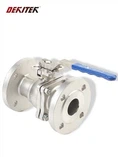
One of the most significant differences between ball valves and regular valves is the design. A ball valve consists of a hollow sphere or ball with a bore through the center. The ball is connected to a lever or handle that rotates it 90 degrees to open or close the valve. When the ball is rotated 90 degrees, the bore aligns with the pipeline, allowing the flow of fluid. When the ball is rotated back, a solid surface blocks the pipeline, stopping the flow of fluid.
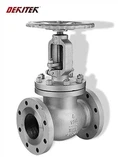
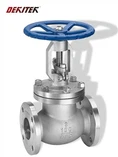
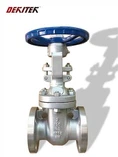
On the other hand, regular valves come in different designs but generally consist of a disk, gate, or plug that moves in a linear fashion to control the flow of fluid. The disk, gate, or plug is connected to a stem that is turned by a handle, or compressed by an actuator to open or close the valve. When the disk, gate, or plug is lifted or moved away from the pipeline, fluid flows through the valve. When the disk, gate, or plug is pressed against the pipeline, the valve is closed, and fluid flow stops.
**Functionality
Another difference between ball valves and regular valves is how they function. Ball valves are known for their quick shut-off ability and their ability to control flow with precision. This is because the ball rotates in one direction, allowing fluid to flow through the bore or stopping it completely when rotated in the opposite direction. Ball valves are also low-maintenance because their design minimizes the chance of leaks occurring.
Regular valves, on the other hand, take longer to open or close, making them less suitable for applications where quick flow control is necessary. However, regular valves often have a more precise flow control range than ball valves. Also, because regular valves have fewer moving parts than ball valves, they are easier to disassemble and repair.
**Applications
Ball valves are commonly used in applications where quick flow control and shut-off are necessary, such as in fuel or chemical processing plants. They are also used in applications where abrasive or viscous fluids are flowing. Ball valves are also very useful for applications that require low-maintenance because of their design.
Regular valves have a broader range of applications because of their flexibility in flow control range. They can be used to control the flow of any fluid, including high-pressure or high-temperature fluids. For example, gate valves are often used in water distribution systems, while plug valves are used in oil and gas pipelines. Butterfly valves are used in paper production, sewage systems, and food processing.
**Advantages and Disadvantages
Ball valves have several advantages. They have a low frictional loss, provide a tight seal, and require low torque to operate. They are also easy to disassemble and repair, and their design minimizes leaks. However, ball valves have some drawbacks, such as ball dead space, where fluid can get trapped in the valve when it is closed, leading to contamination or corrosion. Ball valves are also not suitable for applications where precise flow control is required because of their 90-degree rotation limits.
Regular valves have advantages and disadvantages as well. They offer precise flow control and a low-profile design that minimizes installation space. They are also less expensive than ball valves. However, regular valves require higher torque to operate, and they are prone to leaks.
**Conclusion
In conclusion, the choice between ball valves and regular valves ultimately depends on the specific application. If quick flow control or shut-off is necessary, ball valves are the preferred option. If precise flow control is required, regular valves may be the better choice. Regardless of the type of valve chosen, it is essential to consider the design, functionality, applications, advantages, and disadvantages to ensure that the right valve is selected for the task at hand.