

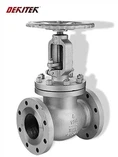
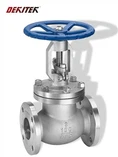
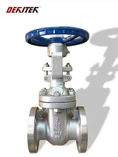
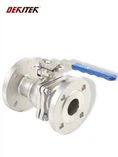
1. The anti -blocking of the direct stroke regulating valve and the angle valve?
The valve core of the direct stroke regulating valve is vertical movement, the fluid is horizontal movement, and the inner flow tract structure of the valve cavity is not a direct formula. Generally, it appears to S -shaped. This is deformed into many blind spots. Settlement, which is easy to cause blockage. The valve core of the angle stroke valve is in the horizontal rotation movement, and the medium is also at the horizontal direction. Therefore, it is not easy to exist dead ends, and the precipitated substance is easily taken away by the fluid. Therefore, the direct stroke regulating valve is much better.
2. The reason why the valve stem is relatively thin in direct stroke?
Due to the principle of sliding friction and small rolling friction. The valve stems of the straight procedure valve are moving and downward, so that greater friction is generated. Therefore, the design of the valve stems is small, and the tetrafluoro fillers with small friction coefficients are to the maximum possible reduction of friction. However, if the detailed valve stems are arisen, it is easy to bend, and the filling life is short.
3. The cutting pressure difference between the corner stroke valve is large?
Because the combined force generated by the medium on the valve core is very small to the torque generated by the valve axis, it can withstand a large pressure difference, so the cutting pressure difference between the angle stroke valve is large.
4. Why should the cutting valve try to use a hard seal as much as possible?
In terms of cutting effect, the soft sealing valve is better than the hard -density valve. However, the abrasion resistance and reliability of the soft sealing valve are much worse than that of the hard -dermis valve. Therefore, from the dual standards of leakage and reliability, the stable seal cutting valve is better than the soft seal cutting valve. Many cutting valves now use heap welding -resistant alloy, which greatly improves sealing performance, enough to meet the requirements of the cutting valve.