

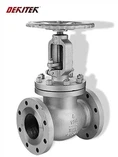
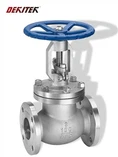
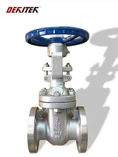
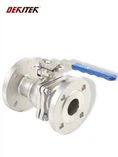
As core component of industrial fluid control, stainless steel cut-off valve is widely used in chemical industry, pharmaceutical system safety and food industry. Its sealing performance directly affects production efficiency, equipment lifespan and environmental safety. leakage accidents caused by seal failure account for over 60% of valve failures, causing waste of resources and potentially serious consequences such as explosions and poisoning, according to industry sources. A chemical plant, for example, suffered a major economic loss when a faulty valve seal caused a hydrogen leakage to explode. Therefore, to improve the sealing performance of stainless steel cut-off valve has become an important direction for technological upgrading of the industry.
Seal Structure Design: From Principles to Innovation
Basic Sealing Principles
The sealing performance of stainless steel cut-off valve depends on a forced sealing mechanism: pressure is applied through the valve stem, allowing the disc to be in close contact with valve seat, forming a physical barrier against media leakage. Depending on the conditions of use, the sealing structure can be divided into the following types:
- Flat sealing: suitable for low pressure, clean medium (such as pure water transport), simple structure, but weak abrasion resistance.
- Conical sealing: A highly reliable seal in a high pressure steam system by matching the angle of the conical valve disc to the valve seat (usually 30-45°), resulting in more uniform pressure distribution and stronger impact resistance.
Innovative Design Enhances Sealing Performance
1.Bellows Seal Technology
Bellows globe valves achieve "zero leakage" by welding a stainless steel bellows to the valve stem, completely isolating the medium from the atmosphere. Its core advantages are:
- Double Sealing: The bellows and packing gland form a double barrier, maintaining a seal even if the packing wears out.
- Suitable for Hazardous Media: Widely used for toxic or flammable media such as hydrogen and chlorine. One chemical plant reduced its leakage rate by 95% after adopting this technology.
2.Multi-Stage Sealing Structure
For large-diameter valves (such as DN250 and above), a double-bracket guided motion design is used to distribute the sealing pressure and solve the problem of sealing surface displacement caused by excessive opening and closing torque. For example, a steel plant's supercritical steam pipeline valves achieved a sealing life of over 5 years with this design.
Selection of Sealing Materials: adapt to different operating conditions.
Metal Sealing Materials
- Hard Alloy Overlay stainless steel:
the 316L valve body is overlain with cobalt or nickel-based cemented carbide, increasing abrasion resistance by more than 3 times. Suitable for liquid conveying systems containing solid particles. Using the material, a pharmaceutical company extended the valve's lifespan from two to 10 years.
- Nickel-based Alloy:
temperature resistance ≥ 800°C, high-temperature oxidation resistance, is the first choice of supercritical power plant boilers main steam pipelines sealing material.
Non-metallic Sealing Materials
- Polytetrafluoroethylene (PTFE):
Good chemical stability, strong corrosive medium such as concentrated sulfuric acid acid and hydrochloric acid, but limited temperature range (-196° C to 260 °C), require to avoid high temperature.
- Graphite:
Self-lubrication performance, temperature resistance ≤450°C, is commonly used in the sealing of high temperature steam valves. A coal-fired power plant has reduced valve jamming rates by 80% with a graphite sealing modifications.
Composite Sealing Materials
Metal-nonmetal composite seals combines the advantages of two materials: the disc has a stainless steel base and the sealing surface is overlain with PTFE or filled with graphite. For example, when applied to oil and gas transmission, the structure not only meets resistance requirements, but also protects against hydrogen sulfide corrosion, extending the service life to 8 years.
INTRODUCTION Daily maintenance: ensures Long-Term Sealing Performance
Periodic inspection and testing
- Visual inspection: Check valve surface daily for corrosion and scratches. Repair minor damage in time to prevent cracks from spreading and leaking.
- Sealing Performance Testing:
Hydrostatic Test: For low pressure systems, check that leakage rate meets the Class VI zero leakage criterion (rated flow ≤ 0.05%).
Gas Tightness Test: Valves dealing with hazardous media are tested using helium mass spectrometer spectrometers with a sensitivity of 10−9 Pa·m3/s and are capable of detecting small leaks.
Key Component Maintenance
- Valve Stem Lubrication:
Use molybdenum disulfide grease once a month to reduce friction coefficient to less than 0.05. The production line at a food factory was shut down for 12 hours after a a seized valve stem due to a lack of lubrication.
- Seal replacement:
Gaskets or bellows shall be replaced every 1-3 years according to the corrosiveness of the medium. When replacing, the same seal as the original material should be used to avoid leakage due to different thermal expansion coefficients.
Operational Procedure Optimization
- Avoid frequent opening and closing: reduce wear and tear of the cover; it is advisable to open and close for ≥ 5 minutes at a time.
- Media flow control: ensure that the valve is unidirectional sealing to prevent backflow from impacting the sealing cover. For example, steam valves must be installed in the arrow direction.
- Temperature and pressure management:
316 L stainless steel body is resistant to high temperature ≤ 870°C; exceeding this temperature results in intergranular corrosion.
When nominal pressure PN ≥ 20MPa is required, a reverse flow design (media entry from above the disc) with a pressure-assisted sealing should be utilized.
Conclusion: closed-loop management to ensure Sealing Performance
Ensuring the sealing performance of stainless steel cut-off valves requires closed-loop management methods, encompassing structural design optimization, material science adjustments and preventive maintenance: innovative design to address extreme working conditions, material selection to balance performance and cost, and daily maintenance to extend service life. In the future, with the widespread use of IoT sensor technology, real-time monitoring and early warning of valve sealing status will be possible, driving the industry toward the goal of "zero leakage." Smart valves, for example, can predict the risk of seal failure 30 days in advance by connecting pressure sensors to temperature sensors, reducing maintenance costs by 60%.