

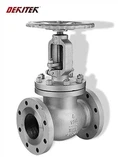
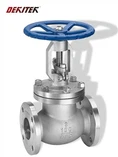
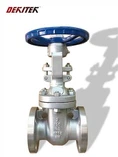
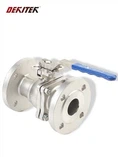
As key control element of industrial pipeline systems, valves play an important role in regulating flow rate and cutting off medium. In numerous fields such as petrochemicals, power generation, pharmaceuticals and food processing, the performance of valves directly affects the safety and efficiency of production. As one of the most common valve types, gate valve is widely used in various operating conditions to cut off media by sealing between disc and seat.
With the development of materials science, stainless steel has become the mainstream choice of gate valves with its excellent corrosion resistance and mechanical properties. Compared with traditional cast-iron gate valve and cast steel gate valve, stainless steel gate has obvious advantages under harsh working conditions. This paper will analyze the core difference between stainless steel gate valve and ordinary gate valves from four dimensions: corrosion resistance, durability, application scene and economy.
The Corrosion Resistance Advantage of stainless Stainless Steel Gate Valves
Material Characteristics: Differences in Corrosion Resistance Mechanisms
The core advantage of stainless steel is the formation of the dense chromium oxide protective film on the surface. In the case of 304 stainless steel, the combination of chromium (≥18%) and nickel (≥8%) resulted in a passivation film of approximately 2-3 nanometres thick in oxidizing environments, effectively preventing dielectric contact with the substrate. 316L stainless steel added 2% 2% -3% molybdenum, further improving its ability to resist corrosion in chloride ion environments.
In contrast, valves made from common materials such as gray iron and carbon steel lack active corrosion protection mechanisms. In humid or corrosive media, iron reacts electrochemically with oxygen and water, forming loose layers of rust that cause the material to constantly drain away.
Corrosive Media Comparison: performance under extreme conditions
- Acidic/Alkaline Environments: In a 10% hydrochloric acid solution, the corrosion rate of 304 stainless steel is only 0.01 mm/year, whereas under the same conditions the corrosion rate of carbon steel valves is more than 5 mm/ year. For sulfuric acid media, 316L 316L stainless steel more than 200 times more corrosion resistance than cast steel valves at 80°C and 50% concentration.
- Salt Spray/Marine Environment: Valves used in coastal areas must be able to withstand chlorine ion corrosion over time. Experimental data shows that 304 stainless steel remained rust-free for 1000 hours in a 5% NaCl salt spray test, while conventional carbon steel valves showed severe rust within 240 hours.
Case study: Performance Verification in real-world applications
- Chemical industry: In an ethylene oxide production unit, a petrochemical plant replaced the regular cast steel gate valve in the pipe with a 316L stainless steel valve. This increased the average valve lifespan from three to 9 years and reduced unplanned downtime due to corrosion by 80%.
- Food industry: after the adoption of 316L stainless steel valves by dairy company, the product microorganism detection pass rate increased to 99.8%, completely solved product contamination problem caused by valve inner wall corrosion.
Durability versus Maintenance Cycle
Lifespan Difference: A Direct Reflection of Material Performance
gate valves valve under normal conditions of use, according to media corrosivity corrosion and use of the frequency and other factors, the design lifespan of 3-10 years. Stainless steel gate valves has excellent fatigue resistance and corrosion resistance, in high temperature, high pressure (such as steam pipelines) or particle media conditions, the service life can be 10 to 20 years. According to the statistics of a power company, the stainless steel gate of its boiler's main steam pipeline has been operating continuously for 15 years, and its performance parameters still meet design requirements.
Maintenance Cycle factor: Multi-dimensional Performance Comparison
- Media Cleanliness: A medium containing solid particles accelerates the wear and tear of valve sealing surfaces. Experiments show that the wear rate of ordinary carbon steel valves seal is 5 times that of stainless steel valve in a slurry containing 10% silica sand.
- Frequency of operation: The hard cover of stainless steel valves (such as Stellite) shows a low fatigue damage rate when opened and closed at high frequencies. Even with 100,000 opening and closing cycles per year, the sealing leakage rate of stainless steel valves remains below 0.01%, according to automated production line statistics.
- Environmental conditions: Valves installed outside must be able to withstand environmental pressures such as ultraviolet radiation and temperature differences. Stainless steel valves due to high material stability, maintenance cycle is 30% longer than normal valve, mainly reflected in the frequency of replacement of anticorrosion coating.
Maintenance cost analysis: full life cycle economic benefits
In the case of a DN100 gate valve, for example, the initial purchase cost of a common carbon steel valve is about $800, with an average annual maintenance cost of approximately $120 (including seal replacement and antiseptic treatment), and the initial purchase cost of a a 316L stainless steel valve is about $1,500, but the average annual maintenance cost is only $40. The total cost of stainless steel valves is approximately 25% less than conventional valves, based on a 10-year service life.
INTRODUCTION Advantages of application in specific areas
Chemical and Pharmaceutical Industries: first choice in a tough business environment
- Corrosion Resistance Requirements: In highly corrosive media such as hydrogen fluoride and chlorine gas, stainless steel valves are the only option for long-term stable operation. The equipment repair cycle was extended from three months to two years with the introduction of the Hastelloy C-276 stainless steel valves, according to one fluorchemical company.
- Cleanliness standards: The pharmaceutical industry requires very high roughness (≤ 0.4 μm) of the valve's inner wall. 316L stainless steel is electrolytic polishing to meet GMP certified cleanliness requirements and avoid cross-contamination during drug manufacturing.
High temperature, high pressure environment: breaking Performance Limits
- Power industry: The main steam pipeline temperature of supercritical units reaches 570°C with a pressure of more than 25MPa. 316H stainless steel valves remain structurally stable under these conditions, while conventional cast steel valves are at risk of creep failure at 450°C.
- Oil and gas: Wellhead equipment must be able to withstand corrosive gases such as H2S and CO2 as well as high pressure (105 MPa and above). Duplex stainless steel (2205) valves has become core equipment of deep sea oil and gas development because of its excellent stress corrosion cracking performance.
Food and Beverage Industry: Ensuring Health and Safety
- steel valves (≤ 0.8 μM) inhibits microbial adhesion. The Brewery renovation project showed that with the introduction of the 316L stainless steel valves, the iron ion content in the product decreased from 0.3 mg/L to less than 0.05 mg/L, with a 90% reduction in impurities complaints.
- Environmental protection and water treatment: verification of Long-Term Reliability
- Environmental tests at a coastal wastewater treatment plant showed that 304 stainless steel valves had a cumulative corrosion depth of less than 0.1 mm over 10 years in a corrosive environment of 3.5% NaCl and that the PTFE soft-seal structure achieved zero leakage, greatly reducing the risk of water pollution.
Economic Efficiency and Selection Recommendations
Initial investment and life-cycle costs
The unit price of stainless steel valves is 1.5 to2 times that of conventional valves, but the service life can be reduced by 40%. In the case of a DN200 valve, the total cost of stainless steel valves (including procurement, maintenance and replacement) over a 10-year service life is approximately $8,000 less than the total cost of carbon steel valves.
Core Selection Factors
Media Characteristics: For media with pH greater than or equal to 4 and environments containing chloride ions, preference should be given to materials of 316L or higher.
OPERATIONAL PRESSURE: For high voltage systems over 10MPa, forged stainless steel valves are recommended to avoid safety hazards due to casting defects.
Accreditation criteria: Nuclear and pharmaceutical industries must comply with international standards such as ASME B16.34 and DINEN 13709 to ensure traceability and quality stability of materials.
Limitations of Alternative Solutions:
Cast Steel Valves: sulfur corrosion in sulfur-containing oil is easy to occur. Cast steel valves need to be replaced on average every 6 months, while stainless steel valves can last more than 3 years, according to one refinery.
Copper valves: copper alloys soften and deform in working conditions above 150 ° C, causing seal failure.
INTRODUCTION Conclusion
Stainless steel gate valves has excellent corrosion resistance, long service life and low maintenance cost. It has irreplaceable advantages in chemical industry, pharmaceutical industry, high temperature and high pressure, food hygiene and so on. With advancements in materials technologies (such as duplex stainless steel and super austenitic stainless steel applications) and integration of intelligent monitoring technologies (such as online corrosion detection and predictive maintenance), the application of stainless steel gate valves will further expand and become a mainstream choice in the field of industrial valves. steel gate valves is undoubtedly a more valuable investment option for users seeking long-term stable operation and full life cycle economic benefits.