



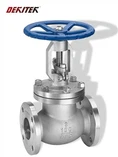

What is the maximum pressure a check valve can handle?
As a long - standing check valve supplier, I often get asked about the maximum pressure a check valve can handle. This is a crucial question, as the pressure - handling capacity of a check valve directly impacts its performance and safety in various industrial applications.

Understanding Check Valves and Their Functions
Before delving into the maximum pressure aspects, it's essential to understand what check valves are and how they work. Check valves are mechanical devices that allow fluid to flow in one direction only. They automatically open when the fluid pressure in the forward direction exceeds a certain threshold and close when the pressure reverses. This one - way flow control is vital in preventing backflow, which can cause damage to pumps, compressors, and other equipment in a fluid system.
Factors Affecting the Maximum Pressure of Check Valves
Several factors determine the maximum pressure a check valve can handle:
Material of Construction
The material used to manufacture the check valve plays a significant role. For instance, valves made of high - strength metals like stainless steel or alloy steel can generally withstand higher pressures compared to those made of cast iron or PVC. Stainless steel offers excellent corrosion resistance and high tensile strength, making it suitable for high - pressure applications in chemical processing, oil and gas, and power generation industries.
Design and Construction
The design of the check valve also affects its pressure - handling capacity. Swing check valves, for example, have a disc that swings on a hinge to allow or block the flow. Their design can be optimized for different pressure ratings. A well - engineered swing check valve with a robust hinge and a properly sized disc can handle higher pressures. On the other hand, lift check valves use a piston - like disc that moves up and down. The internal structure and the way the disc seals against the seat can be engineered to handle specific pressure ranges.
Size of the Valve
The size of the check valve is another important factor. Generally, smaller valves can handle higher pressures per unit area compared to larger ones. This is because the forces acting on the valve components are distributed over a smaller surface area in smaller valves. However, larger valves are often required for applications with high flow rates, and manufacturers need to design them carefully to ensure they can handle the required pressures.
Industry Standards and Pressure Ratings
The check valve industry follows several standards to define the pressure ratings of valves. One of the most widely recognized standards is API 6D. API 6D sets the requirements for pipeline valves, including check valves, used in the oil and gas industry. Valves that comply with API 6D are designed and tested to meet specific pressure and performance criteria.
For example, our API6D Flange End Swing Type Check Valve is designed according to API 6D standards. It has been rigorously tested to ensure it can handle high pressures in pipeline applications. These valves are commonly used in oil and gas transmission lines, where the pressure can be extremely high.
Another type of valve that adheres to API 6D standards is our API 6D BW Check Valve. The butt - weld (BW) design provides a strong and reliable connection, and it is suitable for high - pressure, high - temperature applications.
Typical Maximum Pressure Ratings
The maximum pressure a check valve can handle varies widely depending on the type, size, and material. In general, small - sized check valves made of high - strength materials can handle pressures up to several thousand pounds per square inch (psi). For example, in some high - pressure hydraulic systems, check valves may be rated for pressures up to 5000 psi or even higher.
In the oil and gas industry, large - diameter pipeline check valves may have pressure ratings ranging from 150 psi to 2500 psi or more, depending on the specific application and the requirements of the pipeline. For instance, in a high - pressure gas transmission pipeline, a large - sized check valve may need to handle pressures of 1500 psi or higher to ensure the safe and efficient operation of the system.

Testing and Certification
To ensure that check valves can handle the specified maximum pressures, they undergo rigorous testing. Manufacturers typically use hydrostatic testing, where the valve is filled with a liquid (usually water) and pressurized to a level higher than its rated pressure for a specific period. This test helps to detect any leaks or structural weaknesses in the valve.

In addition to hydrostatic testing, valves may also be subjected to other tests such as pneumatic testing, functional testing, and performance testing. Once a valve passes all the required tests, it can be certified to meet the relevant industry standards, providing customers with confidence in its pressure - handling capacity.
Importance of Selecting the Right Pressure - Rated Check Valve
Selecting a check valve with the appropriate maximum pressure rating is crucial for the safety and efficiency of a fluid system. If a valve is rated for a lower pressure than the actual operating pressure in the system, it can lead to valve failure, which may result in leaks, equipment damage, and even safety hazards.
On the other hand, choosing a valve with a much higher pressure rating than necessary can be costly and may not be the most efficient solution. Therefore, it is essential to accurately assess the pressure requirements of the system and select a check valve that can handle those pressures safely and effectively.
Conclusion
In conclusion, the maximum pressure a check valve can handle is determined by a combination of factors, including the material of construction, design, size, and industry standards. As a check valve supplier, we are committed to providing high - quality valves that meet the diverse pressure requirements of our customers. Our API6D Flange End Swing Type Check Valve and API 6D BW Check Valve are just two examples of our products that are designed to handle high - pressure applications.
If you are in need of check valves for your industrial applications, we encourage you to contact us for a detailed discussion about your specific pressure requirements. Our team of experts can help you select the right check valve to ensure the safe and efficient operation of your fluid system. We look forward to the opportunity to work with you and provide you with the best check valve solutions.
References
- American Petroleum Institute. (2023). API 6D: Specification for Pipeline Valves.
- Valve Manufacturers Association. (2022). Technical Guidelines for Check Valves.