


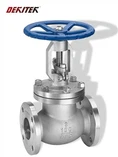

Water hammer is a common and potentially destructive phenomenon in fluid systems, especially in pipelines where Alloy Steel Pressure Seal Gate Valves are widely used. As a leading supplier of Alloy Steel Pressure Seal Gate Valves, I have witnessed firsthand the impact of water hammer on these valves. In this blog, I will delve into the nature of water hammer, its effects on Alloy Steel Pressure Seal Gate Valves, and how we can mitigate these impacts to ensure the longevity and performance of our valves.
Understanding Water Hammer
Water hammer, also known as hydraulic shock, occurs when there is a sudden change in the flow velocity of a fluid in a pipeline. This sudden change can be caused by various factors, such as the rapid closing or opening of a valve, the start - up or shutdown of a pump, or a sudden blockage in the pipeline. When the flow velocity changes abruptly, a pressure wave is generated. This pressure wave travels through the pipeline at high speed, and its magnitude can be significantly higher than the normal operating pressure of the system.
The physics behind water hammer is based on the principles of fluid mechanics. According to Newton's second law, a change in the momentum of the fluid (which is related to its mass and velocity) results in a force. When the flow is suddenly stopped or redirected, the fluid's momentum changes rapidly, creating a large force that manifests as a pressure surge.
Impact of Water Hammer on Alloy Steel Pressure Seal Gate Valves
Structural Damage
One of the most significant impacts of water hammer on Alloy Steel Pressure Seal Gate Valves is structural damage. The high - pressure waves generated by water hammer can exert excessive forces on the valve components. The valve body, which is designed to withstand normal operating pressures, may experience stress levels beyond its design limits. This can lead to cracks, fractures, or deformation of the valve body. For instance, the sudden pressure increase can cause the valve body to expand and contract rapidly, creating internal stresses that may eventually lead to material failure.
The gate of the valve is also vulnerable to water hammer. The gate is responsible for controlling the flow of fluid through the valve, and the high - pressure waves can cause it to move erratically. This can lead to damage to the gate's sealing surfaces, resulting in leakage. Moreover, if the gate is forced against the valve seat with excessive force, it can cause wear and tear on the seat, further compromising the valve's sealing performance.
Seal Integrity
Alloy Steel Pressure Seal Gate Valves rely on tight seals to prevent fluid leakage. Water hammer can have a detrimental effect on the seal integrity of these valves. The pressure surges can cause the seals to deform or dislodge. For example, the soft seals used in some valves may be compressed or pushed out of their proper positions by the high - pressure waves. This can lead to internal and external leakage, which not only wastes valuable fluids but also poses safety risks, especially in systems handling hazardous or flammable substances.


Operational Issues
Water hammer can also cause operational issues for Alloy Steel Pressure Seal Gate Valves. The sudden pressure changes can make it difficult to operate the valve smoothly. The valve may become harder to open or close, and the actuator may experience increased wear and tear due to the additional forces required to operate the valve. In some cases, the valve may even get stuck in an open or closed position, disrupting the normal operation of the fluid system.
Mitigation Strategies
Proper Valve Sizing and Selection
As a supplier of Alloy Steel Pressure Seal Gate Valves, we emphasize the importance of proper valve sizing and selection. Valves that are too small for the system may experience higher flow velocities, increasing the risk of water hammer. On the other hand, valves that are too large can be inefficient and may not respond well to flow changes. We work closely with our customers to understand their system requirements and recommend the most suitable valves. For example, in systems prone to water hammer, we may suggest valves with features that can help dampen the pressure waves, such as slow - closing or quick - opening mechanisms.
Installation of Surge Suppressors
Surge suppressors, also known as water hammer arrestors, are devices designed to absorb the energy of the pressure waves generated by water hammer. These devices can be installed in the pipeline near the valve to reduce the impact of water hammer on the valve. There are different types of surge suppressors available, such as air chambers, spring - loaded devices, and hydraulic accumulators. The choice of surge suppressor depends on the specific characteristics of the fluid system, such as the flow rate, pressure, and type of fluid.
Control of Valve Operation
Controlling the speed of valve operation is another effective way to mitigate the impact of water hammer. Rapid valve closing or opening is one of the main causes of water hammer. By using actuators with adjustable speed controls, we can ensure that the valve opens and closes gradually, reducing the sudden changes in flow velocity. This can significantly reduce the magnitude of the pressure waves generated by water hammer.
Our Product Offerings
As a trusted supplier of Alloy Steel Pressure Seal Gate Valves, we offer a wide range of products to meet the diverse needs of our customers. Our valves are made from high - quality alloy steel, which provides excellent strength, corrosion resistance, and durability. We also offer different types of gate valves, such as [Stainless Steel Flexible Wedge Gate Valve](/gate - valve/stainless - steel - flexible - wedge - gate - valve.html), [Duplex Stainless Steel Pressure Seal Gate Valve](/gate - valve/duplex - stainless - steel - pressure - factory.html), and [Carbon Steel Flexible Wedge Gate Valve](/gate - valve/carbon - steel - flexible - wedge - gate - valve.html).
Our team of experts is always available to provide technical support and advice on valve selection, installation, and maintenance. We understand the challenges posed by water hammer and are committed to helping our customers find the best solutions to protect their valves and fluid systems.
Conclusion
Water hammer is a serious issue that can have a significant impact on the performance and longevity of Alloy Steel Pressure Seal Gate Valves. The structural damage, seal integrity issues, and operational problems caused by water hammer can lead to costly repairs, downtime, and safety risks. However, by understanding the nature of water hammer and implementing appropriate mitigation strategies, such as proper valve sizing, installation of surge suppressors, and control of valve operation, we can minimize these impacts.
As a leading supplier of Alloy Steel Pressure Seal Gate Valves, we are dedicated to providing high - quality products and comprehensive solutions to our customers. If you are facing challenges related to water hammer or are in need of reliable gate valves for your fluid system, we encourage you to contact us for a detailed discussion. Our experienced team will work with you to find the most suitable valves and strategies to ensure the smooth and efficient operation of your system.
References
- Karney, B. W. (2009). Transient analysis of pipeline systems. In Water Distribution Systems Handbook (pp. 541 - 564). McGraw - Hill.
- Wylie, E. B., & Streeter, V. L. (1993). Fluid transients in systems. Prentice Hall.
- Chaudhry, M. H. (2014). Applied hydraulic transients. Springer.