



Hey there! As a check valve supplier, I often get asked about the flow direction of a check valve. It might seem like a simple question, but it's actually pretty crucial to understand if you're working with these valves. So, let's dive right in and explore what the flow direction of a check valve is all about.
First off, what exactly is a check valve? Well, it's a type of valve that allows fluid (like water, gas, or oil) to flow in one direction only. It's like a one - way street for fluids. This function is super important in a lot of industries, from plumbing to oil and gas.
The flow direction of a check valve is determined by its design. Most check valves have an inlet and an outlet. The fluid enters the valve through the inlet and exits through the outlet. And here's the key part: the valve is designed to open when the fluid is flowing in the correct direction (from inlet to outlet) and close when the fluid tries to flow in the opposite direction.
There are different types of check valves, and each has its own way of controlling the flow direction. Let's take a look at some common types.
Swing Check Valves
Swing check valves are one of the most popular types. They have a disc that swings on a hinge. When the fluid flows in the correct direction, it pushes the disc open, allowing the fluid to pass through. Think of it like a door that opens when you push it from the right side. Once the flow stops or tries to reverse, the disc swings back and closes the valve, preventing backflow.
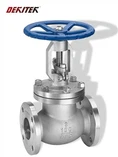
We offer a great API6D Flange End Swing Type Check Valve. This valve is designed according to API 6D standards, which means it's built to handle high - pressure and high - temperature applications. It's suitable for a wide range of industries, including oil and gas pipelines, refineries, and chemical plants.
Lift Check Valves
Lift check valves work a bit differently. They have a disc that moves up and down inside the valve body. When the fluid flows in the correct direction, the pressure of the fluid lifts the disc off its seat, allowing the fluid to pass. When the flow stops or reverses, the disc drops back onto the seat, closing the valve.
These valves are often used in applications where a tight shut - off is required, like in steam systems or high - pressure water lines.
Ball Check Valves
Ball check valves use a ball to control the flow. The ball is usually made of a hard material like stainless steel. When the fluid flows in the correct direction, it pushes the ball away from the seat, opening the valve. When the flow reverses, the ball is pushed back onto the seat, closing the valve.
Ball check valves are known for their simplicity and reliability. They're commonly used in small - scale applications, like in household plumbing or in some types of pumps.
Why is the Flow Direction Important?
Understanding the flow direction of a check valve is crucial for several reasons.


First, if a check valve is installed in the wrong direction, it won't work properly. It might not open when it should, or it might not close when there's backflow. This can lead to all sorts of problems, like reduced efficiency, damage to equipment, or even safety hazards.
For example, in a water supply system, if the check valve is installed backwards, it could allow contaminated water to flow back into the clean water supply, which is a major health risk.
Second, the flow direction affects the performance of the valve. Different check valves are designed to work best with a certain flow rate and pressure in the correct direction. If the flow is going the wrong way, the valve might not be able to open fully or close tightly, which can cause issues like leakage or excessive pressure drop.
How to Determine the Flow Direction
When you're installing a check valve, it's important to know which way the fluid should flow. Most check valves have an arrow marked on the valve body that indicates the flow direction. You should always follow this arrow when installing the valve.
If there's no arrow, you can usually tell the flow direction based on the valve's design. For example, in a swing check valve, the disc should swing open in the direction of the flow. In a lift check valve, the disc should lift up when the fluid is flowing in the correct direction.
Our API 6D BW Check Valve
We also have the API 6D BW Check Valve. This valve is butt - welded, which makes it suitable for high - pressure and high - temperature applications. It's designed to meet API 6D standards, ensuring reliable performance and long - term durability. Whether you're working on an offshore oil platform or a large - scale industrial plant, this valve can handle the job.
Conclusion
So, to sum it up, the flow direction of a check valve is all about allowing fluid to flow in one direction and preventing backflow. Different types of check valves use different mechanisms to control the flow, but they all have the same basic function.
As a check valve supplier, we understand the importance of getting the flow direction right. That's why we offer a wide range of high - quality check valves that are designed to work correctly in the intended flow direction.
If you're in the market for check valves, whether it's for a small - scale project or a large - scale industrial application, we'd love to talk to you. Our team of experts can help you choose the right valve for your needs and ensure that it's installed correctly. So, don't hesitate to reach out for a purchase negotiation.
References
- "Valve Handbook", Crane Co.
- "Piping and Pipeline Engineering", George A. Antaki