



Hey there! As a supplier of Double Offset Lug Type Butterfly Valves, I'm super excited to dive into the flow characteristics of these amazing valves. So, let's get right into it!
Basics of Double Offset Lug Type Butterfly Valves
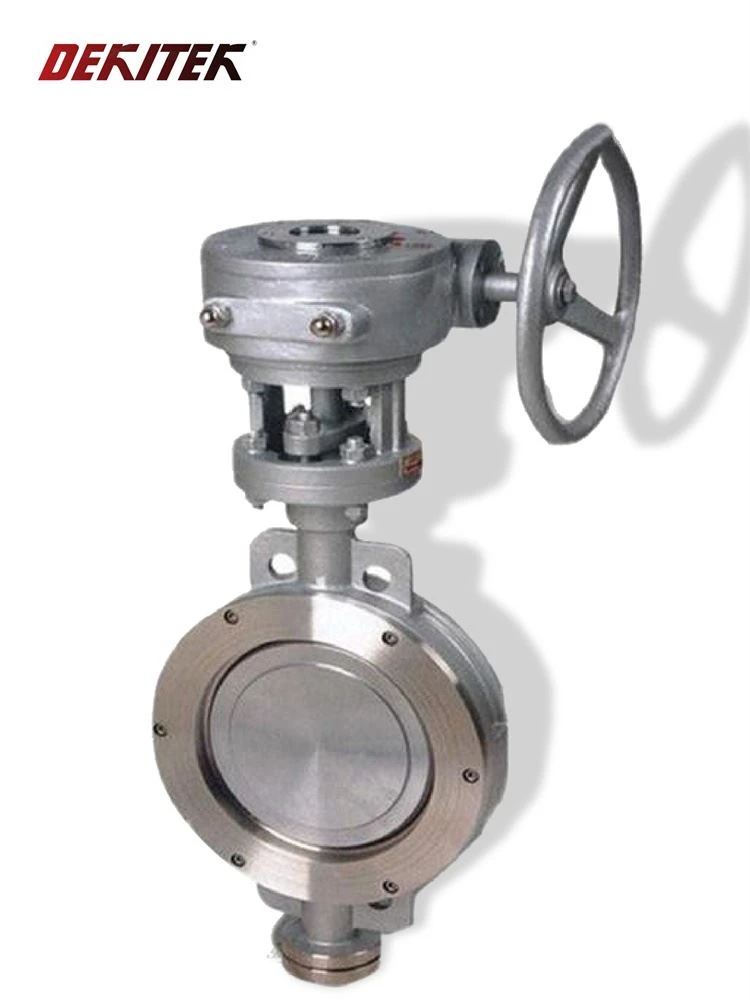
First off, let's quickly go over what a Double Offset Lug Type Butterfly Valve is. These valves are a type of quarter - turn valve, which means they can be opened or closed with just a 90 - degree rotation of the valve stem. The "double offset" part refers to the unique design where the valve shaft is offset from the center of the disc and the centerline of the pipe. The "lug type" means the valve has lugs on its outer circumference, which allow it to be bolted between two flanges in a pipeline.
Flow Behavior at Different Openings
Fully Open Position
When the Double Offset Lug Type Butterfly Valve is fully open, it offers a relatively unobstructed flow path. The disc is parallel to the flow direction, and the cross - sectional area of the flow passage is almost the same as that of the pipeline. This results in low pressure drop across the valve. In other words, the fluid can flow through the valve with minimal resistance, just like water flowing through a straight pipe. This is great for applications where high flow rates are required, such as in large - scale water supply systems or industrial processes where large volumes of fluid need to be transferred quickly.
Partially Open Positions
As the valve starts to close and moves to partially open positions, things get a bit more interesting. The disc begins to obstruct the flow path, and the flow behavior becomes more complex. The fluid has to flow around the disc, which creates turbulence. At small opening angles, say around 10 - 20 degrees, the flow is highly restricted, and the pressure drop across the valve increases significantly. The fluid velocity near the edges of the disc can be quite high, which may lead to cavitation in some cases. Cavitation is when the pressure of the fluid drops below its vapor pressure, causing the formation of vapor bubbles. These bubbles can collapse when they move to a region of higher pressure, and the resulting shockwaves can damage the valve and the pipeline over time.
As the opening angle increases to around 30 - 60 degrees, the flow starts to become more stable, but there is still a considerable amount of turbulence. The pressure drop is still relatively high compared to the fully open position, but it is lower than at very small opening angles. This range of opening angles is often used for flow control applications, where the goal is to regulate the flow rate of the fluid.
Nearly Closed Position
When the valve is nearly closed, the flow is severely restricted. The fluid has to pass through a very narrow gap between the disc and the valve seat. This creates a high - velocity jet of fluid, which can cause erosion of the valve seat and the disc. The pressure drop across the valve is extremely high at this point, and the flow is highly turbulent. In some applications, such as in throttling services where precise flow control is needed at low flow rates, the valve may operate in this nearly closed position for extended periods. However, special design considerations are required to prevent damage to the valve due to the high - velocity flow and erosion.
Flow Coefficient (Cv)
The flow coefficient, also known as Cv, is an important parameter that describes the flow characteristics of a valve. It is defined as the number of US gallons per minute of water at 60°F that will flow through the valve with a pressure drop of 1 psi. For a Double Offset Lug Type Butterfly Valve, the Cv value varies depending on the size of the valve and its opening angle.
In general, larger valves have higher Cv values because they have a larger flow passage. At the fully open position, the Cv value is at its maximum. As the valve closes, the Cv value decreases. Manufacturers usually provide Cv curves for their valves, which show how the Cv value changes with the opening angle. These curves are very useful for engineers when selecting the right valve for a particular application. They can use the Cv curves to calculate the pressure drop across the valve for a given flow rate and vice versa.
Comparison with Other Types of Butterfly Valves
Let's compare the flow characteristics of Double Offset Lug Type Butterfly Valves with other types, like the Triple Offset Wafer Type Butterfly Valve and the Triple Offset Flange End Type Butterfly Valve.
Triple offset butterfly valves have an additional offset compared to double offset valves. This extra offset allows for a more precise sealing and better performance in high - pressure and high - temperature applications. However, in terms of flow characteristics, double offset valves usually have a lower pressure drop at fully open positions because their disc design is more streamlined for high - flow applications.
On the other hand, triple offset valves may have better flow control characteristics at small opening angles. The unique design of the triple offset disc allows for a more gradual change in the flow area as the valve opens and closes, which can result in more stable flow control.
Applications Based on Flow Characteristics
The flow characteristics of Double Offset Lug Type Butterfly Valves make them suitable for a wide range of applications.
Water Treatment Plants
In water treatment plants, these valves are used for both large - scale water distribution and for controlling the flow of chemicals. In the water distribution system, the valves are often kept fully open to ensure high - flow rates with minimal pressure drop. When it comes to chemical dosing, the valves can be used in partially open positions to precisely control the flow rate of the chemicals.
HVAC Systems
In heating, ventilation, and air - conditioning (HVAC) systems, Double Offset Lug Type Butterfly Valves are used to control the flow of water or refrigerant. They can be adjusted to maintain the desired flow rate and temperature in different parts of the system. For example, in a large - scale building's HVAC system, the valves can be used to balance the flow of chilled water to different floors or zones.
Conclusion and Call to Action
Well, that's a pretty detailed look at the flow characteristics of Double Offset Lug Type Butterfly Valves. As you can see, these valves offer a lot of flexibility in terms of flow control and are suitable for a wide range of applications.

If you're in the market for high - quality Double Offset Lug Type Butterfly Valves, or if you have any questions about how these valves can fit into your specific application, don't hesitate to reach out. You can check out our Double Offset Lug Type Butterfly Valve product page for more information. We're here to help you find the perfect valve solution for your needs. Whether you need a valve for a small - scale project or a large - scale industrial application, we've got you covered. So, let's start a conversation and see how we can work together!
References
- Miller, R. W. (1996). Flow Measurement Engineering Handbook. McGraw - Hill.
- Idelchik, I. E. (2007). Handbook of Hydraulic Resistance. Begell House.