


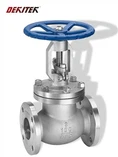

Check valves, also known as non-return valves or one-way valves, play a crucial role in various industries by allowing fluid to flow in one direction while preventing backflow. As a check valve supplier, I understand the importance of adhering to strict standards and regulations to ensure the quality, safety, and performance of these valves. In this blog post, I will delve into the key standards and regulations that govern check valves and their significance in the industry.
International Standards for Check Valves
API Standards
The American Petroleum Institute (API) sets standards that are widely recognized in the oil and gas industry. API standards ensure that check valves can withstand the harsh conditions often encountered in oil and gas exploration, production, and transportation.
- API 6D: This standard covers pipeline valves, including check valves. It specifies requirements for design, materials, testing, inspection, and marking of valves used in pipeline transportation systems. API 6D valves are designed to handle high-pressure and high-temperature applications. For instance, our API6D Flange End Swing Type Check Valve complies with API 6D standards, making it suitable for use in critical pipeline applications. The swing type design allows for efficient flow in one direction and reliable prevention of backflow.
- API 594: Focuses on wafer and lug type check valves. It details the requirements for the dimensions, materials, and performance of these types of check valves. API 594 check valves are commonly used in refineries, chemical plants, and other industrial settings where compact and cost - effective check valve solutions are needed.
ASME Standards
The American Society of Mechanical Engineers (ASME) standards are also fundamental in the valve industry.
- ASME B16.34: This standard covers the design, material, and pressure - temperature ratings of valves. It ensures that check valves are designed to handle specific pressure and temperature combinations safely. For example, in a steam system, the check valve must be able to withstand the high - pressure and high - temperature steam without failure. ASME B16.34 provides the guidelines for manufacturers to design and produce valves that can meet these requirements.
- ASME B16.10: Deals with the face - to - face and end - to - end dimensions of valves. Standardized dimensions are crucial for ensuring proper installation and compatibility with other components in a piping system. When a check valve is installed in a pipeline, it must fit precisely with the adjacent pipes and fittings, and ASME B16.10 helps achieve this.
ISO Standards
The International Organization for Standardization (ISO) standards provide a global framework for valve manufacturing.
- ISO 5208: Specifies the methods of testing valves for non - metallic sealing surfaces. This standard helps to ensure the tightness and reliability of the valve's sealing mechanism. A proper seal is essential in a check valve to prevent leakage and backflow. By following ISO 5208, manufacturers can guarantee that their check valves meet the required sealing performance.
- ISO 10497: Covers ball valves, butterfly valves, and check valves for use in petroleum, petrochemical, and associated industries. It includes requirements for design, materials, and testing, providing a comprehensive set of guidelines for valve manufacturers operating in these industries.
Regional and National Regulations
European Union Regulations
In the European Union, the Pressure Equipment Directive (PED) is a key regulation that affects check valve manufacturers. The PED applies to pressure equipment and assemblies with a maximum allowable pressure greater than 0.5 bar. It aims to ensure the safety of pressure equipment placed on the European market. Check valves that fall under the scope of the PED must comply with its requirements, which include design, manufacturing, and conformity assessment procedures. This regulation helps to protect the health and safety of users and the environment in the EU.

Chinese Regulations
In China, the National Standard of the People's Republic of China (GB) sets the requirements for check valves. For example, GB/T 12236 - 2008 covers the technical conditions for globe valves and check valves. These standards ensure the quality and performance of check valves produced and used in China. Chinese manufacturers must adhere to these standards to meet the domestic market requirements and also for export purposes.
Significance of Standards and Regulations
Quality Assurance
Standards and regulations act as a benchmark for quality. By following these standards, check valve suppliers can ensure that their products are of high quality. For example, API standards require rigorous testing procedures, such as hydrostatic testing and non - destructive testing. These tests help to detect any defects in the valve, such as cracks or porosity, before the valve is put into service. This ensures that the check valve will perform reliably over its service life.

Safety
Safety is of utmost importance in industries that use check valves. Standards and regulations are designed to minimize the risk of accidents caused by valve failure. For instance, in a nuclear power plant, a faulty check valve could lead to a dangerous backflow of radioactive materials. By complying with strict standards like ASME standards for nuclear applications, the safety of the plant and its surrounding environment can be ensured.
Compatibility
Standardized dimensions and performance requirements ensure that check valves are compatible with other components in a piping system. When a check valve is installed in a pipeline, it must be able to connect properly with pipes, flanges, and other valves. Standards such as ASME B16.10 for dimensions and API 6D for performance ensure that this compatibility is achieved, reducing the likelihood of installation errors and system failures.
Our Commitment as a Check Valve Supplier
As a check valve supplier, we are fully committed to meeting and exceeding all relevant standards and regulations. We have a strict quality control system in place to ensure that every check valve we produce complies with the highest industry standards. Our API 6D BW Check Valve is a prime example of our dedication to quality and compliance. It is designed and manufactured to meet the requirements of API 6D, making it suitable for use in demanding pipeline applications.
We also invest in research and development to continuously improve our products. We stay updated with the latest changes in standards and regulations to ensure that our check valves remain at the forefront of technological advancements. Our team of experienced engineers and technicians is trained to follow all the necessary procedures to produce high - quality check valves.
Contact Us for Your Check Valve Needs
If you are in the market for high - quality check valves that meet all the relevant standards and regulations, we are here to help. Whether you need a check valve for a small - scale industrial application or a large - scale pipeline project, we have the expertise and the product range to meet your requirements.

We understand that every project is unique, and we are willing to work closely with you to provide customized solutions. Our check valves are not only reliable but also cost - effective, offering you the best value for your money.
Don't hesitate to contact us to discuss your check valve needs. We look forward to the opportunity to work with you and provide you with the best check valve solutions in the industry.
References
- American Petroleum Institute (API). API 6D: Specification for Pipeline Valves.
- American Society of Mechanical Engineers (ASME). ASME B16.34: Valves - Flanged, Threaded, and Welding End.
- International Organization for Standardization (ISO). ISO 5208: Industrial valves - Pressure testing.
- Pressure Equipment Directive (PED) of the European Union.
- National Standard of the People's Republic of China (GB). GB/T 12236 - 2008: Technical conditions for globe valves and check valves.